


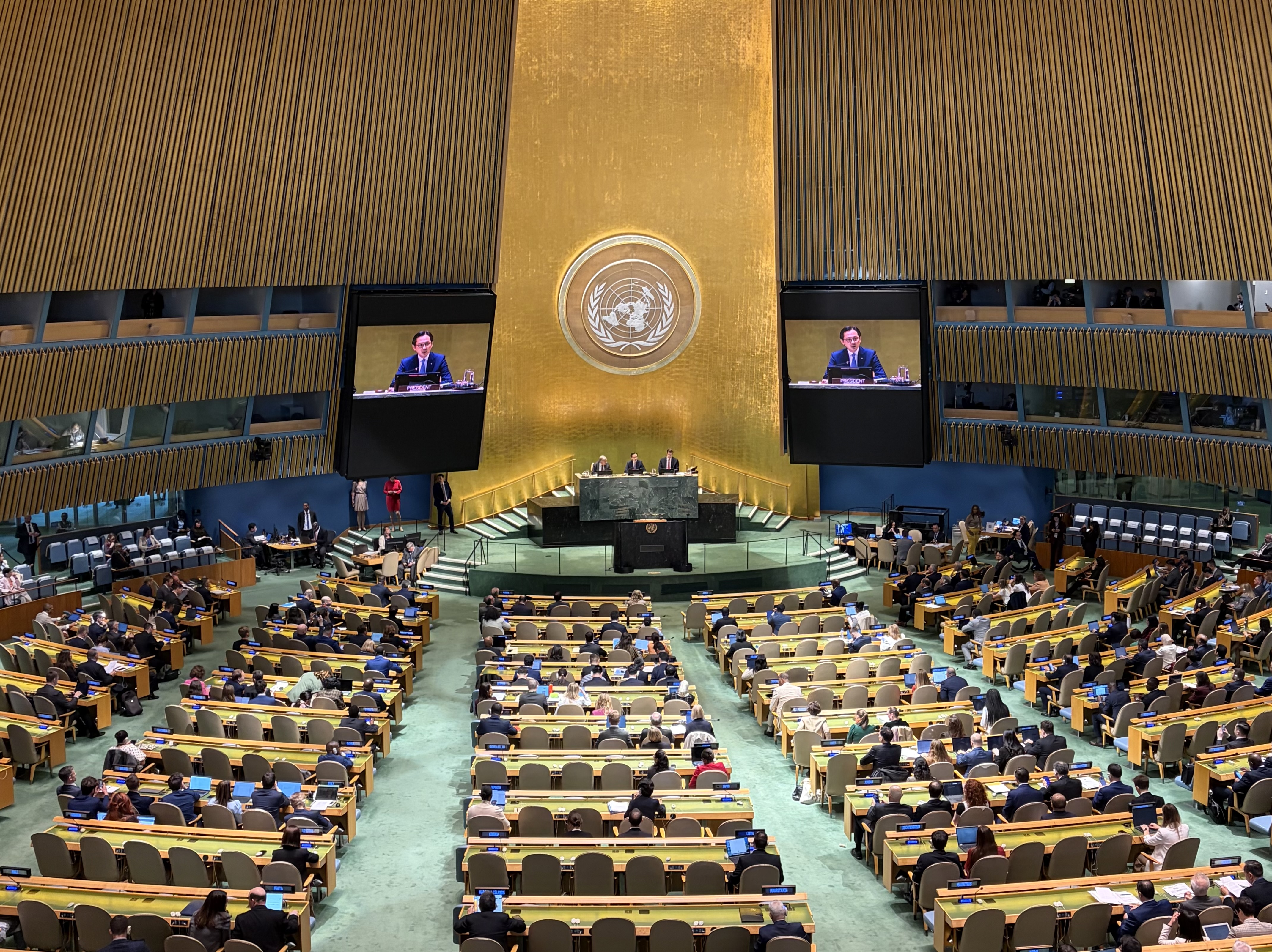
The 2026 Review Conference of the Parties to the Treaty on the Non-Proliferation of Nuclear Weapons (NPT) concluded in New York on 22 May without reaching an agreement on a substantive outcome document. This marked the first time in the treaty’s five-decade review process that three consecutive conferences had failed to reach an agreement, reflecting the growing strain on the treaty.
In a new commentary, VCDNP’s Japan Chair Fellow Sanaa Alvira argues that, despite not being a party to the treaty, India benefits from the NPT and will not be unaffected by the gradual and compounding pressure on it. Consequently, a weakening NPT has direct consequences for India’s security and strategic interests.
A strained NPT carries two specific consequences for India. First, it weakens what limited multilateral pressure exists on China’s nuclear expansion, exposing India to a more unpredictable security neighbourhood. As nuclear-weapons states expand and modernise their arsenals against their Article VI obligations, India can expect quiet pressure to recalibrate the specifics of its credible minimum deterrent, a posture defined by the prevailing security environment rather than any fixed physical composition.
Second, the normative implications become apparent over time. The increasing salience of nuclear weapons together with the gradual de-stigmatisation of non-possession, runs against India’s long-standing call for a non-discriminatory path to universal disarmament. This could gradually erode the value of India’s voluntary adherence to NPT norms and values, despite having no legal obligation to do so. Much of India’s standing as a responsible nuclear power has rested on this voluntary alignment.
The commentary highlights three developments from the 2026 NPT Review Conference that India should pay close attention to: the potential erosion of the norm against nuclear testing and the extent to which nuclear-weapons states engage with one another, as well as with other non-nuclear-weapons states (if at all) on the issue amid broader tensions; the language and positions that reflect a growing and explicit salience of nuclear weapons among a wider set of states; and the extent to which peaceful uses of nuclear technology become increasingly contentious over conditionalities, sustainable development and climate change framings, and/or attacks on civilian nuclear facilities. Each speaks to why the strain on the NPT affects India as well.
Sanaa Alvira concludes that the NPT regime, in which nuclear restraint is valued, non-proliferation is obligatory, peaceful uses of nuclear technologies are expanded, and disarmament is the ultimate goal, is increasingly at risk under a strained treaty. India benefits from the NPT and should prepare for the challenges that an increasingly fragile treaty may bring.
The commentary was published on India's World (paywalled).