


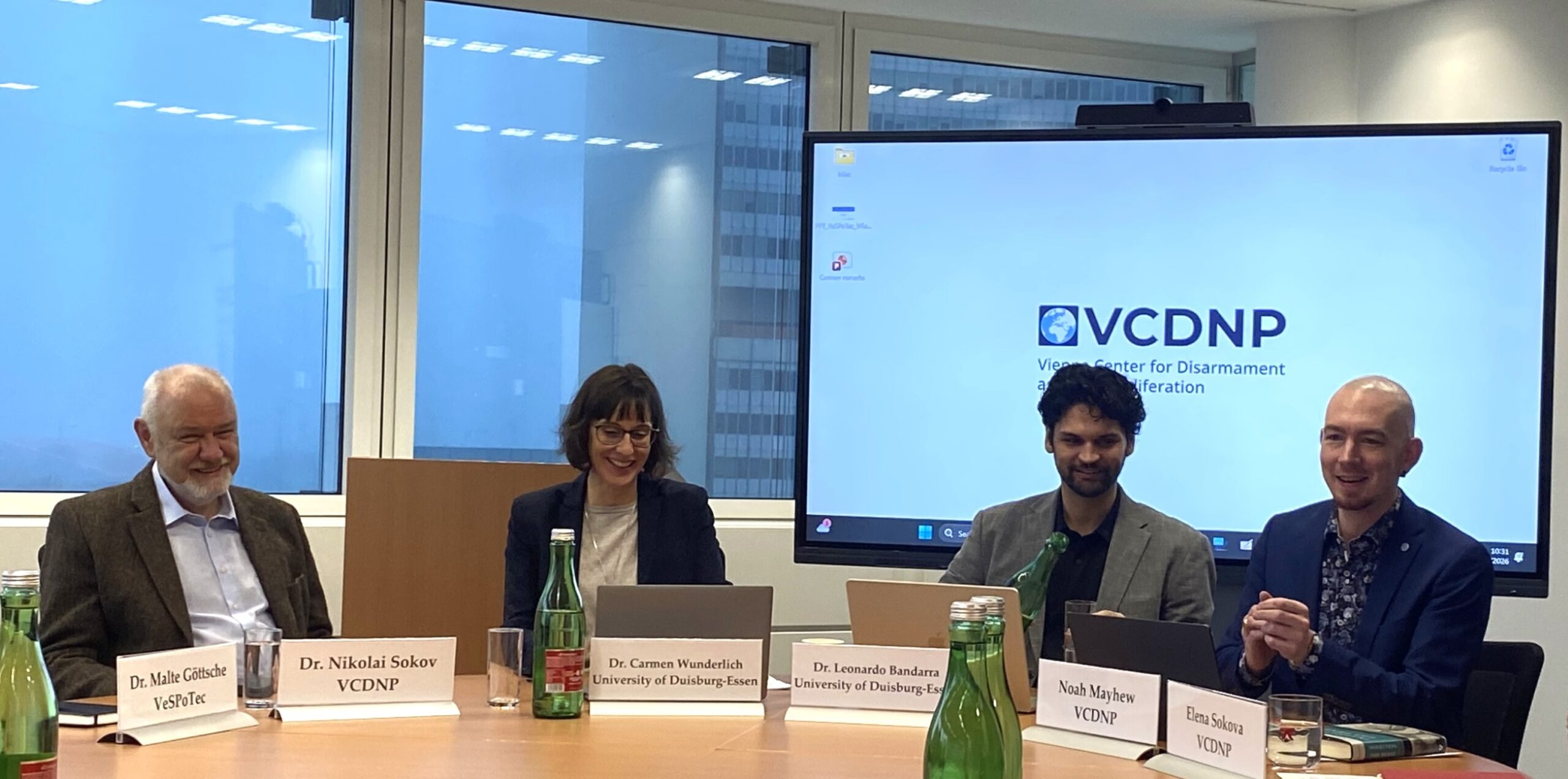
As geopolitical tensions rise and international treaties face unprecedented strain, the future of nuclear verification is uncertain. Against this backdrop, on 4 February 2026 the VCDNP and the research consortium VeSPoTec (Verification in a complex and unpredictable world: social, political and technical processes) convened an expert-level workshop titled “Prospects for Nuclear Verification in Times of Uncertainty and Crisis.”

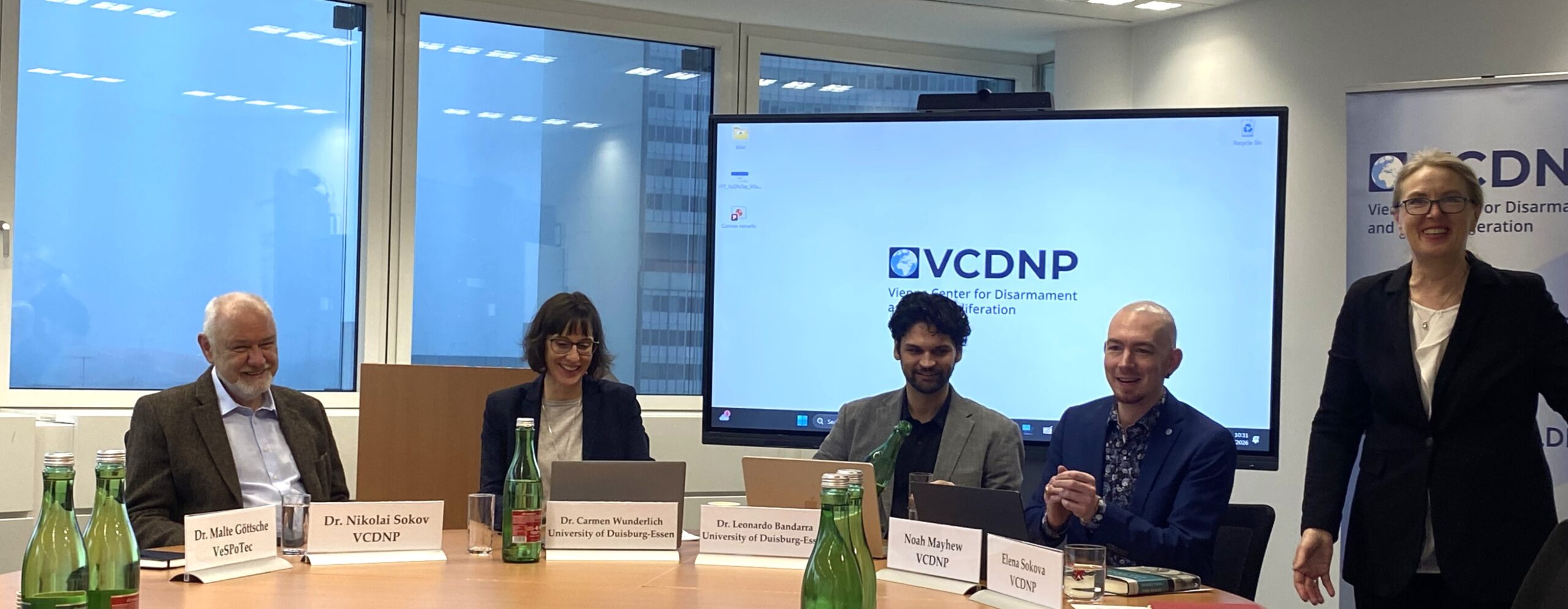
During the workshop, VCDNP and VeSPoTec experts discussed the challenges facing nuclear verification today and explored prospects for the future. VCDNP Senior Research Associate Noah Mayhew addressed the difficulties that can arise in safeguards implementation in times of crisis, including in war zones, natural and manmade disaster areas and during political instability. VCDNP Senior Fellow Dr. Nikolai Sokov explored prospects for futureprogress in nuclear weapons verification. Nuclear arms control and treaty-based nuclear verification—including under the recently expired New START Treaty—is in decline.
Verification of the next nuclear arms control treaties is likely to be much more complex, as parties will need to address verification of nuclear warheads whereas previous treaties focused their verification on delivery systems. Dr. Leonardo Bandarra, Senior Researcher at the University of Duisburg-Essen, discussed the current and future role of the Global South in nuclear verification and their increasing agency in shaping negotiations and verification. Finally, Dr. Carmen Wunderlich, also a Senior Researcher at the University of Duisburg-Essen, presented the next phase of VeSPoTec, which will focus on the topic of “knowing in the nuclear weapons world”.
VCDNP Executive Director Elena K. Sokova and Dr. Malte Göttsche of the Peace Research Institute Frankfurt delivered opening remarks.