From 9 to 12 November 2026, the International Atomic Energy Agency (IAEA) held its quadrennial Symposium on International Safeguards in Vienna under the theme “Innovation and Resilience in a Changing World – Safeguards as a Shared Responsibility”. The Symposium brought together over 800 participants from Member States, national safeguards authorities, industry, and the expert community.
VCDNP experts contributed, inter alia, to discussions on the digitalisation of national accounting systems, fusion energy, naval nuclear propulsion, artificial intelligence, the IAEA’s budget, and the resilience of safeguards in times of crisis.
Digital Transformation in SSACs: Experiences and Lessons Learned
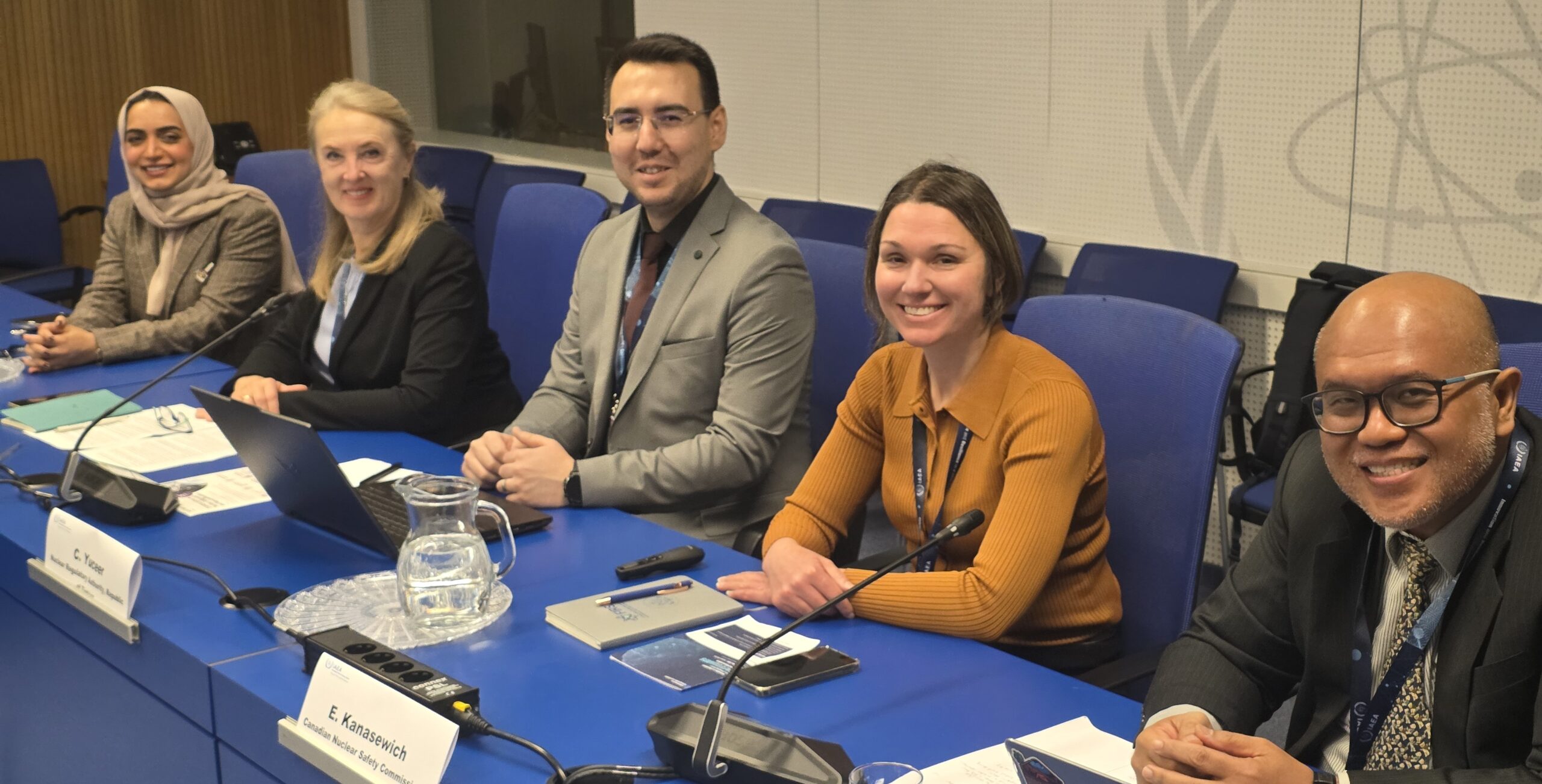
VCDNP Executive Director Elena Sokova moderated a session on how States produce the accounting information on which IAEA verification depends. She noted that the quality, completeness, and timeliness of State’s reports are the starting point for the Agency’s work, but that many State systems of accounting for and control of nuclear material (SSACs) still rely on spreadsheets, paper ledgers, and manual data transmission.
Panellists shared national experiences of building digital nuclear material accounting systems, from facility-level accounting to the automatic generation of reports to the IAEA. The discussion covered coordinating with operators on SSAC digitalisation, protecting sensitive information, and sharing lessons with other States that are developing their own digital nuclear material accounting and reporting systems.

Safeguards for Fusion: Non-Proliferation Issues
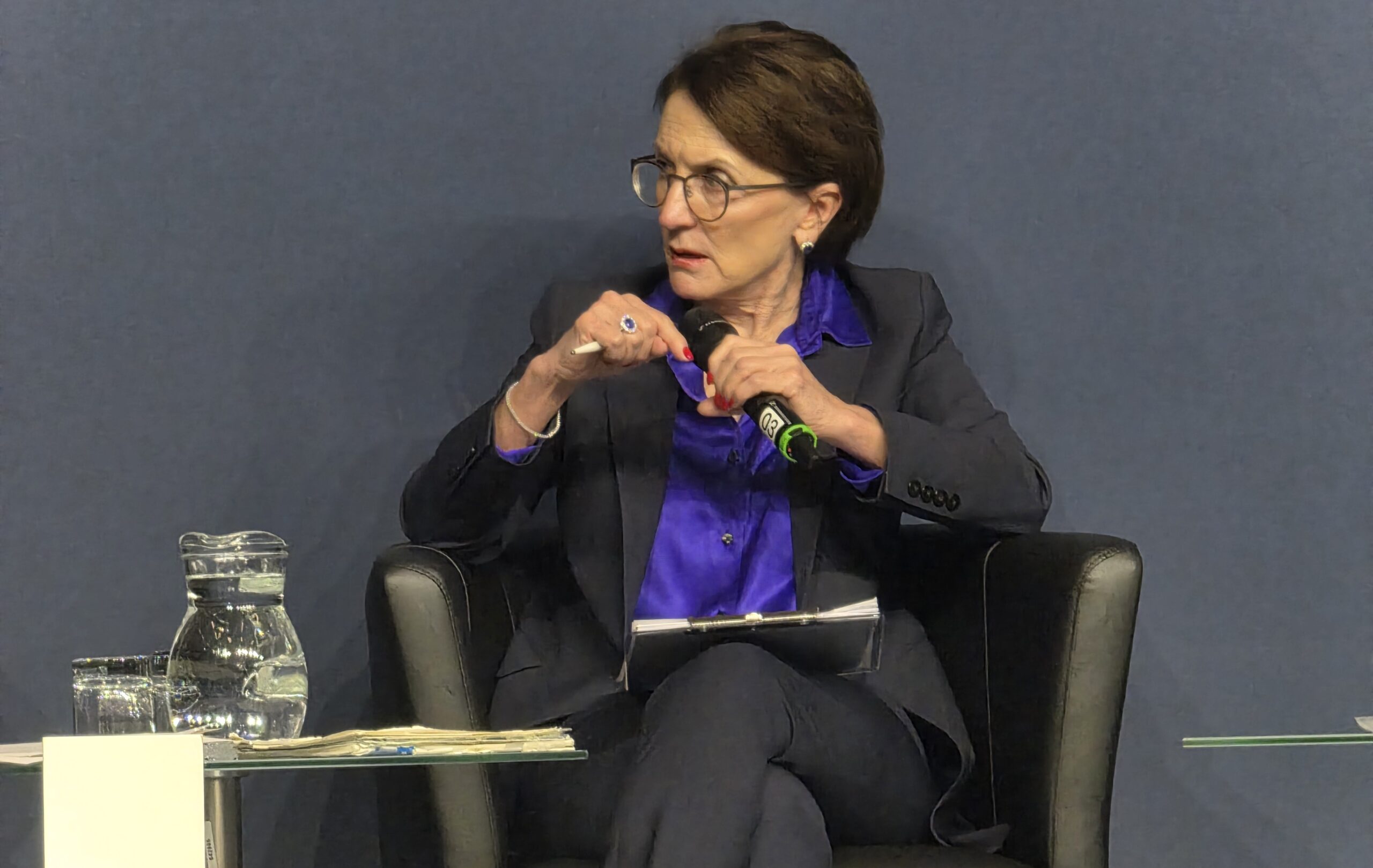
VCDNP Senior Fellow Laura Rockwood chaired a session on non-proliferation and fusion energy and presented a paper synthesising the work of the technical working group she co-chairs within FELEX, an international group of legal experts on fusion energy. She noted that while fusion’s proliferation risks are perceived to be lower than those related to fission, they are not zero, and identified three: using neutrons to breed plutonium from uranium in beryllium blankets; diverting tritium or lithium inventories to nuclear weapons use; and acquiring knowledge relevant to thermonuclear weapon design.
Ms. Rockwood explained that under a comprehensive safeguards agreement (CSA), a fusion installation that processes, uses, or produces nuclear material would be subject to safeguards, even if that production is incidental. Gaps remain, however: the Model Additional Protocol does not cover beryllium, tritium, or lithium, and much fusion development is carried out by commercial entities in nuclear-weapon States, which not required to have CSAs. She concluded that addressing these risks credibly and with foresight can facilitate industry growth, government support, and public acceptance of fusion.
Naval Nuclear Propulsion and IAEA Safeguards
In a session on naval nuclear propulsion, Ms. Rockwood addressed the legal, procedural, and substantive aspects of applying safeguards to nuclear material used for this purpose. She noted that neither naval nuclear propulsion nor the transfer of enriched uranium, regardless of enrichment level, were prohibited under the Treaty on the Non-Proliferation of Nuclear Weapons. Nor does the IAEA Statute preclude IAEA involvement in such an activity: an arrangement concluded with the IAEA under paragraph 14 of INFCIRC/153 is a prerequisite for any such use of nuclear material.
On process, Ms. Rockwood observed that the IAEA had developed safeguards procedures through a range of mechanisms, from Board committees to bilateral negotiations, and that experience suggested that novel and complex technical issues are best left to technical experts. On substance, she emphasised that the “non-application” of safeguards under paragraph 14 does not preclude verification measures, and that routine safeguards must be reapplied as soon as the material returns to peaceful use. A key question, she noted, was how to bring safeguards as close as possible to the submarine reactor without access to classified information. She concluded that each arrangement must be tailored to the specific circumstances and fit for purpose, regardless of the States involved.

Noah Mayhew, Senior Research Associate and the VCDNP’s Programmes and Outreach Manager, contributed to five sessions and events.
AI for IAEA Safeguards: Potential Challenges and Risk Mitigations
In a poster presentation, Mr. Mayhew examined the risks that may arise with the IAEA’s growing use of artificial intelligence. He grouped them into three categories: AI used against safeguards, such as deepfakes and manipulated satellite imagery; potential Agency errors arising from untested systems or analysts who stop checking AI outputs; and the Agency’s own AI tools becoming targets. To mitigate these risks, he recommended investment in tools to authenticate evidence, independent validation of AI systems, and closer coordination between the Department of Safeguards and the Division of Nuclear Security. Throughout, he stressed that AI supports the analyst but does not draw safeguards conclusions.
Back to the Futures: Preparing Safeguards for 2030
Revisiting the “Drivers 2057” foresight exercise from the 2022 Symposium, Mr. Mayhew observed that much of the anticipated future of strategic competition had arrived: safeguarded facilities have been attacked in war; continuity of knowledge has been lost; and the Agency’s budget is under strain. Less anticipated were attacks on the credibility of the Agency itself and the growing difficulty of attributing attacks near nuclear facilities. He concluded that “crisis is not an anomaly for safeguards; it is a structural feature of its environment,” and that the question for 2030—when the next Symposium will take place—was whether Member States would pay for, protect, and stand behind the system.

Safeguards in Extraordinary Circumstances
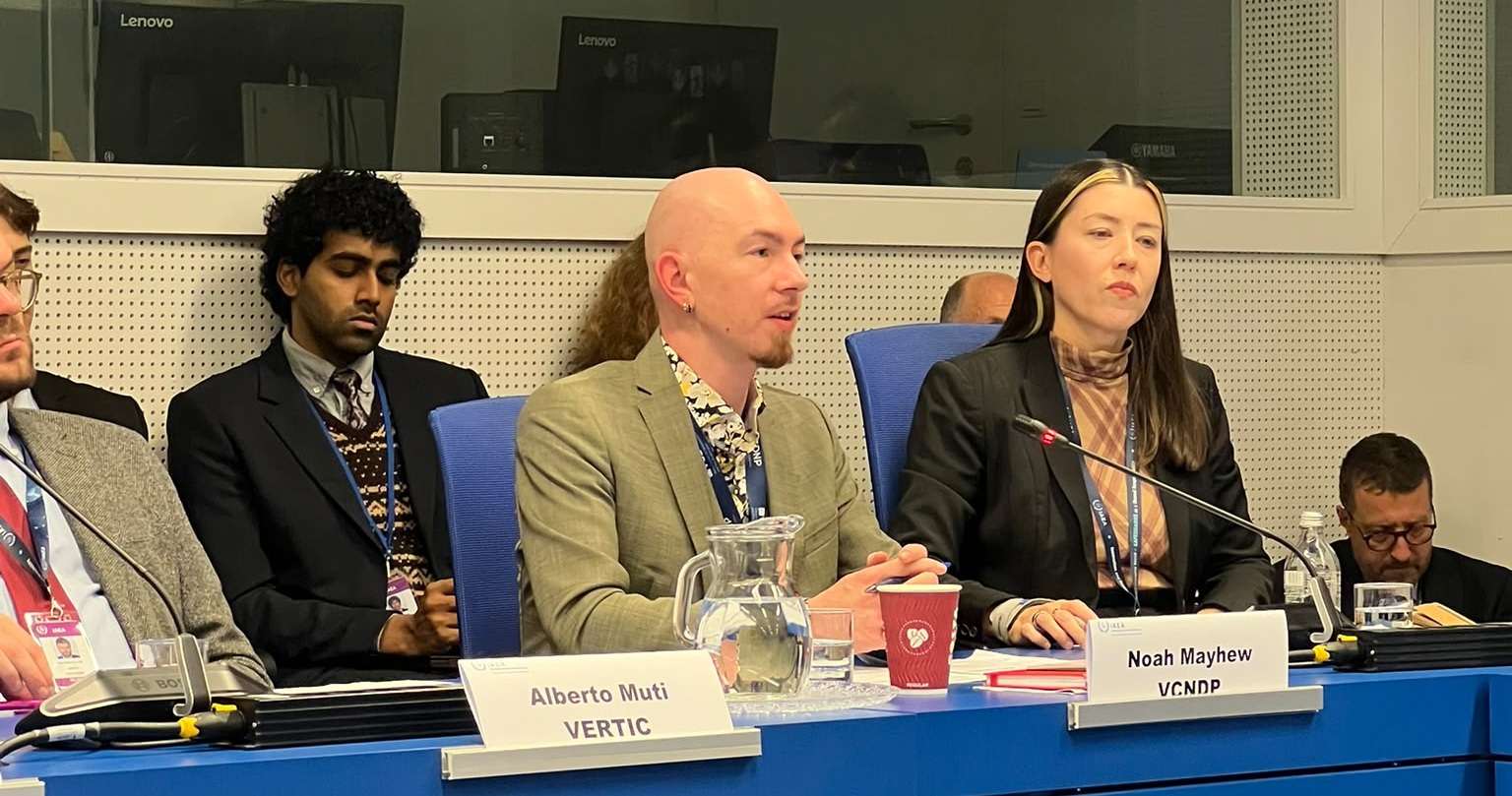
Mr. Mayhew presented research on how natural disasters, pandemics, armed conflict, and non-compliance disrupt safeguards implementation. The paper, co-authored with Neslihan Yanikömer, Alberto Muti, and Julian Schäfer, is forthcoming in the Journal for Peace and Nuclear Disarmament. He argued that crises test not the legal frameworks themselves but the conditions on which they depend: access for inspectors; functioning equipment; and cooperation by the State. Whether the Agency recovered continuity of knowledge, he observed, depended less on the severity of a crisis than on the political nature of the crisis. He proposed a dedicated extrabudgetary fund for crisis response, a non-binding code of conduct on safeguards during armed conflict, and hostile-environment training for all field personnel.
Resilience in Action: Adapting to Increasing Workloads and Shrinking Resources
Presenting research, co-authored with independent data analyst Cecelia Hunter, Mr. Mayhew showed that, while the safeguards budget grew from about €142 million to €172 million between 2018 and 2025, it ended slightly below its 2018 level in real terms. With efficiency savings largely exhausted and the Agency now under zero nominal growth, he proposed six recommendations to “safeguard safeguards”, including, inter alia:
- Building growth in the safeguards workload directly into budget negotiations;
- A one-off, phased budget increase, as Member States had agreed in 2003 and 2009; and
- A one-time top-up of the Agency’s Working Capital Fund.
Industry Night Flash Talk
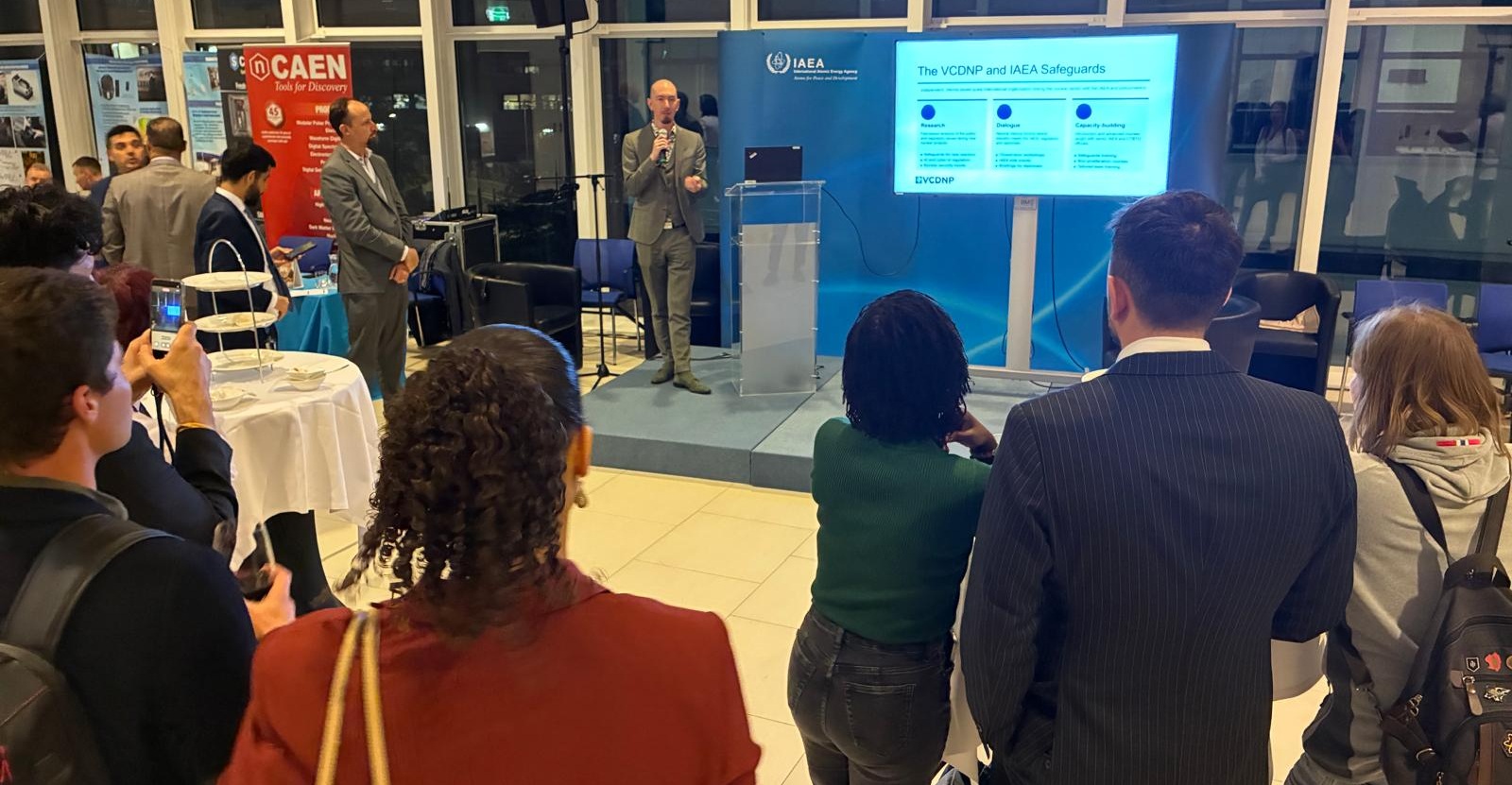
The Symposium’s industry night connected the nuclear industry with the wider safeguards community. In a flash talk, Mr. Mayhew outlined the value the VCDNP adds as an independent, Vienna-based organisation linking the nuclear sector with the IAEA and policymakers, through research, dialogue, and capacity building.