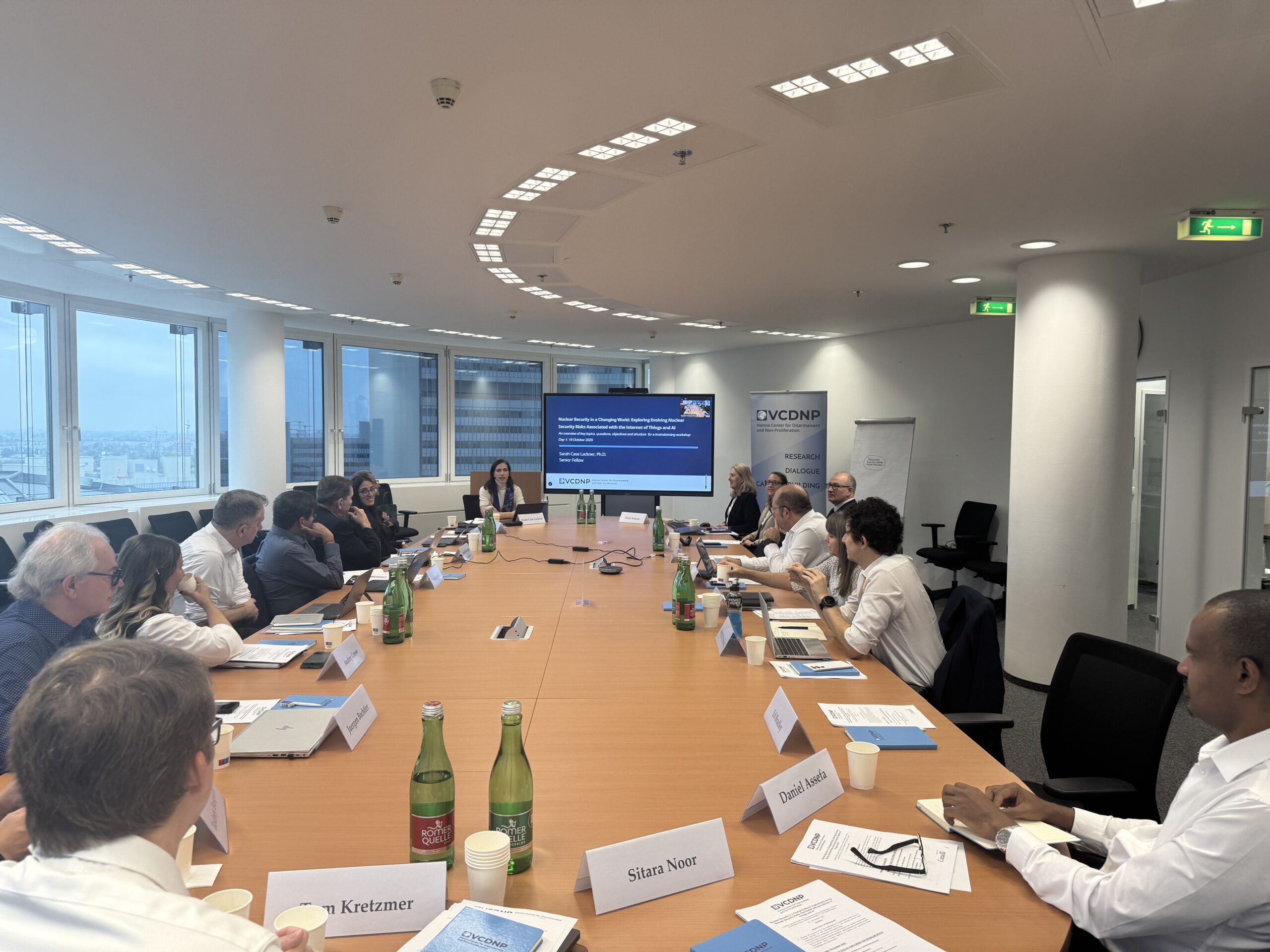
On 10 December 2025, the VCDNP held a webinar on drones, featuring Dr. George Moore, Scientist-in-Residence and Adjunct Professor at the James Martin Center for Nonproliferation Studies. The event was moderated by VCDNP Senior Fellow Dr. Sarah Case Lackner.
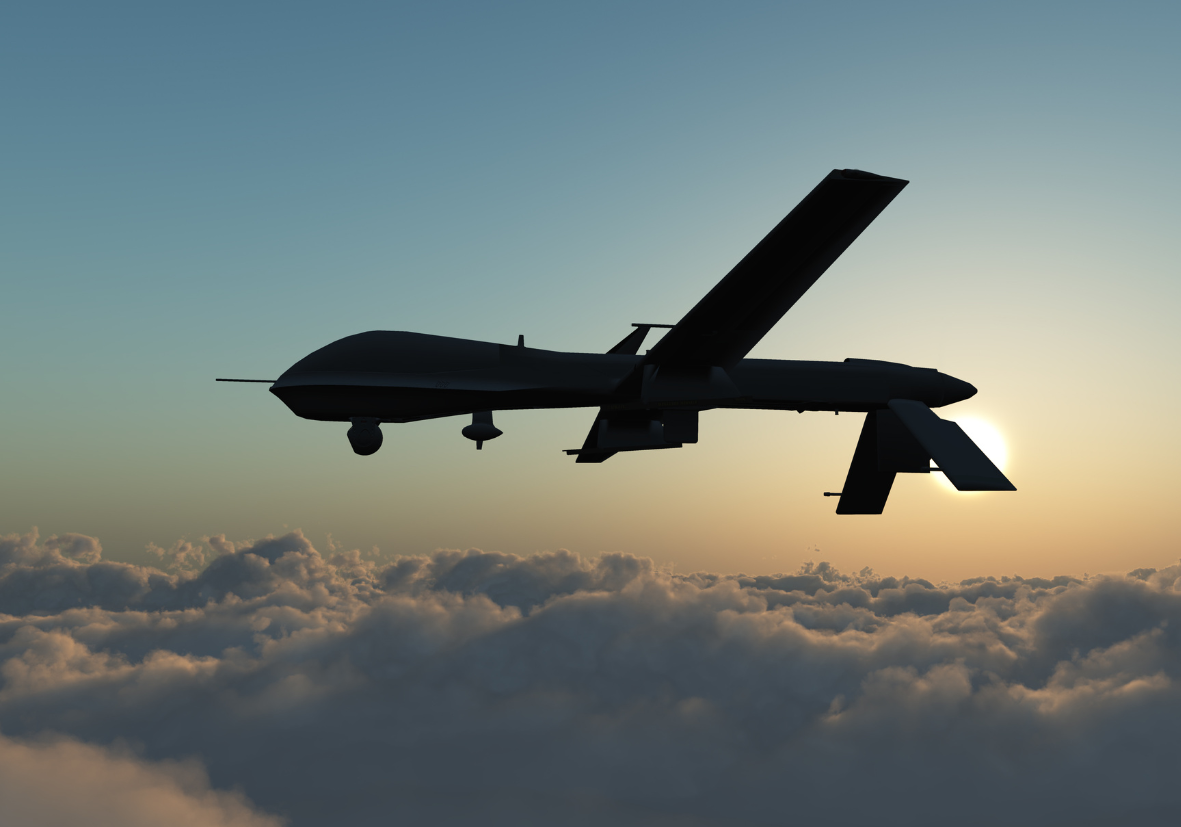
Dr. George Moore provided a comprehensive overview of drone technology and the different types of drones. He indicated that the Russo-Ukrainian war has served as a turning point in the way drones and their useare perceived, especially in military operations. In general, before the Russo-Ukrainian war, drones were not regarded as militarily significant factors in an environment where the enemy had control of the airspace. However, the Russo-Ukrainian war, has shown that drones can be used at low altitudes and can saturate defences. Both Russia and Ukraine have used drones extensively for intelligence gathering, spotting artillery, and attacking infrastructure and other targets. Other national militaries have also begun investing in the next generation of drone technology and are actively examining the potential to incorporate artificial intelligence (AI) into drones.
Despite the rise of the use of drones for a range of purposes, the regulation of both military and civilian use of drones remains a work in progress. Dr. Moore indicated that only two international agreements are applicable to the transfer of drone technology – the Missile Control Technology Regime and the Wassenaar Arrangement. He highlighted that both agreements are voluntary and not universal, which limits the effectiveness of international regulation of drone technology. In seeking to develop a more international regulation on the use of drones, Dr. Moore suggested that a new agreement or treaty could be more successful. He also discussed domestic drone control, noting that these controls vary widely around the globe and that there are still open questions to be resolved.
Dr. Moore ended his remarks focusing on privacy concerns related to the use of drones and their direct impact on people. As drone technology advances, so too do its surveillance capabilities, raising questions about its use with AI for surveillance as well as increasing privacy concerns. During the Q&A session, Dr. Moore highlighted that the combination of the two technologies could be beneficial for defence authorities or even scientists studying animal habits; however, it could also be very damaging if placed in the wrong hands.