


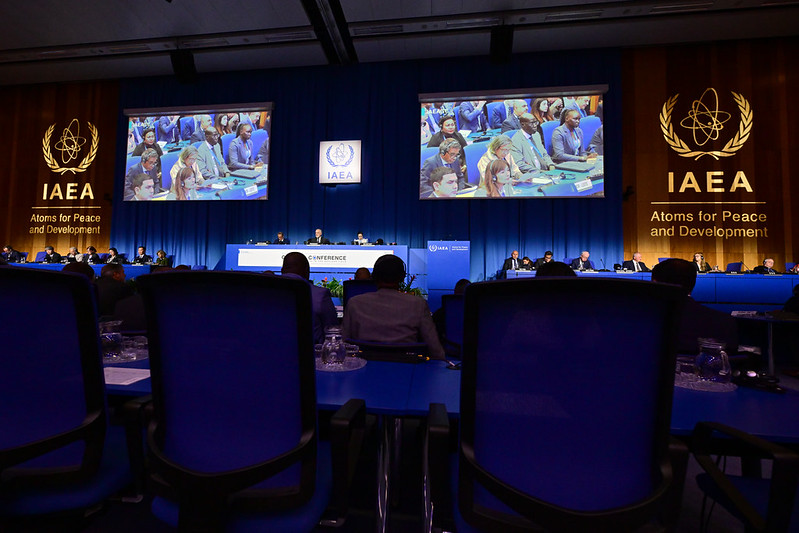
The International Atomic Energy Agency (IAEA) annual General Conference (GC) meetings have grown increasingly contentious in recent years, as geopolitical tensions outside the IAEA spill into its technical work. Since 2022 in particular, GC sessions have continuously run later and later into Saturday morning, as Member States engage in long debates in an effort to reach a consensus outcome, a practice known as the Vienna Spirit.
In a new commentary published by the European Leadership Network, Senior Research Associate and VCDNP’s Programmes and Outreach Manager Noah Mayhew examines the increasing difficulty observed in recent GC meetings to adopt consensus resolutions. He discusses the sources of these difficulties, noting that some relate to the IAEA’s technical work and others are more political in nature. He warns that, if the GC is increasingly unable to adopt consensus resolutions on the IAEA’s technical work in the future, it will further erode the Vienna Spirit. This will result in less clear or outdated instructions to the IAEA Secretariat steered by all Member States and rather concentrate the IAEA’s agenda in the hands of the smaller 35-member Board of Governors.
The commentary concludes by noting that consensus was never automatic, and it will not survive on nostalgia. What matters now, Mr. Mayhew argues, is whether Member States invest the effort it takes to protect technical resolutions from political disagreements in order to ensure the continued effectiveness and efficiency of the IAEA in implementing its technical work.