


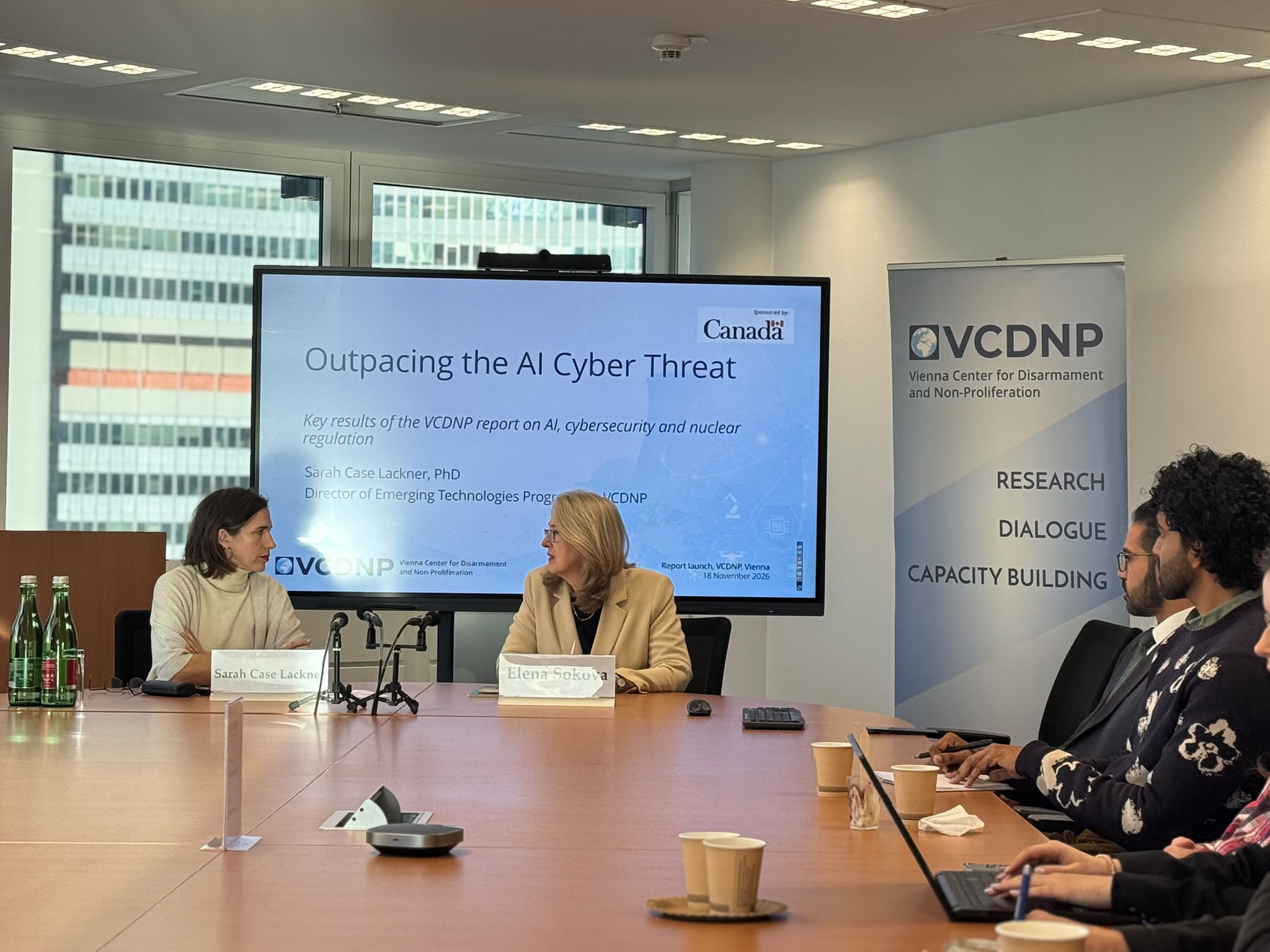

On 18 November 2026, the Vienna Center for Disarmament and Non-Proliferation (VCDNP) held a hybrid launch event to present its new report, Outpacing the AI Cyber Threat, which examines what the rapidly changing AI-enabled cyber threat landscape means for nuclear security and how the nuclear sector's regulatory approach can adapt. The report draws on discussions held during a two-day workshop in Vienna in June 2026 and a follow-up discussion with practitioners held in October 2026 on the margins of the Canadian Nuclear Society's DIET conference. The report also draws on two papers commissioned for the project, by Mr. David Smeatham and Mr. Tom Smeatham (Ennuvo) and Ms. Kim Lawson-Jenkins.
The event opened with remarks from VCDNP Executive Director Elena Sokova, who welcomed participants to the launch of the latest report in the VCDNP’s Nuclear Security in a Changing World series. Ms. Sokova noted that while AI is helping to process more data, find patterns faster, and write code with less training, these same capabilities underpin a growing number of AI-enabled cyberattacks, making AI as much a cybersecurity challenge as a technology challenge. She emphasised that, as one of the most highly regulated sectors in the world, the civil nuclear sector's ability to respond to new threats is shaped by regulation and that if approvals and oversight cannot keep pace, even well-prepared operators will fall behind.

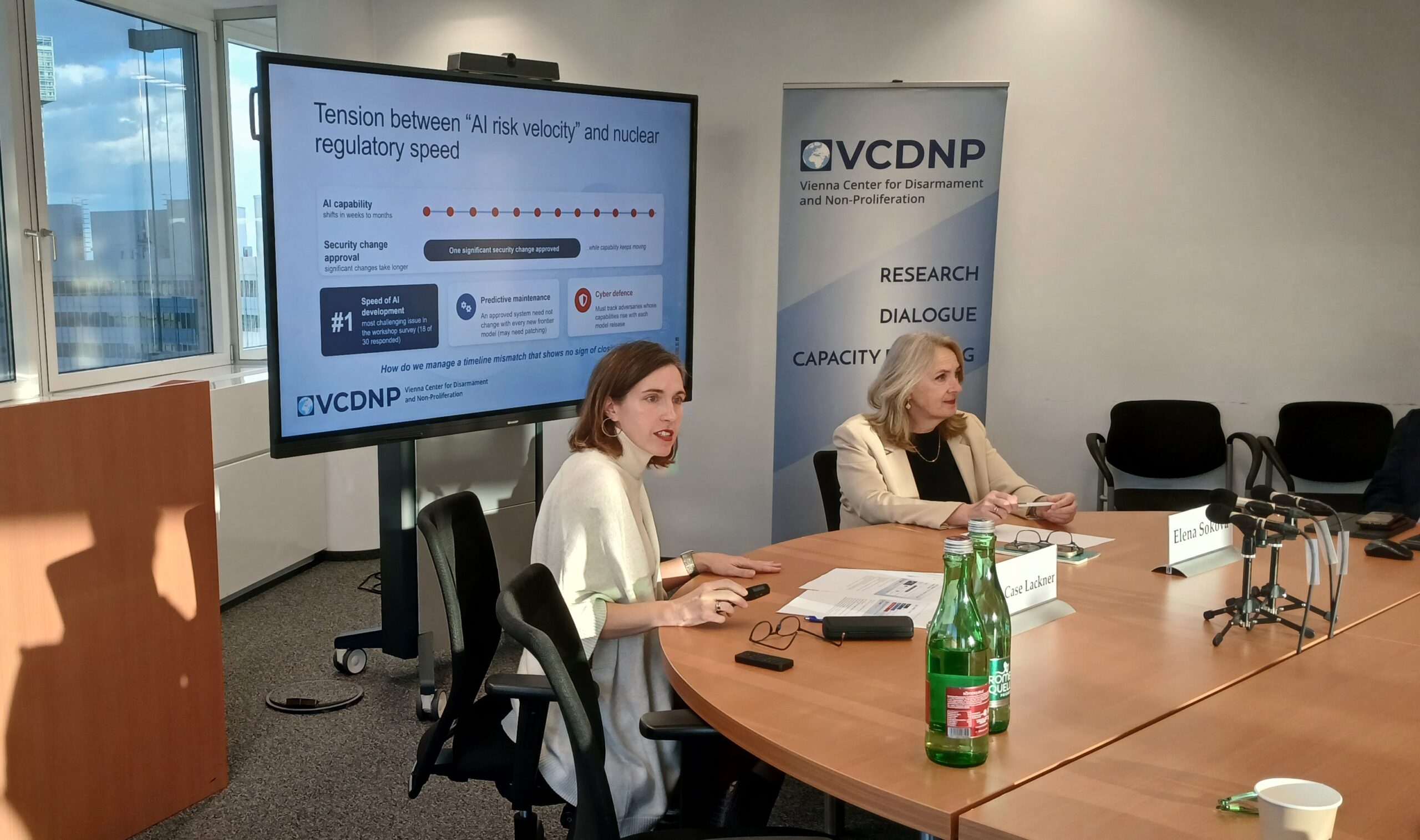
VCDNP Emerging Technologies Programme Director Dr. Sarah Case Lackner then presented the report's key findings. She highlighted that AI is changing attackers' capabilities on a timescale of months, with frontier models now able to discover and exploit software vulnerabilities autonomously and openly available models trailing the frontier by only four to seven months in cyber capability. At the same time, the nuclear sector faces a widening attack surface because of digitisation, ageing operational technology, supply chain exposure, and the vulnerabilities of AI systems themselves.
Dr. Case Lackner explained that this creates a tension between "AI risk velocity" and the far longer timelines of nuclear regulatory approvals, a mismatch that a survey of participants in the June workshop identified as the most challenging issue at the intersection of AI and cybersecurity. She argued, however, that regulations themselves need not move quickly; rather, the measures licensees use to implement them, and the processes for approving those measures, must become more agile, supported by faster-moving informal guidance from regulators.

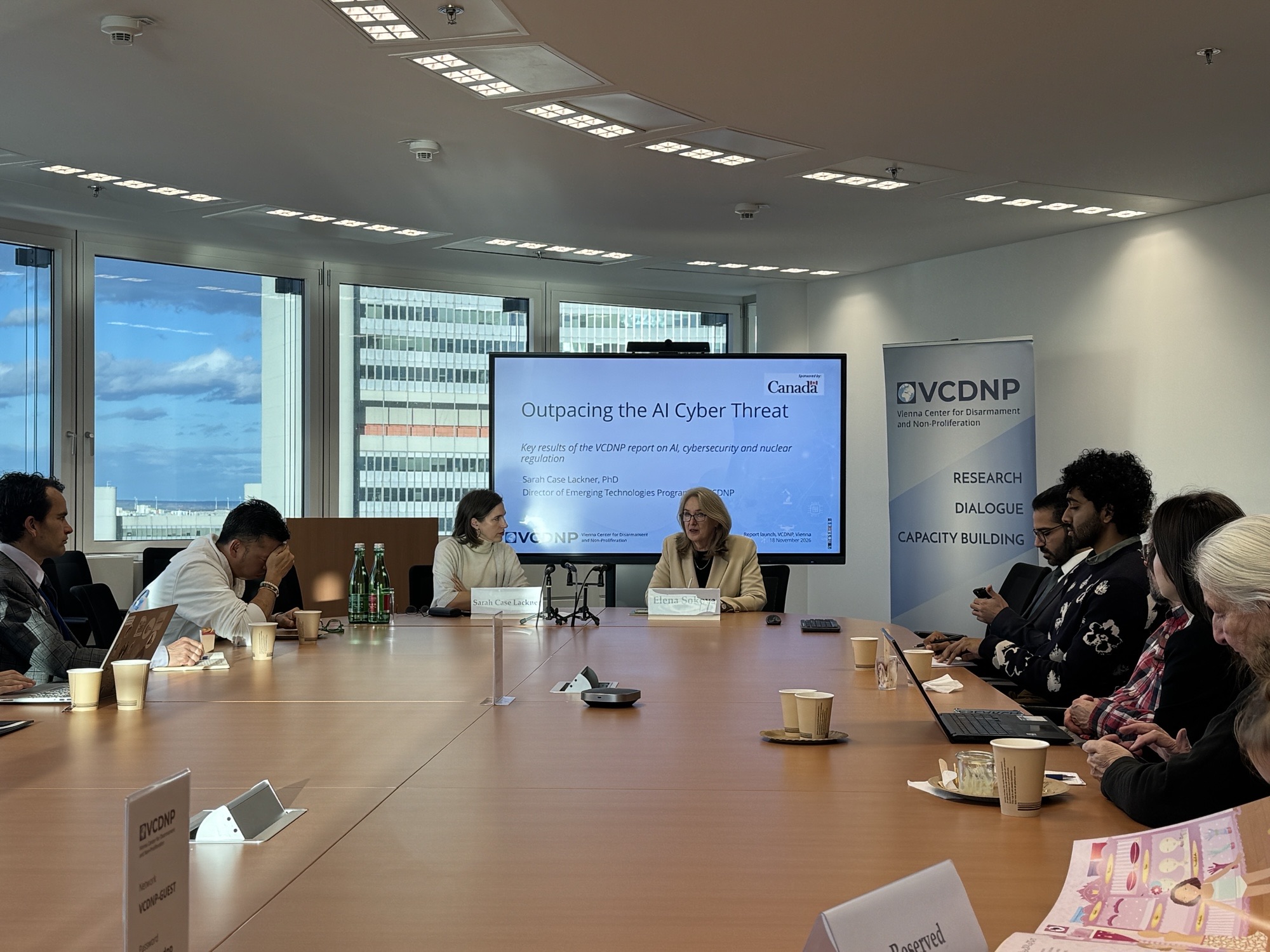
The presentation set out the report's two conclusions: that AI should be adopted where its benefits outweigh the full costs, including security costs, beginning with cyber defence; and that national regulatory approaches will need to adapt to the speed of AI. These were followed by five principles for regulating nuclear cybersecurity as AI transforms both attacks and defence. As a next step, Dr. Case Lackner proposed testing the principles against defined use cases, such as AI agents for cyber defence, through regulatory sandbox exercises.
The VCDNP extends its gratitude to Global Affairs Canada for its generous support of the report and the June workshop.