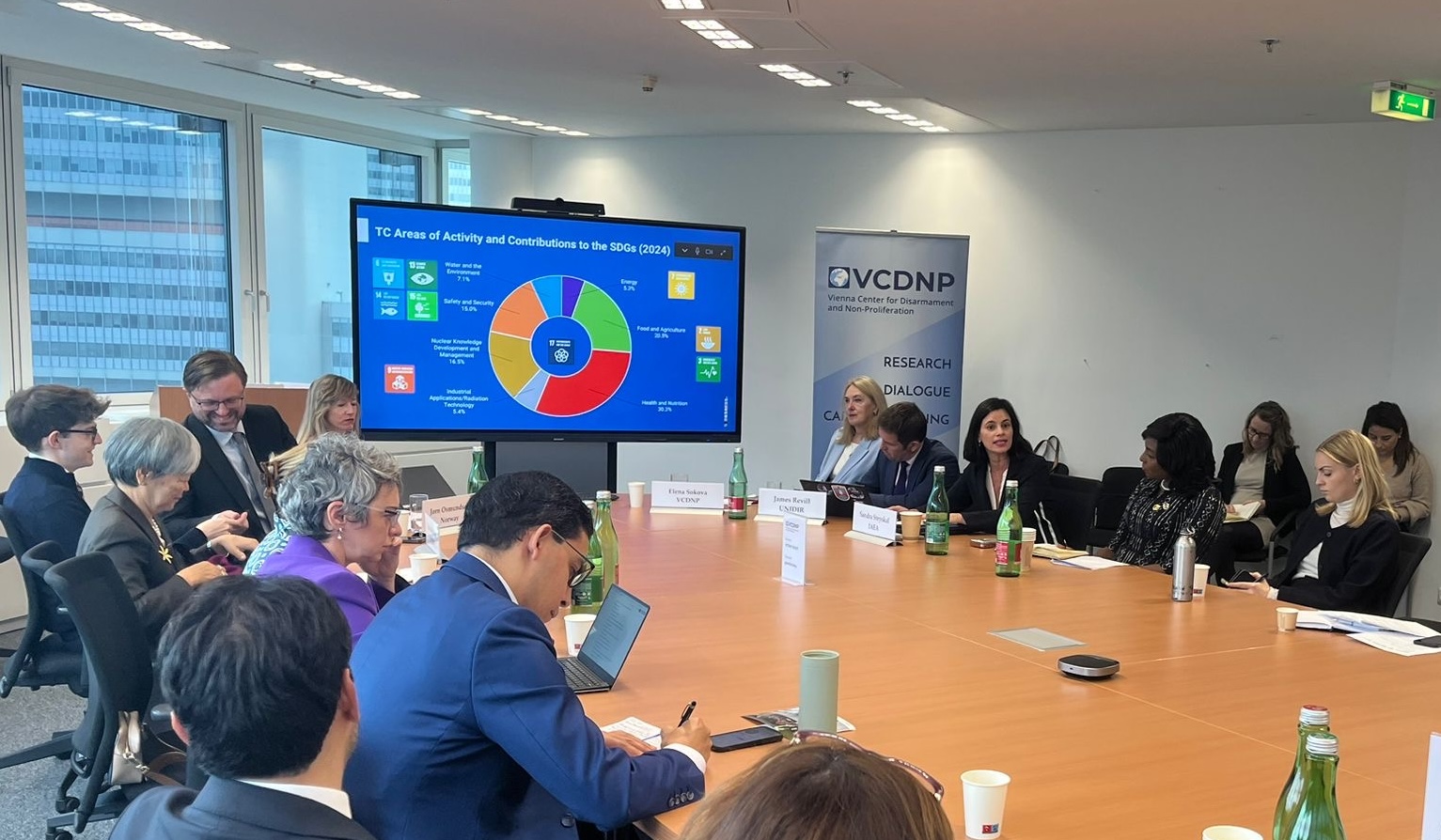
As part of a wider research and engagement project, the VCDNP is releasing its first two publications on space security and the prevention of an arms race in outer space (PAROS), written by Research Fellow Louis Reitmann.
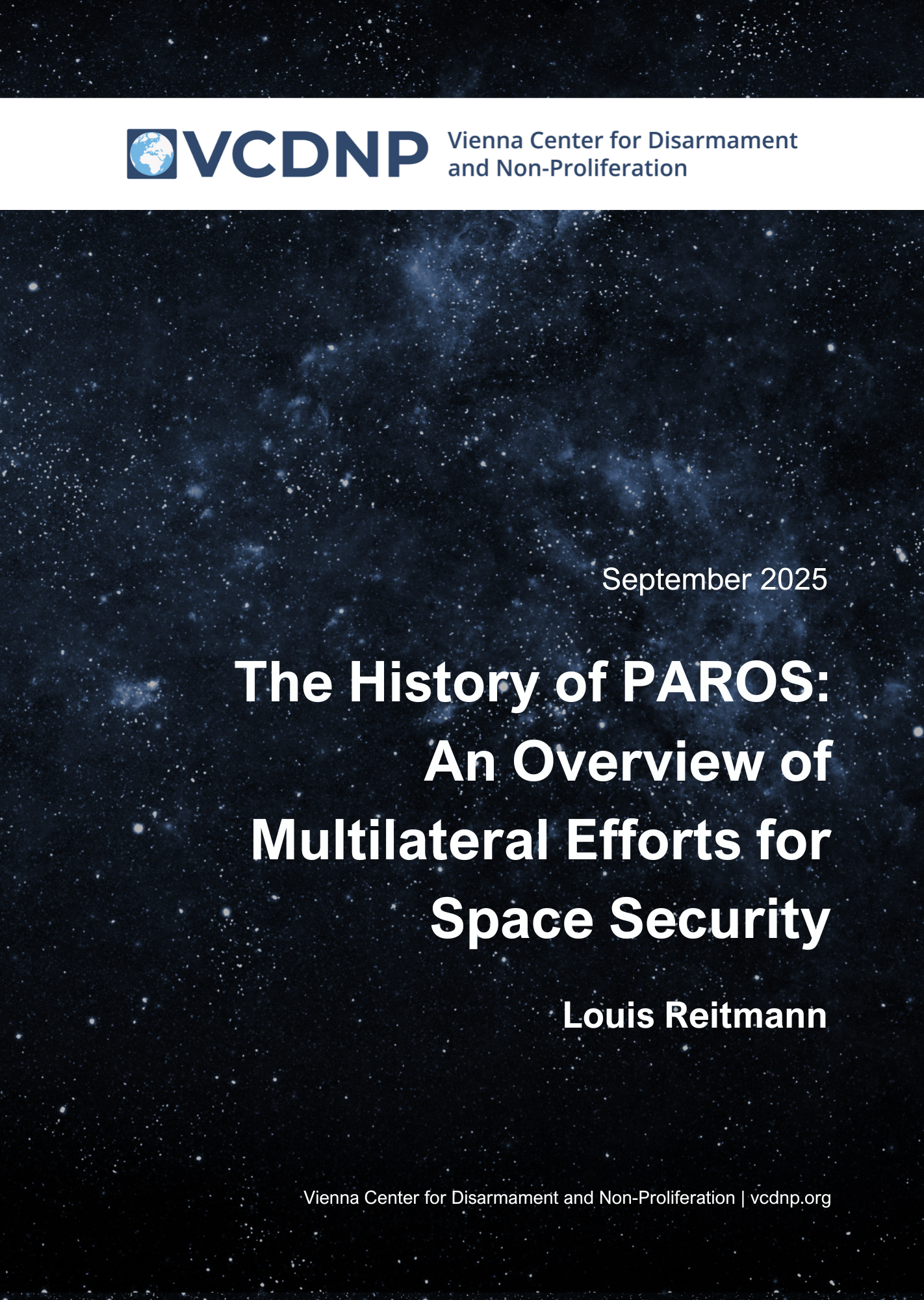
The History of PAROS provides a detailed summary of multilateral efforts for PAROS from their foundations in the 1978 UN General Assembly’s Special Session on disarmament to the latest meeting of the Open-Ended Working Group on PAROS in All its Aspects in July 2025.
The paper highlights key achievements and remaining fault lines across over 40 years of dialogue on space security. It touches on major themes, including the tension between a legally binding and non-legally binding approach to PAROS, recurring questions on definitions and verification of arms control in space, as well as recent shifts and new perspectives, such as the initiative for norms of responsible behaviour in space.
For each of the 10 multilateral bodies and initiatives covered, the paper informs about their mandates, the content of discussions, outcomes, as well as the substantive and political issues that have often hindered progress towards a comprehensive space security regime. Explaining historical and political context, the paper is a useful resource for space diplomats in Geneva, Vienna, and New York, serving as a refresher for delegates to the Conference on Disarmament and the UNGA First Committee, but also as an introduction for delegates to the UN Committee on the Peaceful Uses of Outer Space.
A Results-Oriented and Form-Flexible Approach to PAROS makes the case for a new perspective on addressing space security.
It suggests that States do not have to hold out for consensus on either a legally binding or non-legally binding approach to PAROS to work towards their shared goal of a secure space domain. Instead, it encourages States to develop rules, guidelines, policies, and instruments that address identified space threats – from unauthorised close approaches to intentional debris creation – unilaterally and with partners. Prioritising impact over format, it promotes the flexible adoption of voluntary or legally binding measures or combinations of both along defined threat reduction pathways.
This approach is informed by key developments analysed in the paper, including the limitations of PAROS processes so far, the pragmatic progress made through the initiative for norms of responsible behaviour, and the increasing urgency for space threat reduction given the growing salience of space in defence strategies and the development of new counterspace capabilities by several States.
The paper also proposes to update the reference point for PAROS processes to “the protection of peaceful uses of space”. Not only would this better reflect the fast-growing civil and commercial uses that dominate the modern space domain, it would also acknowledge the priority that espeecially Global South countries place on protecting them. Importantly, “the protection of peaceful uses of space” is not charged with connotations of legally binding or non-legally binding instruments and does not suggest that either is more suitable for space threat reduction than the other.
Finally, the paper offers further recommendations for enhancing the effectiveness of PAROS processes, including to:
These papers were produced with financial support by the UK Foreign, Commonwealth & Development Office.