


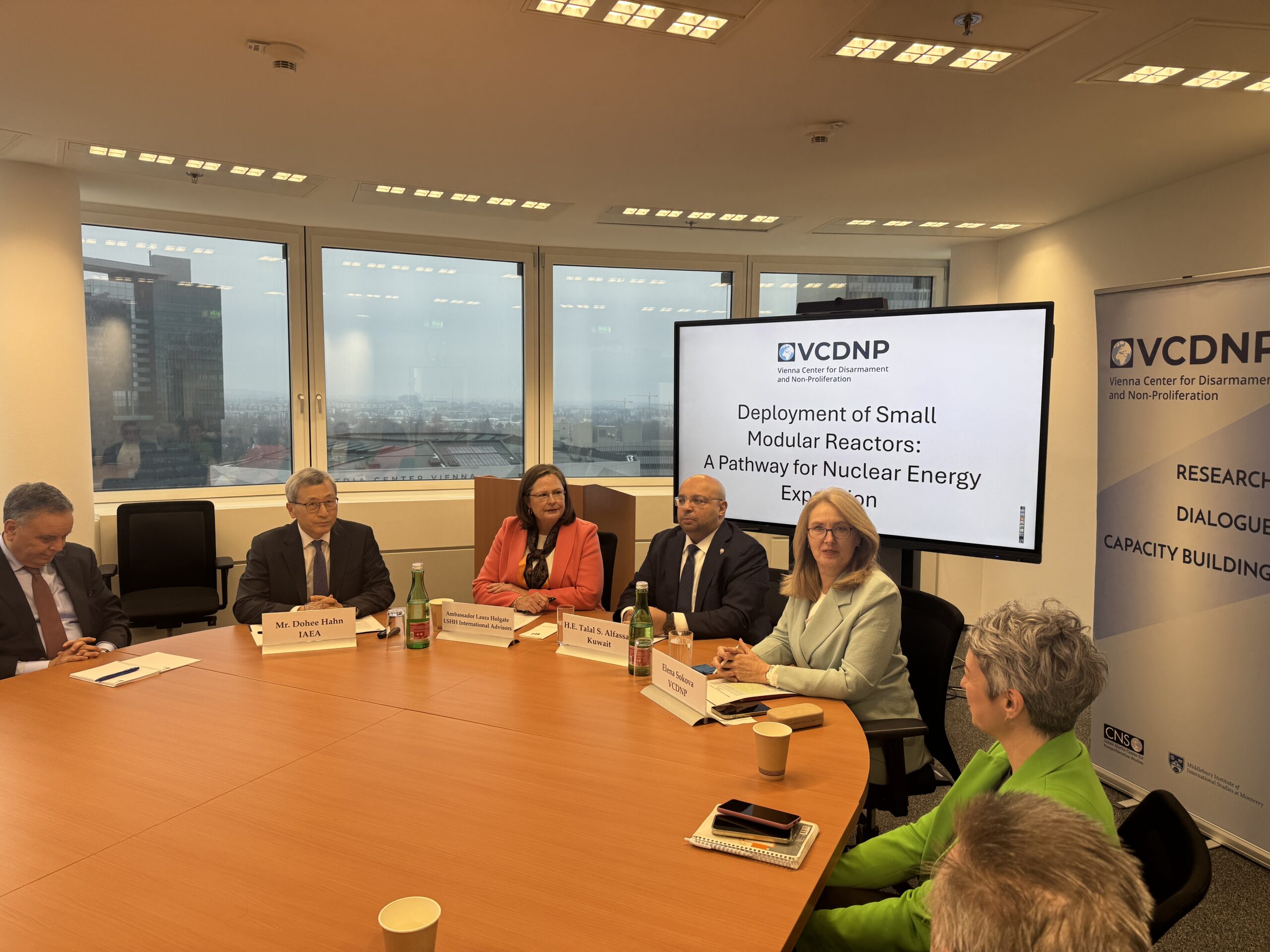
The VCDNP welcomed members of the Vienna diplomatic community and experts from the International Atomic Energy Agency (IAEA) and the public to a panel discussion on small modular reactors (SMRs) as a promising solution to rising energy needs on 21 January 2026.
Discussions focused on the potential benefits of SMRs for carbon-free and resilient energy supplies, powering AI data centres, and desalination for water security, how to secure financing and ensure the economic viability of SMRs, and on IAEA activities to support regulators and SMR developers in meeting nuclear safety, security, and safeguards requirements.
Speakers
Ambassador Talal S. Alfassam, Permanent Representative of the State of Kuwait to the International Organisations in Vienna
Ambassador (ret.) Laura S.H. Holgate, President, LSHH International Advisors
Dr. Dohee Hahn, Director, Division of Nuclear Power, International Atomic Energy Agency (IAEA)
The event was moderated by VCDNP Executive Director Elena K. Sokova.

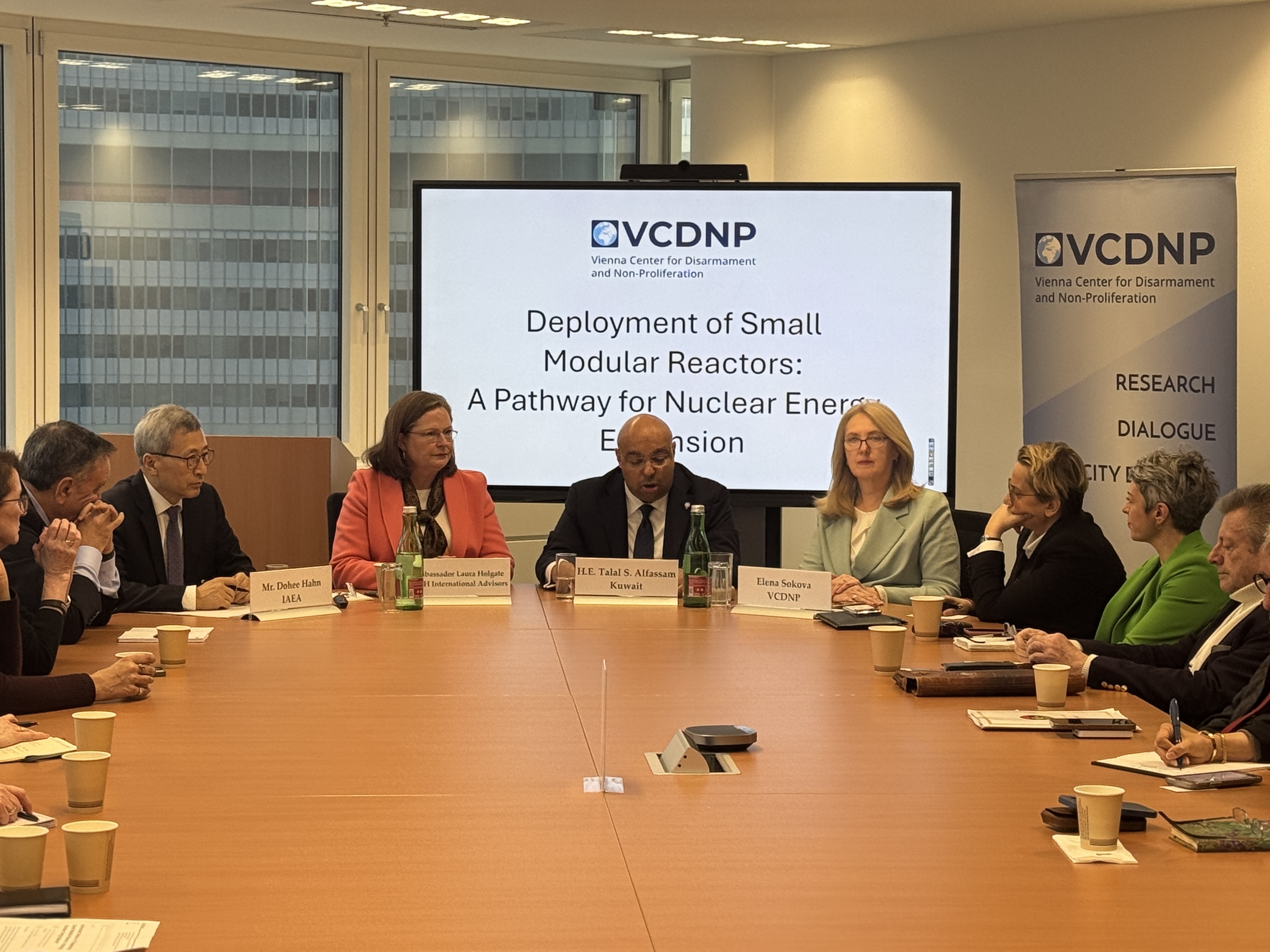
Ambassador Alfassam underlined the strong global interest in SMRs. Growing populations with an enormous need for steady, secure supplies of affordable, carbon-free electricity are looking towards SMRs as a solution that comes without the high upfront costs and long construction times that have dented the appeal of traditional nuclear power plants. Being more adaptable, SMRs also promise custom solutions for high-energy applications in water desalination, hydrogen production, and heat generation in industrial plants.
However, he warned that SMRs are not a quick fix. Their novel characteristics – new fuel types, transportable reactors, or autonomous operation – create new challenges for non-proliferation and the security of nuclear material. The development and deployment of SMRs must avoid undermining international security and public confidence in nuclear power. This was, not least, key for ensuring the economic viability of factory-fabricated, modular reactors. To achieve this, the IAEA, with its expertise and regulatory frameworks on nuclear safety, security, and safeguards was an indispensable partner for end-user countries and developers.
In closing, he outlined four main challenges facing countries looking to deploy SMRs:
- Regulatory frameworks and licensing must be adapted to the novel characteristics of SMRs.
- Countries must invest in training professionals and setting up institutions for SMR regulation and oversight.
- New methods are needed to ensure effective safeguards on SMRs.
- Countries must understand the economic credibility of SMR designs, especially since first-of-a-kind reactors will be expensive.
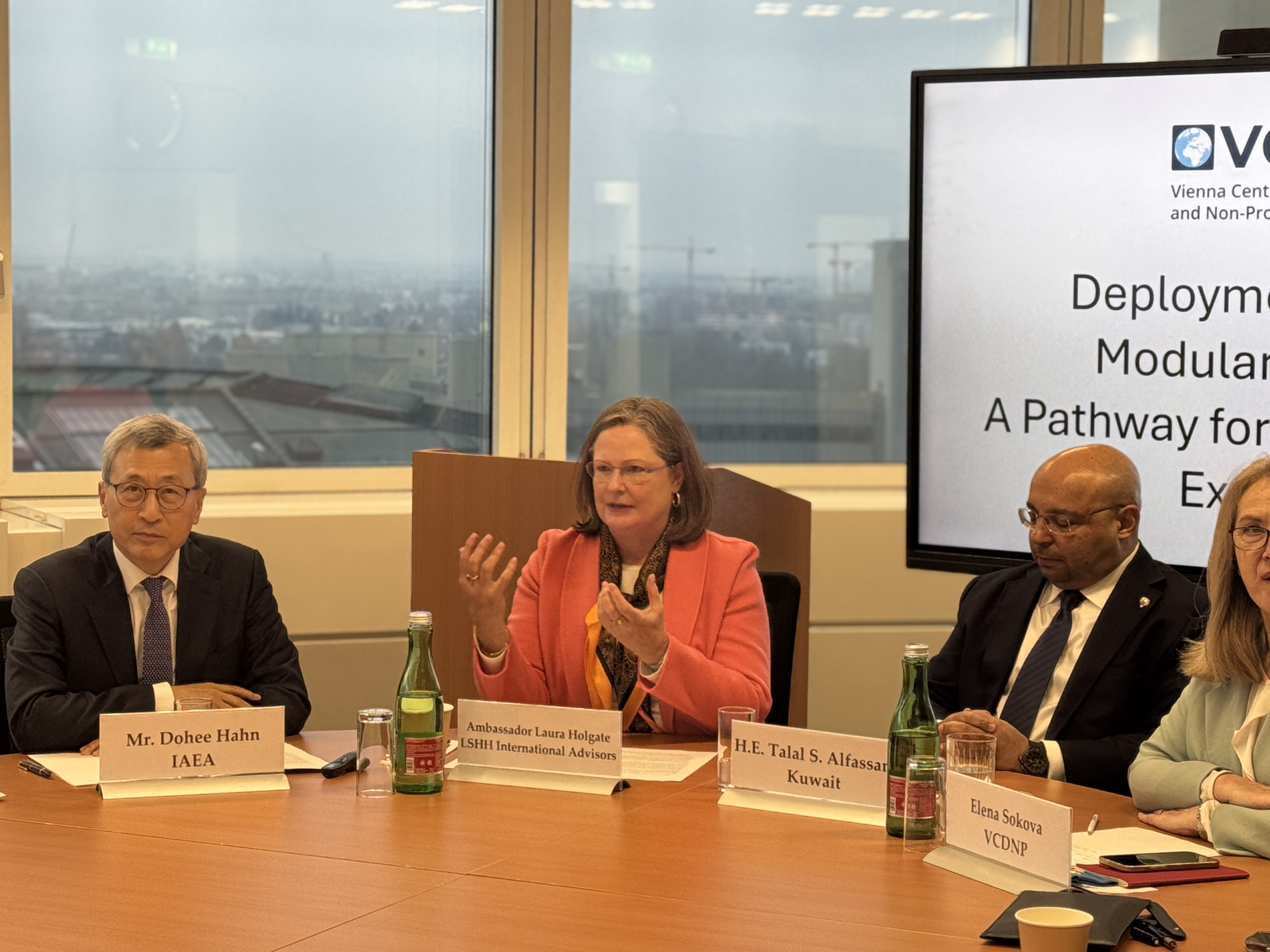
Ambassador (ret.) Holgate introduced current trends in the United States, where ca. 60% of today’s 120 SMR designs are being developed. Successive administrations have sought to smooth the road for SMR developers while advocating for ‘3S by design’, which aims for SMRs to be created with nuclear safety, security, and safeguards requirements in mind, avoiding later retrofits or dangerous security or proliferation gaps. Meeting international 3S standards is essential for exporting SMRs to other countries.
American developers, however, are focused on the US market given the large domestic demand. This lack of attention to international 3S standards could be a critical disadvantage since scaling sales of one design is key for competitiveness.
Ambassador (ret.) Holgate underlined policy priorities to support the SMR industry:
- Developers need regulatory clarity, stability, and harmonisation of rules and oversight mechanisms.
- The SMR sector needs a sustainable talent pipeline, supported by investment in education and training.
- New financing models are needed to share the financial burden of first-of-a-kind reactors among end-user countries. The World Bank has changed its policy to allow investment in nuclear energy projects and regional development banks are following suit. Countries must use this opportunity.
- States must adequately fund the IAEA to monitor and inspect novel reactors.
- For economic viability, the diversity of reactor designs must be consolidated to seven or eight models, which can be tailored to different end uses.
- Countries must manage expectations around localised employment in SMR supply chains.
In closing, she identified the biggest challenge surrounding SMRs in the United States as meeting the immense 50 GW in additional power projected to be required for AI data centres in the next decade. While there is strong investment from tech firms in SMRs as a resilient source of cheap power that can be attached directly to data centres, those investors have a limited understanding of the nuclear sector and yet emerging SMR technologies. What is more, the Silicon Valley culture to ‘move fast and break things’ is not suited for an industry that depends on safety and stability for public acceptance.

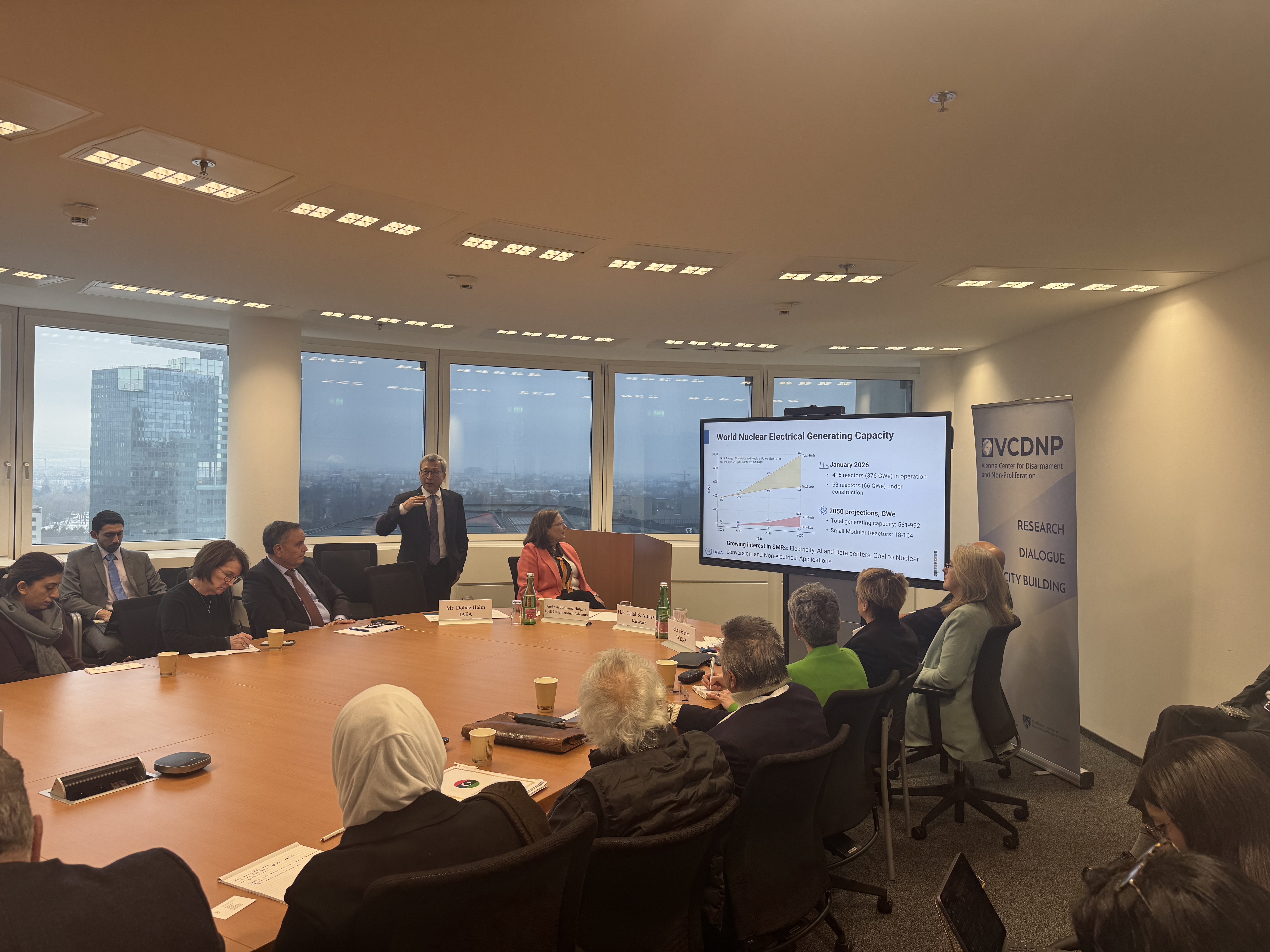
Dr. Hahn provided an overview of the current and projected deployment of SMRs, including two SMRs already in operation in China and Russia and the further six reactors being built in Argentina, Canada, China, Russia, and Uzbekistan. Further designs are in the commissioning phase, with a projected 15 SMRs to come online in the 2030s. However, most of these will be first-of-a-kind reactors used for proof of concept, which illustrates that SMRs have yet to demonstrate that they meet international safety and security standards and are economically competitive.
To support safe innovation, the IAEA offers a review service to SMR developers to assess the safety of new designs. The Agency also works to raise SMR developers’ awareness around ‘safeguards by design’ to ensure that the developed models are built to facilitate mandatory safeguards monitoring and inspections without costly retrofits. Dr. Hahn briefed the audience on the IAEA Platform on SMRs and their Applications; Nuclear Harmonization and Standardization Initiative, which brings together policy-makers, regulators, and SMR developers to advance regulatory innovation and harmonisation for SMRs; and the new IAEA SMR School to raise awareness about key aspects of SMR development and deployment among government and regulatory representatives.
The open discussion explored diverse questions, from government support for building first-of-a-kind SMRs to incentivise commercial investment, and the development of nuclear safety and security cultures in the SMR sector, to the IAEA’s resourcing to conduct monitoring and inspections if numerous SMRs come online around the world.