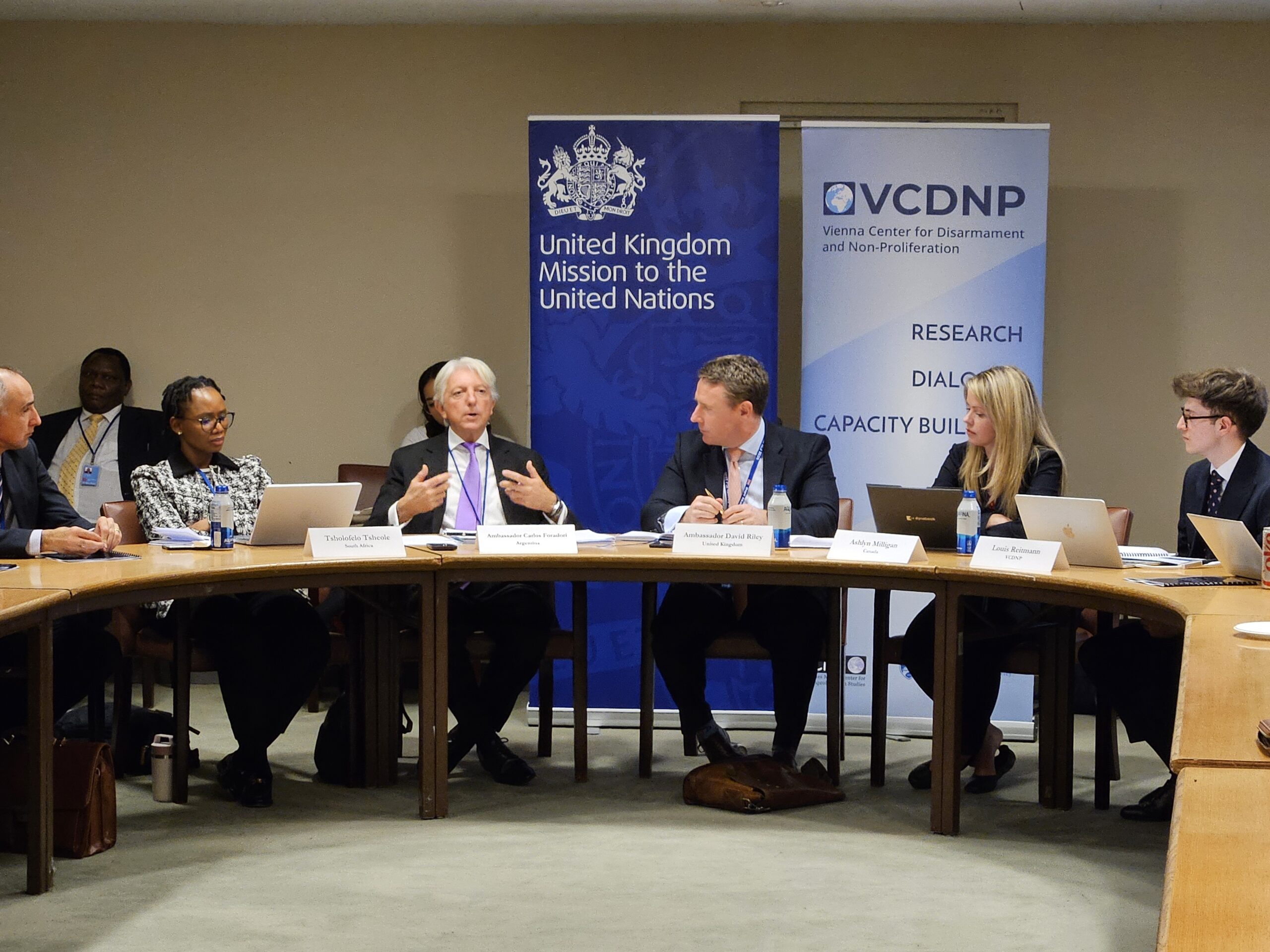
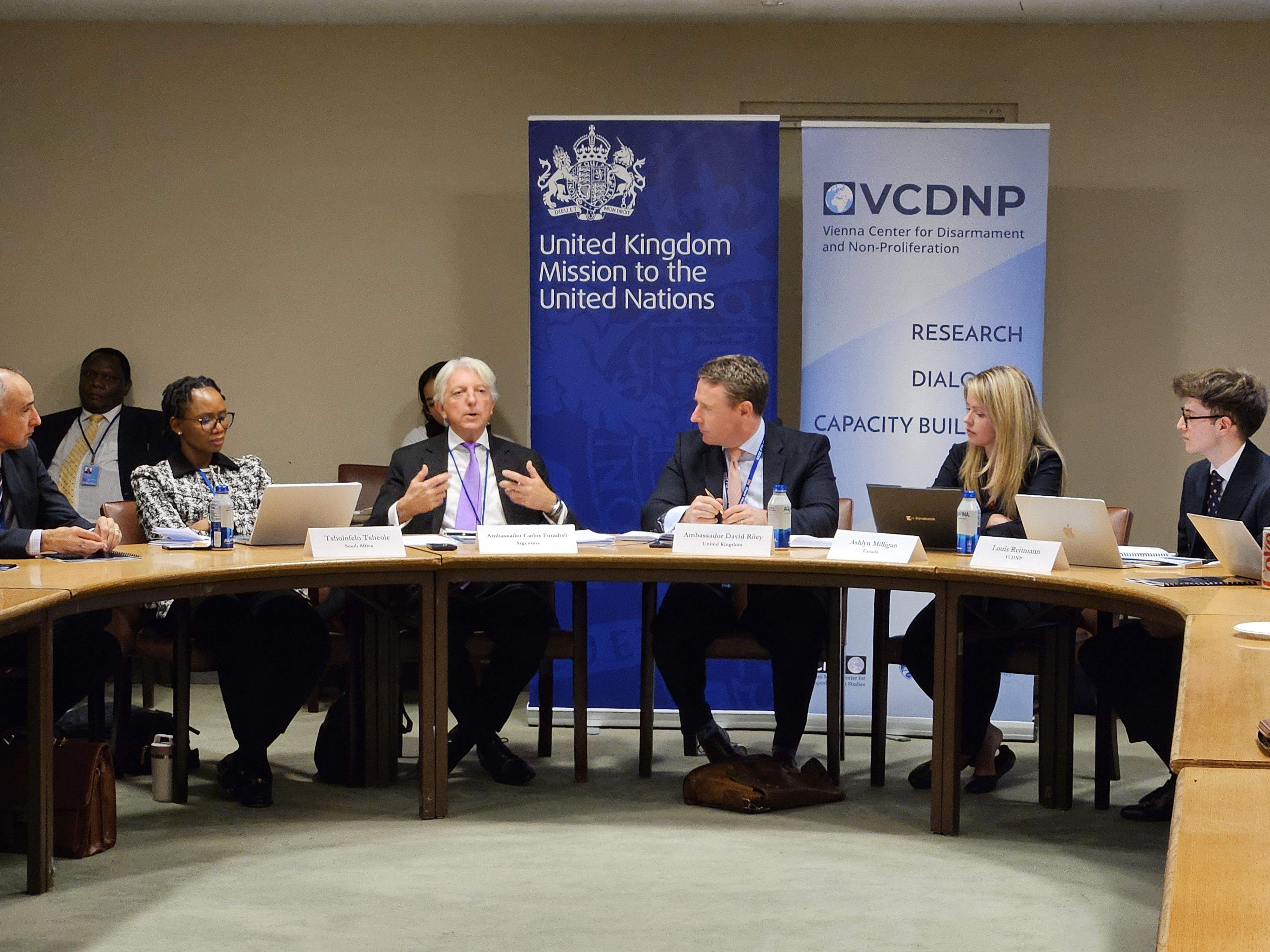
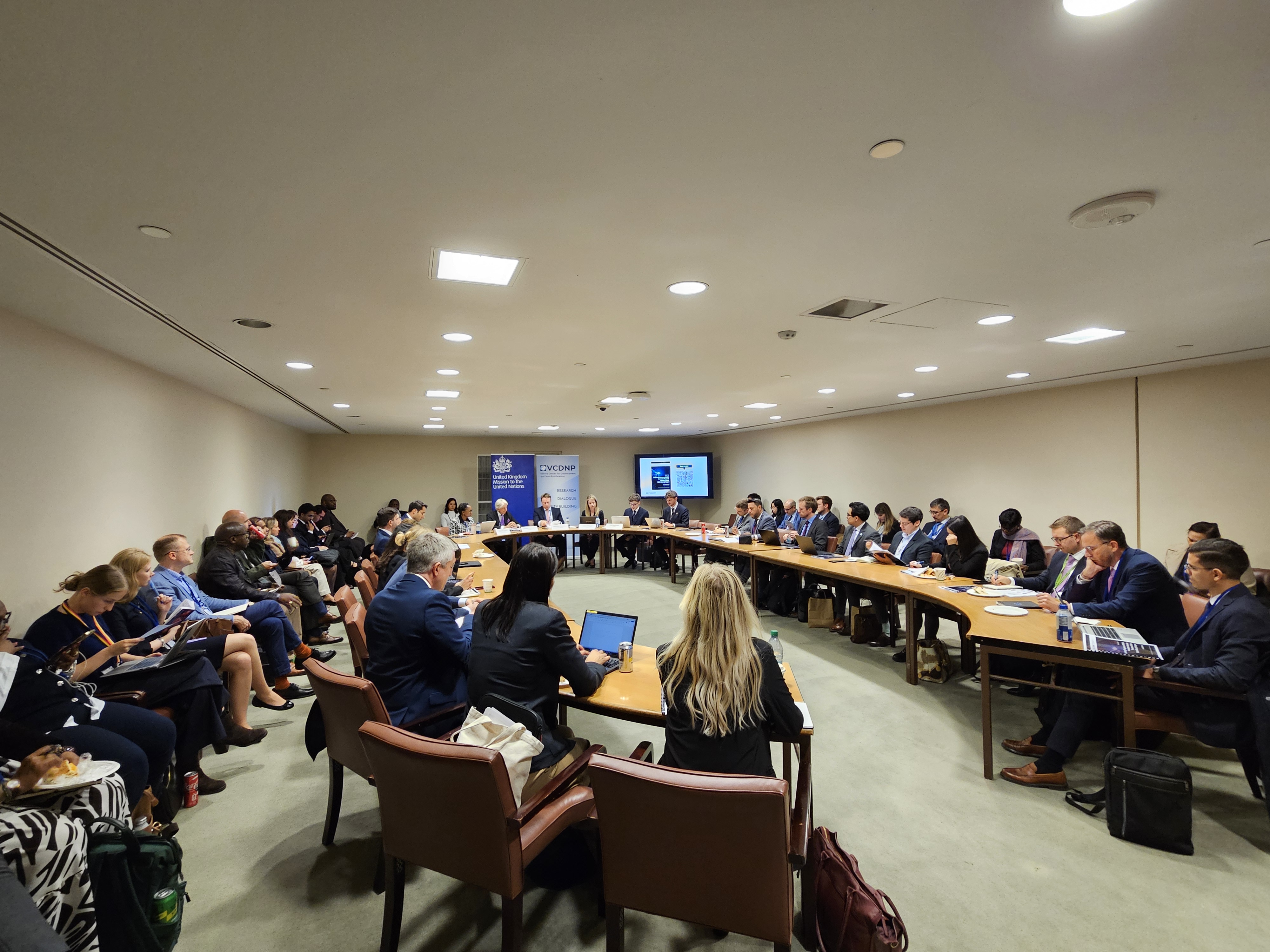
The VCDNP and the United Kingdom organised a joint event on the prevention of an arms race in outer space (PAROS) during the UN General Assembly First Committee meeting, on 24 October 2025. The event presented innovative, concrete measures for space threat reduction and effective multilateral dialogue on PAROS and outlined actions that States can take ahead of the next session of the Open-Ended Working Group on PAROS in All its Aspects in July 2026.
These ideas were developed during a workshop convening diplomats and officials from 18 countries on all continents, experts, and space industry in September 2025, organised by the VCDNP and the Geneva Centre for Security Policy. A summary of these ideas can be found in the report linked below.
The event was moderated by Ambassador David Riley, Permanent Representative of the United Kingdom to the Conference on Disarmament. The speakers were:
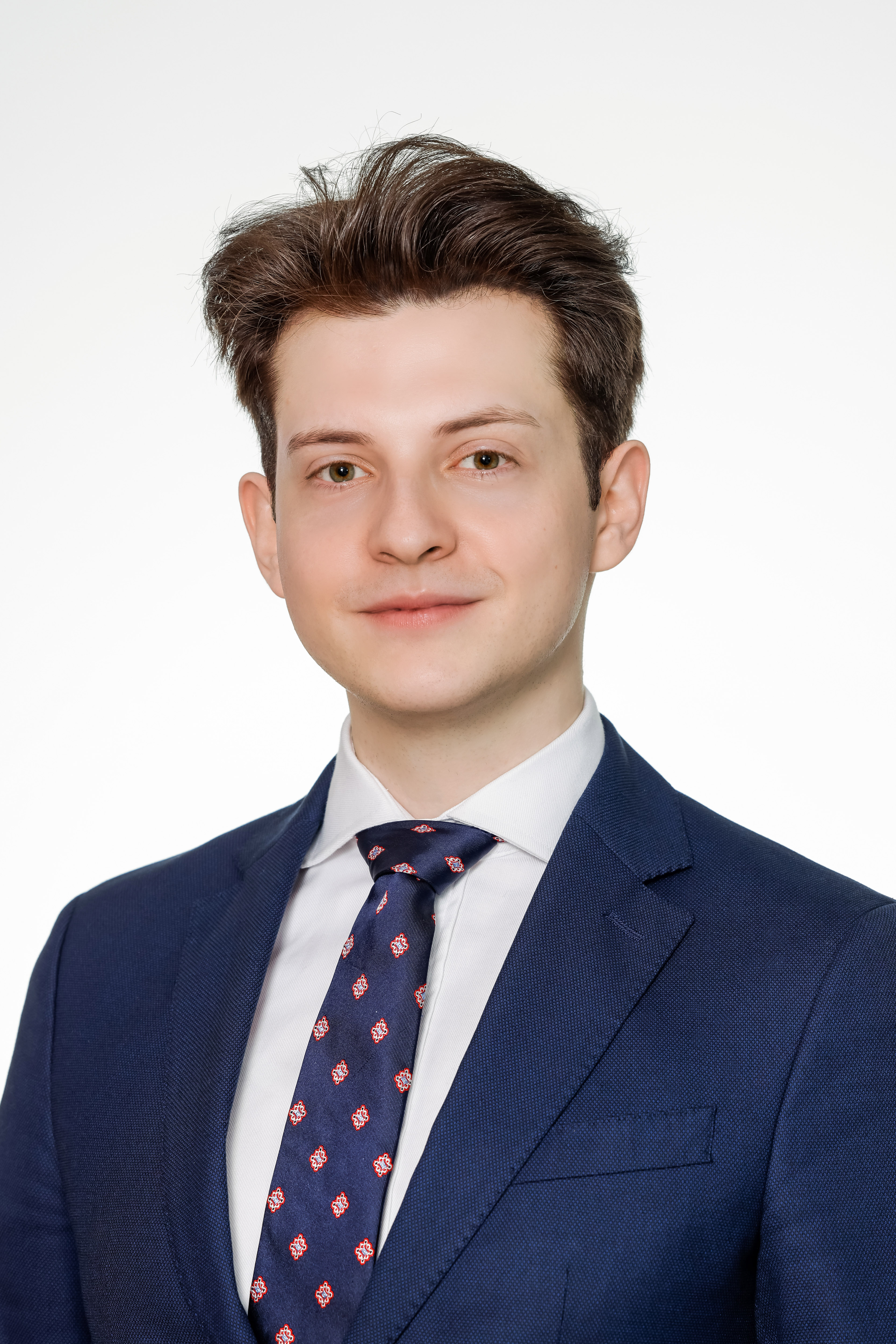
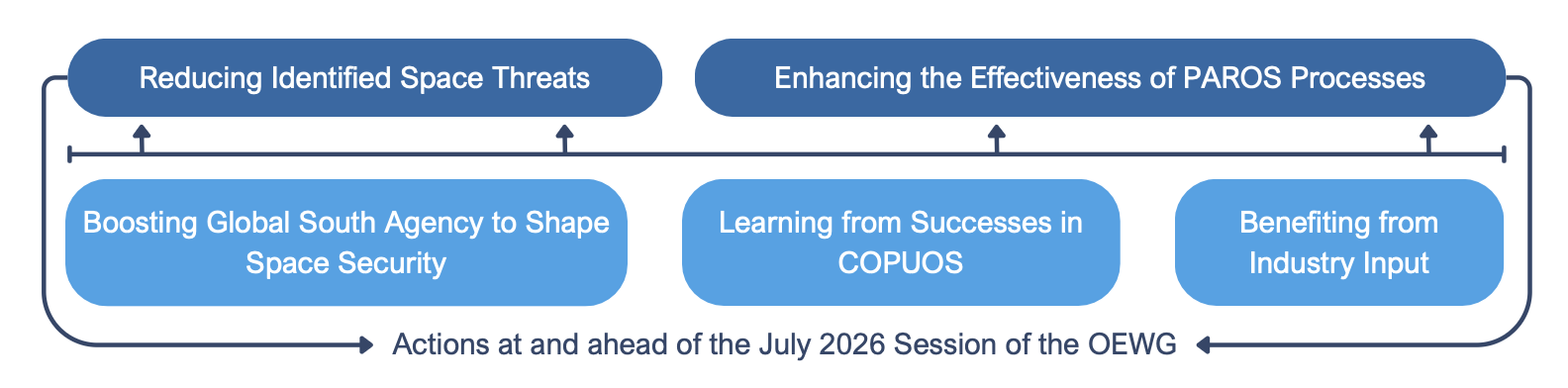
Introducing the report, Research Fellow Louis Reitmann explained the objectives of the workshop: to identify ways forward for space threat reduction and to enhance the effectiveness of UN bodies on PAROS. The workshop also covered three areas for action that can support States in achieving these goals: boosting the agency of Global South countries to shape space security, learning from governance successes and working methods in COPUOS, and benefiting from industry input.
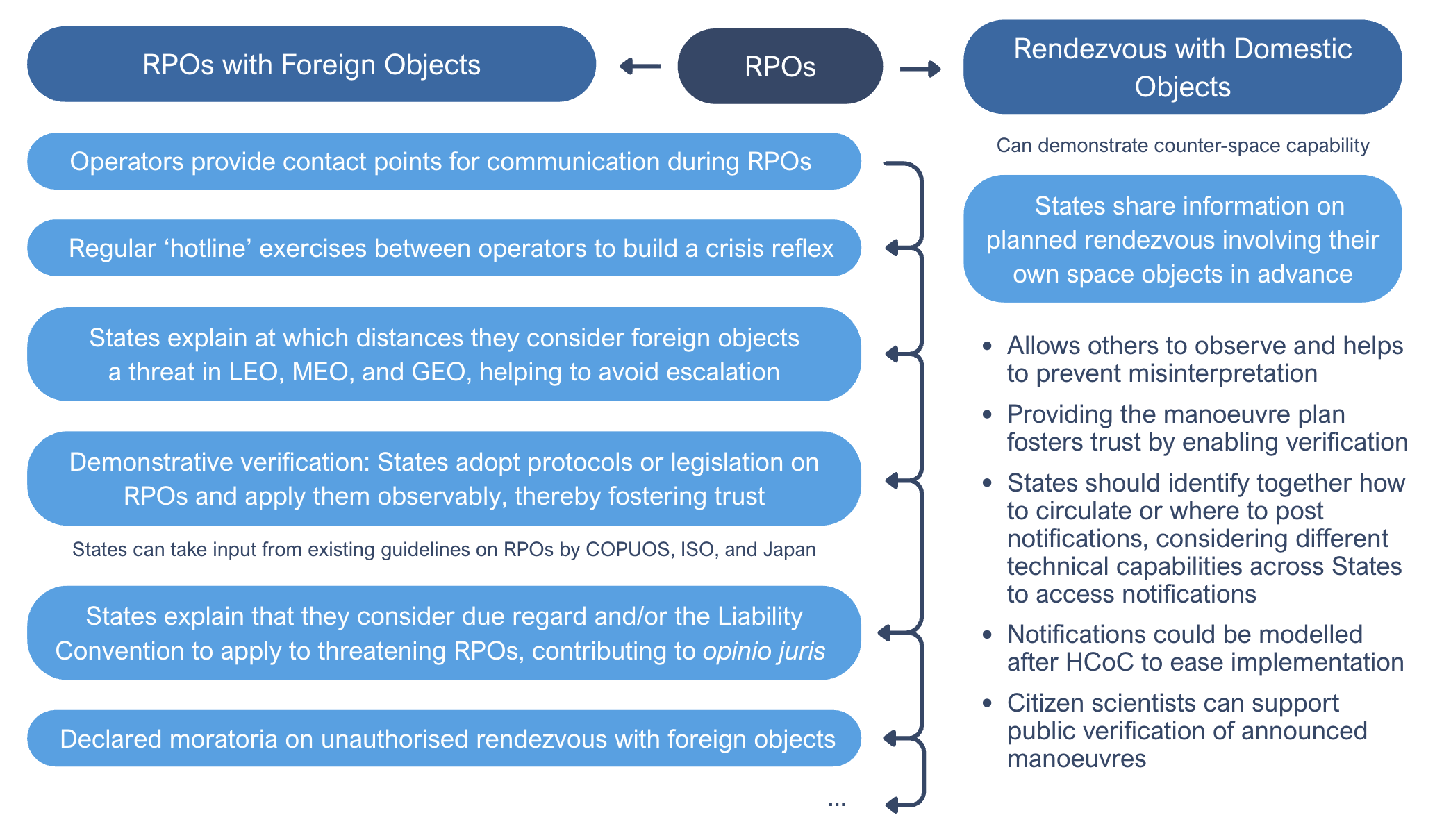
The workshop showed that an issue-focused, results-oriented approach is key for progress on PAROS. Rather than tackling all aspects of space security at once, participants focused on one space threat, breaking down the larger PAROS goal into more manageable issues. In small groups, diplomats, experts, and industry developed a threat reduction pathway to address threats posed by rendezvous and proximity operations (RPOs), illustrated below.
Further work in such agile, mixed groups could expand these ideas and repeat this exercise with other space threats. Workshop participants felt that mapping out threat reduction measures could be a critical next step on PAROS. In an anonymous survey, 82% of respondents confirmed that this “could contribute to a clearer vision for achieving space security”.
In PAROS processes, success is often defined as the unanimous adoption of outcome documents. This, however, has rarely been achieved. The workshop studied what other functions PAROS processes could serve in addition, to ensure that States get ‘the most’ out of the sessions:
Ambassador Foradori, Chair of the OEWG on PAROS in All its Aspects, supported the mapping of threat reduction pathways to produce concrete proposals for States to discuss in the OEWG. Agreement on measures that address specific threats could build the trust and momentum needed for more comprehensive solutions to space security. He emphasised that there could be no single path to reaching the PAROS goals and that no tools should be excluded outright. He also asked States to be flexible on concepts and definitions to ensure that a future space security regime remains adaptable to changes in the space domain.
Ashlyn Milligan highlighted ways for increasing the benefits that PAROS processes provide to member states, particularly by establishing a consistent source of technical expertise to advise the OEWG, by communicating national threat perceptions – for example on RPOs – and empowering Global South countries to provide more verbal and written inputs into the OEWG’s work. She also underlined that applying the high bar of unanimity to the OEWG outcome is unhelpful as States are currently not negotiating a legally binding instrument. Instead, States should aim for substantive outcomes such as the 2024 report of the GGE on Further Practical Measures for PAROS, which was adopted with the minor caveat that States did not seek unanimity on all its parts.
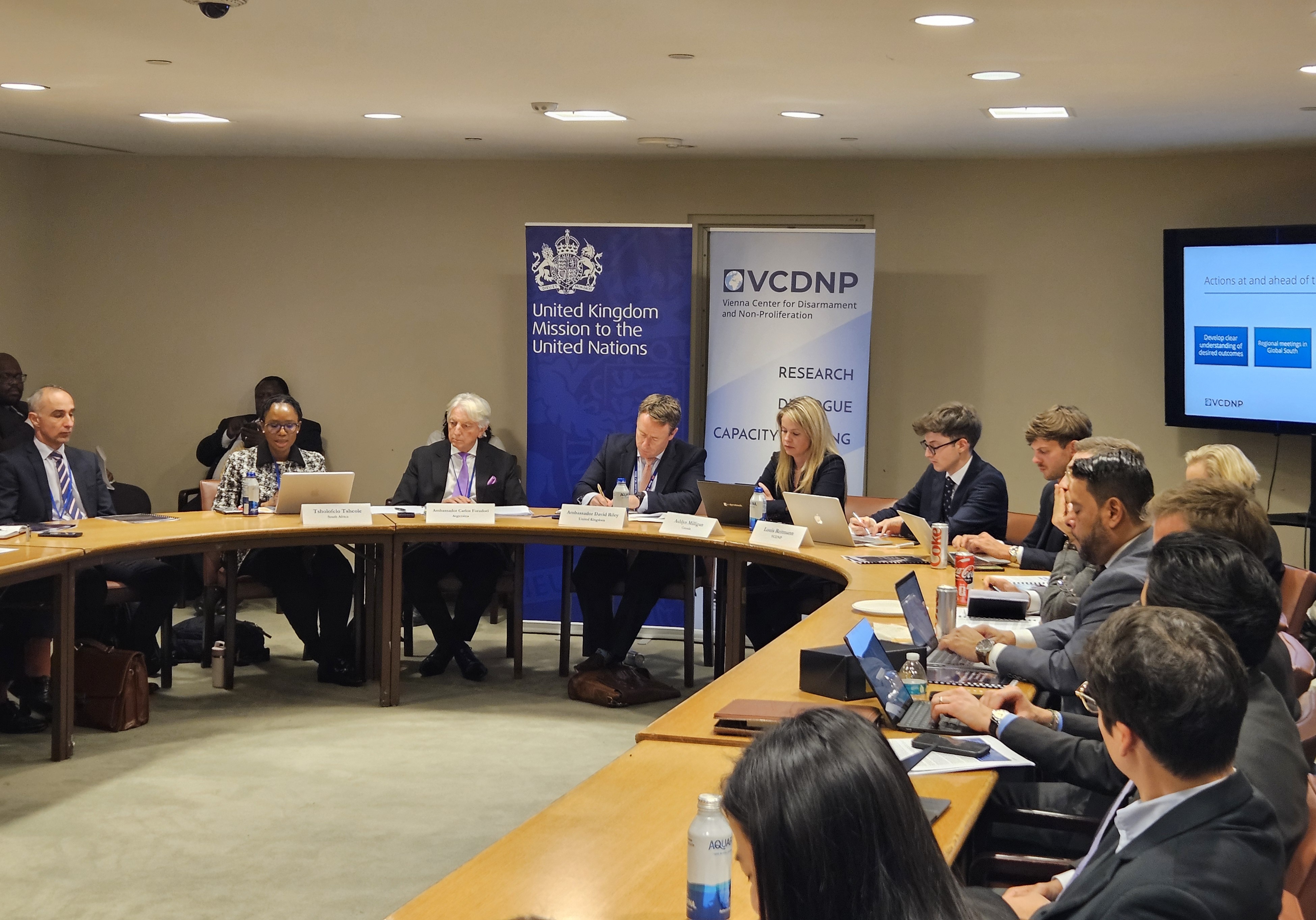
Tsholofelo Tsheole stressed that coordination between COPUOS and the OEWG was essential for Global South countries, many of which understand space security as the preservation of peaceful uses of space by all countries, compared to traditional military definitions. She supported the proposal for capacity-building and dialogue meetings in the Global South, which should be informed by regional needs, for example, to address the threat of falling space debris in equatorial countries. She also promoted the specific role that Global South countries already play on PAROS as honest brokers between the space powers, but also as advocates for transparency and accountability by those developing and deploying counter-space capabilities.
The Q&A session highlighted agreement among States on the importance of empowering Global South countries’ full participation in PAROS processes and coordination between COPUOS and the OEWG. The discussion highlighted interest in fleshing out threat reduction measures on RPOs, regional workshops in the Global South, and lessons from multilateral governance efforts new information technologies.
This event was made possible thanks to the financial support of the UK Foreign, Commonwealth & Development Office.