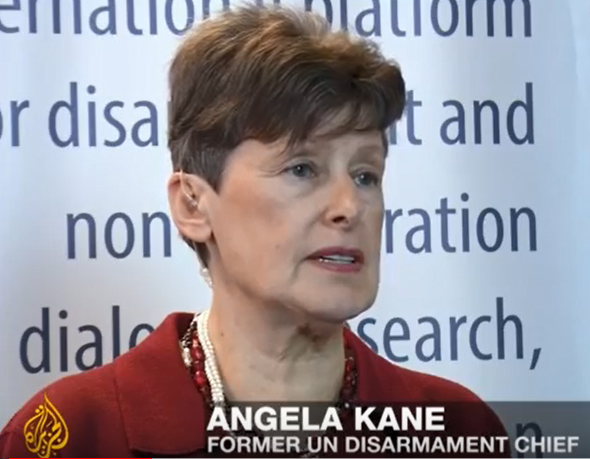
Today, 6 August 2020, marks 75 years since the first use of nuclear weapons in war. VCDNP Senior Fellow Angela Kane discussed the legacy of the bombings of Hiroshima and Nagasaki in an interview with Hilde Stadler of Bayerischer Rundfunk and ARD, published in German.
According to Ms. Kane, also the former UN High Representative for Disarmament Affairs, today's most immediate threat is the decay in arms control between the United States and the Russian Federation, which together maintain the vast majority of the operational nuclear weapons today. In particular, she noted decade-high numbers in global armaments spending, the abrogation of a number of bilateral arms control agreements and the increased prominence of nuclear weapons in military doctrines.
One response to this decay has been the Treaty on the Prohibition of Nuclear Weapons (TPNW), said Ms. Kane. While she does not expect the TPNW to lead to actual reductions in nuclear warheads, it may provide a normative force against nuclear weapons, supported by civil society. Moreover, Ms. Kane advocated an emphasis on multilateralism generally and multilateral approaches to nuclear disarmament specifically.
The bombings of Hiroshima and Nagasaki are a part of history that should remind us of the humanitarian consequences of nuclear weapons use, said Ms. Kane.
Also available through Tagesschau.