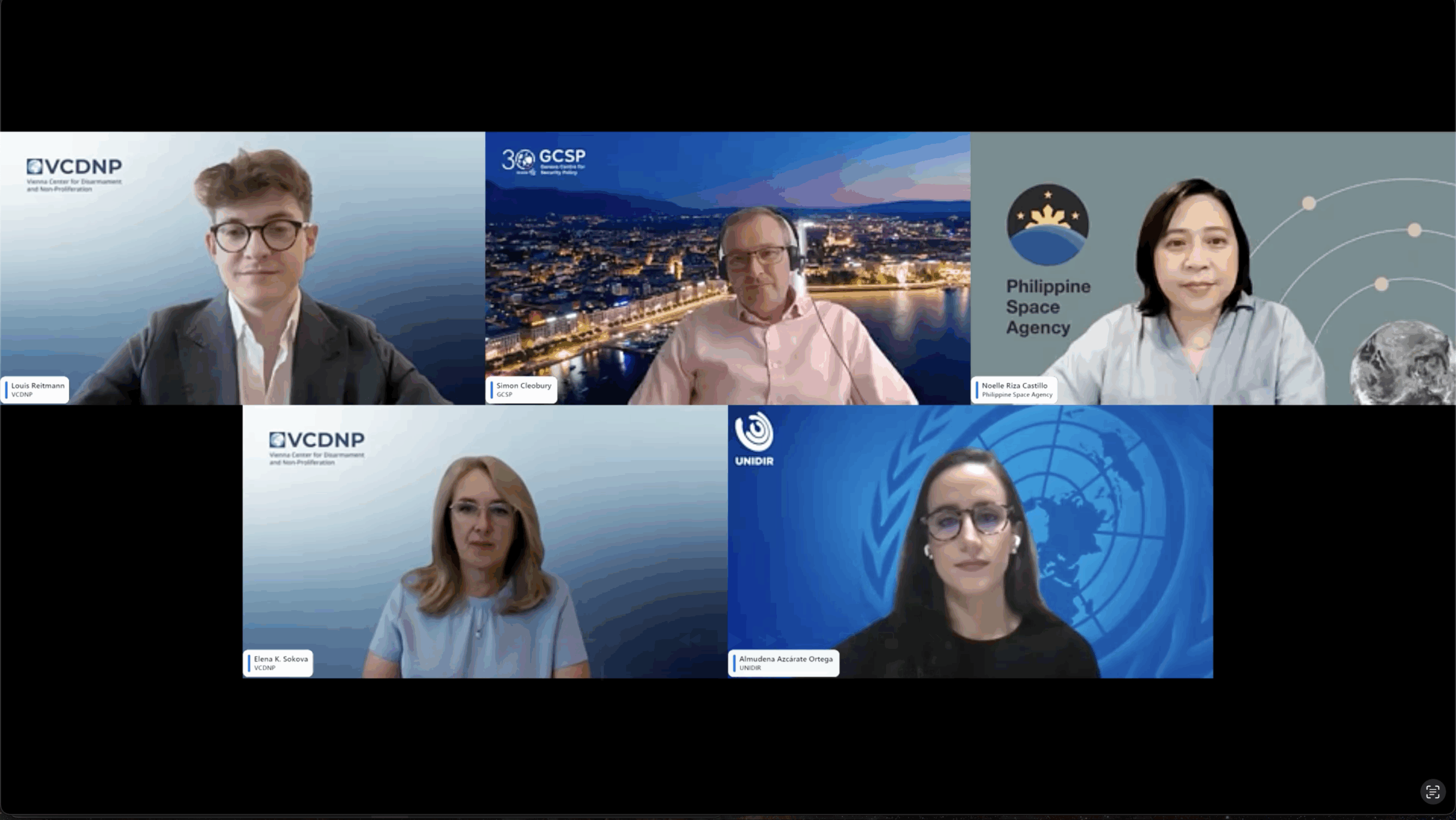
On 4 September 2025, the VCDNP hosted a virtual launch event for two publications on the prevention of an arms race in outer space (PAROS), written by Research Fellow Louis Reitmann. The event featured presentations by the author and a panel discussion with leading experts on space security, who have themselves contributed to multilateral processes on PAROS.
The speakers were:
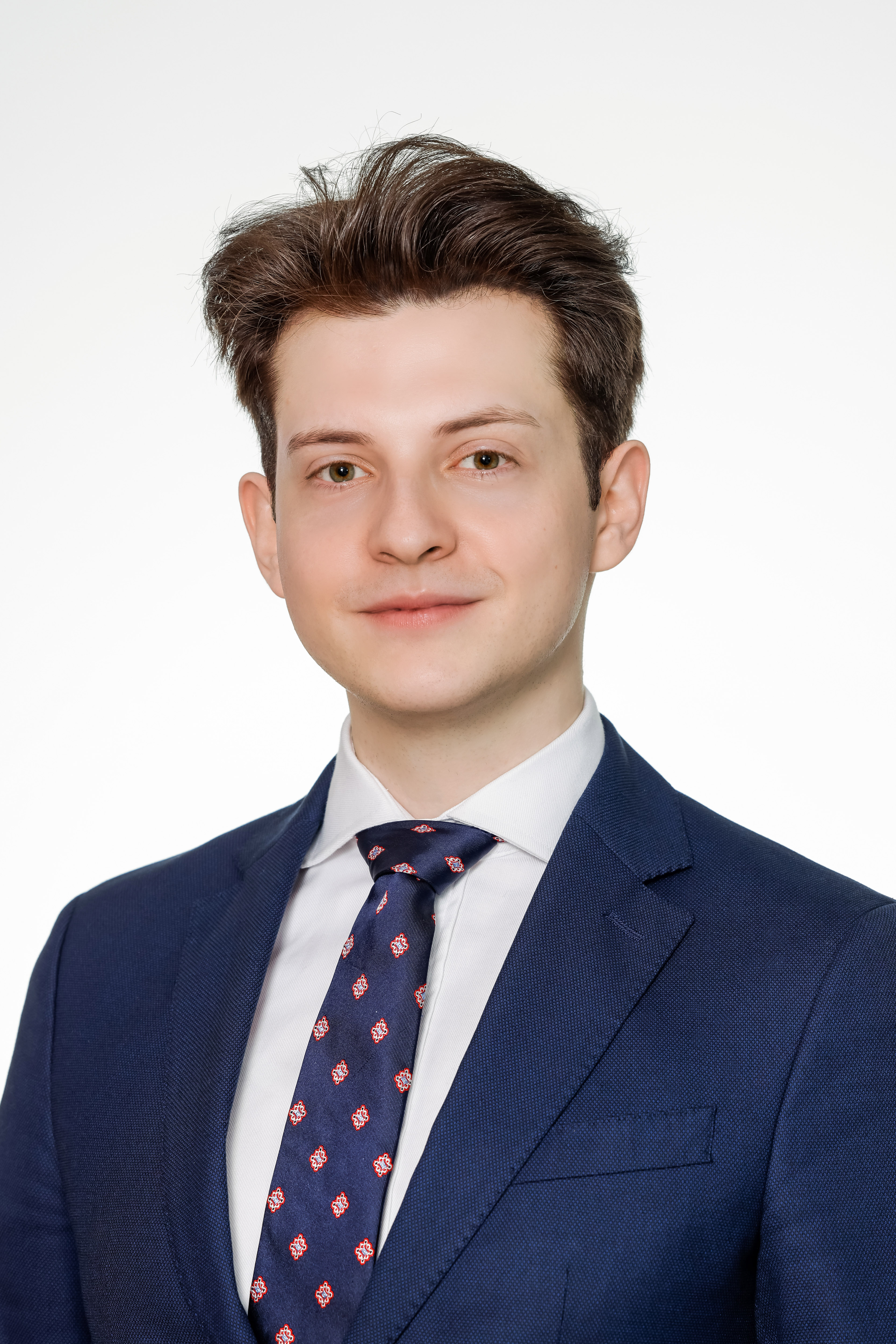
Louis Reitmann, Research Fellow, VCDNP
Noelle Riza Castillo, Director of the Space Policy and International Cooperation Bureau, Philippine Space Agency
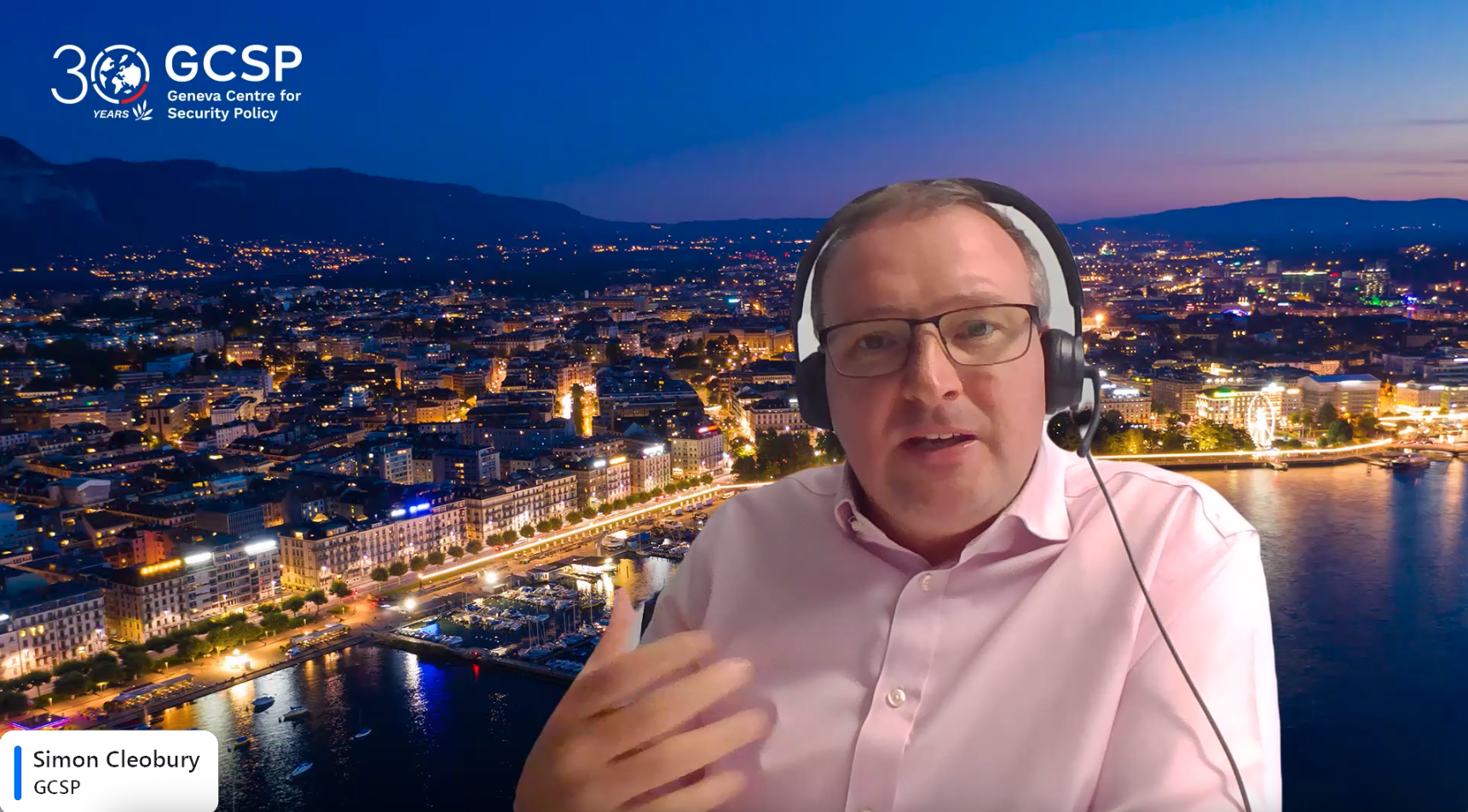
Simon Cleobury, Head of Arms Control and Disarmament, GCSP
Almudena Azcárate Ortega, Researcher, UNIDIR
The event was moderated by VCDNP Executive Director Elena K. Sokova.
The papers A History of PAROS and A Results-Oriented and Form-Flexible Approach to PAROS are part of a wider research and dialogue project on space security that will continue through April 2026. The papers provide a comprehensive summary of multilateral efforts for PAROS from 1978 to 2025, and recommendations to States on enhancing PAROS processes and making concrete progress on space threat reduction.
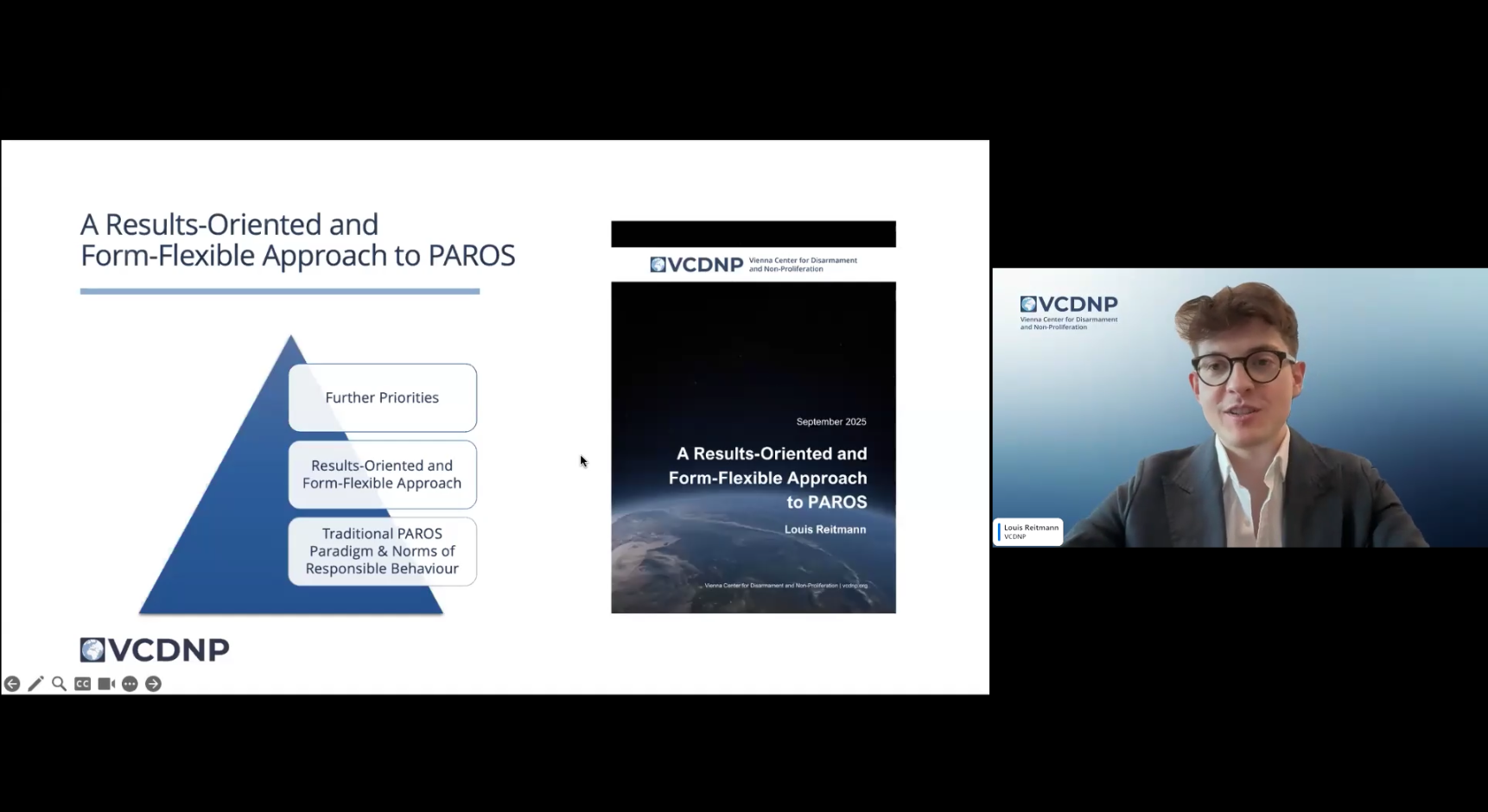
Introducing A History of PAROS, Louis Reitmann explained that the paper provides concise information on the mandates, discussions, outcomes, and the political and historical contexts of 10 multilateral processes in and outside of the UN, from 1978 to 2025. He underlined that it is a useful refresher for diplomats in Geneva but also an introduction to PAROS for delegates to the UN Committee on the Peaceful Uses of Outer Space (COPUOS) in Vienna.
The second paper suggests that States should adopt a results-oriented and form-flexible approach to PAROS, building on progress in the OEWG on Reducing Space Threats. This approach argues that States need not hold out for consensus on a legally binding or a non-binding approach to PAROS. Instead, it encourages States to adopt concrete and effective space threat reduction measures, unilaterally and with partners.
These measures should be based on principles that have already been identified in PAROS processes and those in existing space law, such as due regard and avoiding harmful contamination. They can be flexible combinations of legally binding and voluntary measures, assembled along vertical or horizontal threat reduction pathways.
The paper also proposes to update the framing for space security efforts to “the protection of peaceful uses of space” and to reconsider how States define the success of PAROS processes. Additionally, the paper presents eight priorities and concrete actions for enhancing PAROS processes, for example, to intensify dialogue with space industry and to explore guidelines adopted by COPUOS that could contribute to measures for space threat reduction.
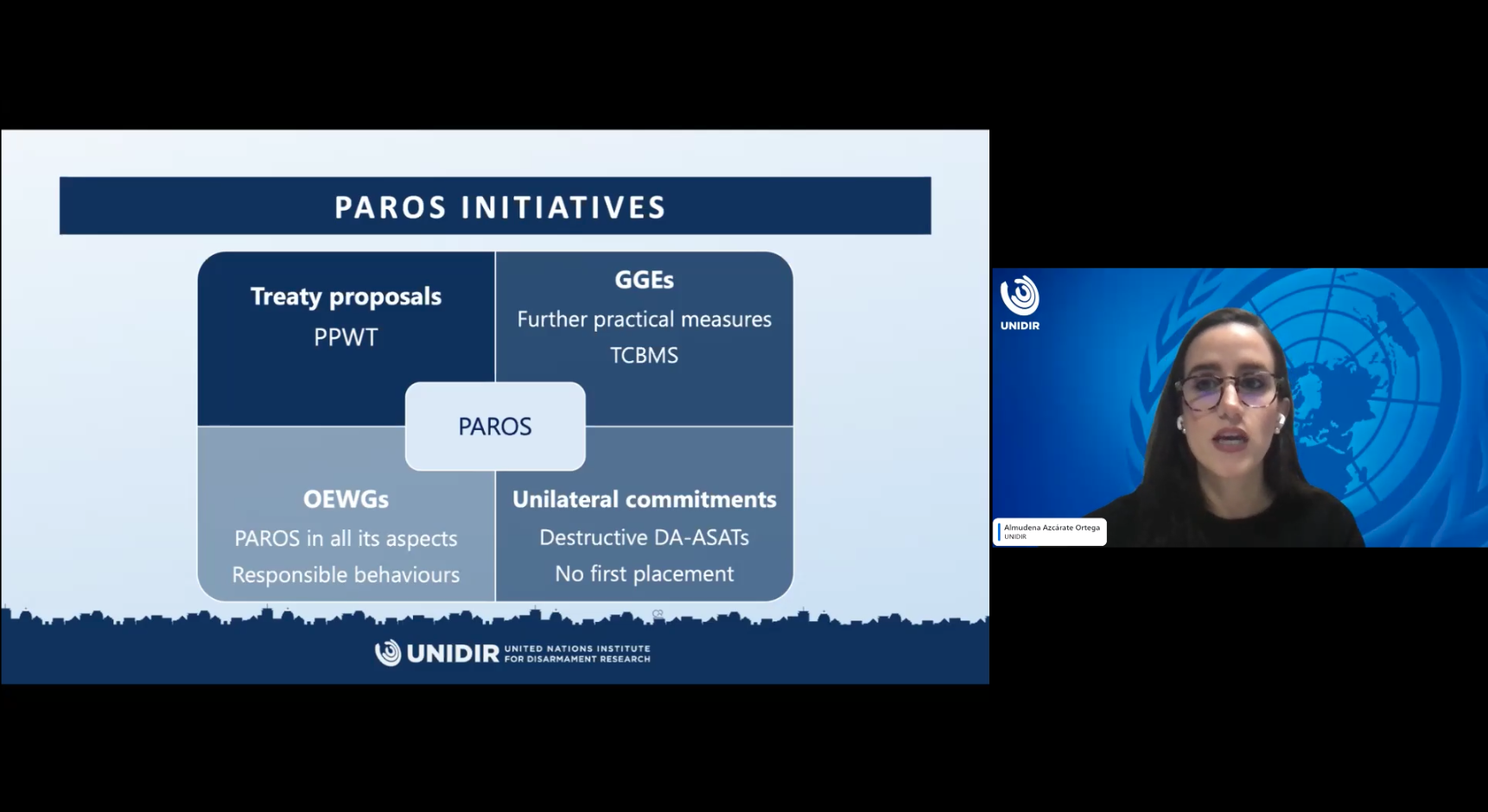
Almudena Azcárate Ortega provided a big-picture analysis of over 40 years of multilateralism for PAROS, including the foundational UN resolutions in the 1980s, the various processes that followed, and the major achievements and remaining fault lines that still characterise PAROS discussions today. She highlighted key issues, such as the tensions between approaches focused on legally binding vs. voluntary measures and approaches focused on regulating capabilities vs. behaviours in space. Her presentation also touched on the recently established OEWG on PAROS in All its Aspects and its promising though challenging mandate to deliver recommendations on PAROS by taking into account different views and the achievements of past UN bodies on PAROS.
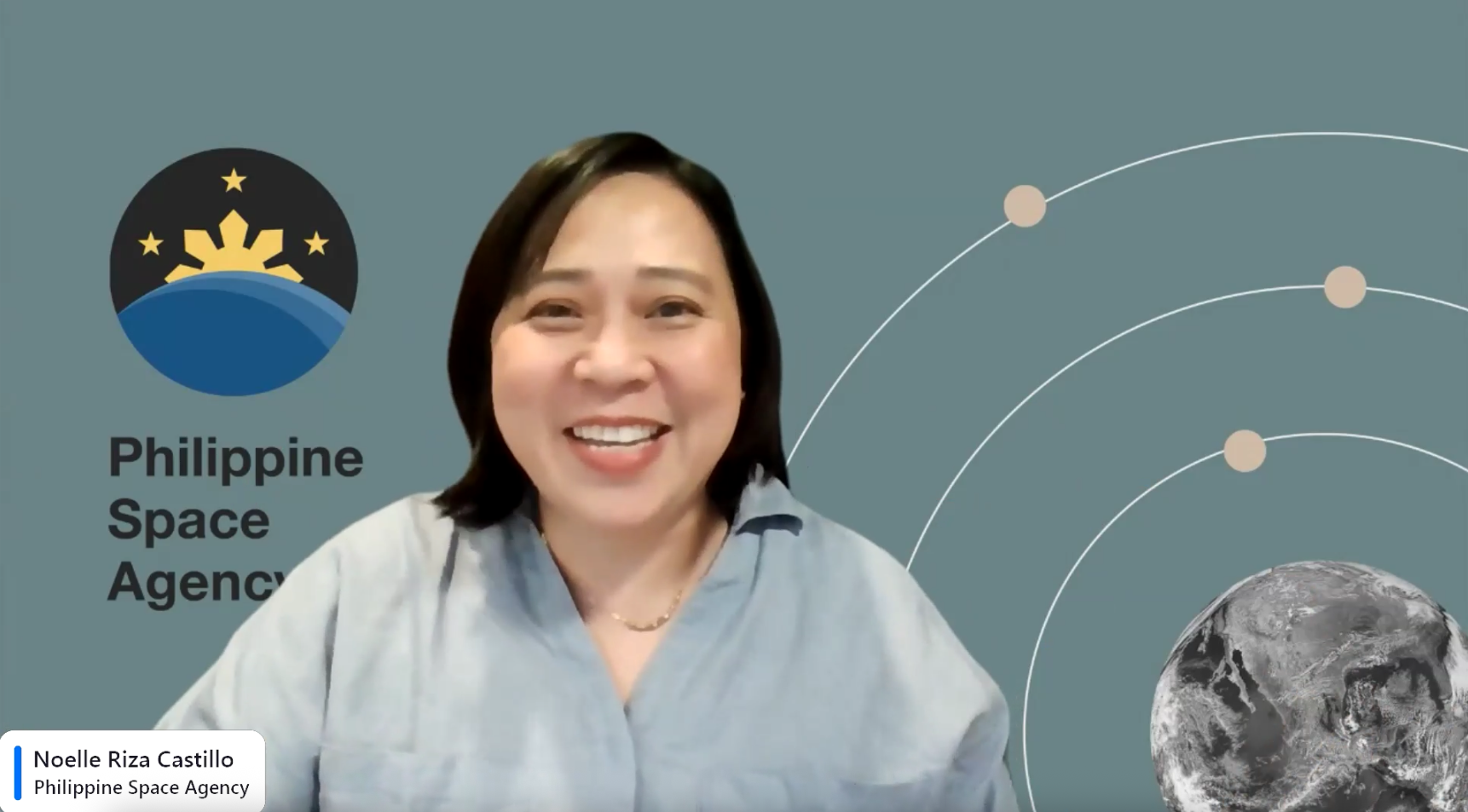
In her contributions, Noelle Riza Castillo supported a flexible approach to developing measures and instruments that reduce space threats. States could adopt rules and commitments between two or more countries that could be multilateralised, starting, for example, with transparency and confidence-building measures identified in the consensus report of the GGE on Further Practical Measures for PAROS (2023-2024).
She also underlined the importance for emerging spacefaring nations like the Philippines to participate in PAROS discussions to be able to shape a future space security regime but also to prepare national space legislation in line with global standards. Additionally, she highlighted the priority that Global South countries attach to keeping space secure for the peaceful purposes that they increasingly draw benefits from.
Simon Cleobury addressed ways for the current OEWG to build on the achievements of the OEWG on Reducing Space Threats, primarily, to continue involving a diverse range of countries in the discussions and to further educate all States about relevant space threats. He expressed support for suggestions in the paper on a panel of technical experts to identify effective measures to address the threat posed by proximity operations and on exploring an updated framing for space security efforts – though cautioning that achieving a new framing could be challenging and would require strong support from middle ground countries. Additionally, he shared how PAROS processes could learn from similar governance efforts, including on lethal autonomous weapons.
During the Q&A session, the speakers addressed timely questions from the audience on the presence of weapons in space, the impact of the US missile defence project “Golden Dome” on PAROS discussions, the protection of civil space objects during potential conflict in space, and the legal significance of moratoria on DA-ASAT weapons tests.
This project is made possible thanks to the generous financial support of the UK Foreign, Commonwealth & Development Office.