The Young Deep Cuts Commission (YDCC), a subsidiary of the trilateral Germany-Russia-US Deep Cuts Commission, is a consortium of up-and-coming experts on nuclear arms control that seeks to develop fresh ideas to strengthen and revitalise nuclear arms control and disarmament. One of the YDCC’s inaugural members is VCDNP Research Associate Noah Mayhew, who recently published the first YDCC policy brief with Artem Kvartalnov (M.A. Candidate, Moscow State Institute of International Relations) and Daria Selezneva (Research Associate, Primakov National Research Institute of World Economy and International Relations).
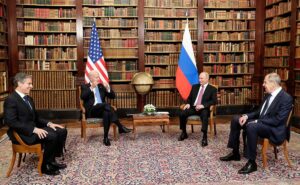
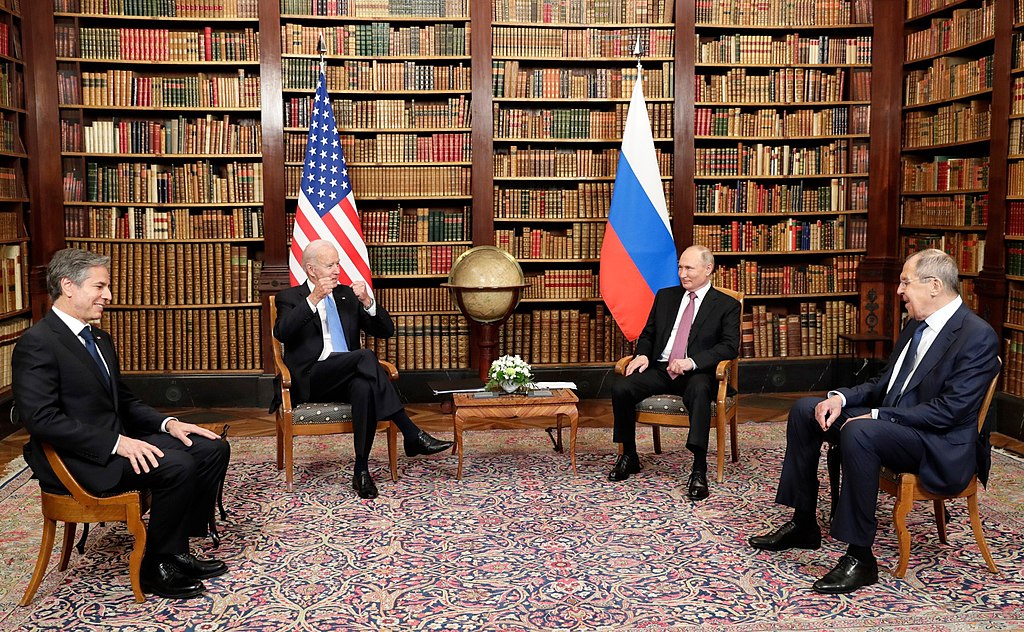
In the policy brief, entitled “Focusing the Message: Immediate Priorities for US-Russian Arms Control,” Mayhew, Kvartalnov and Selezneva argue that, given the large “smorgasbord” of options, that it would be useful for the United States and the Russian Federation to curate their menu of options to address the most immediate concerns in nuclear arms control. They note that, as arms control discussions commence under the auspices of the US-Russian Strategic Stability Dialogue, the parties should consider whether a single new arms control agreement or arrangement would be desirable, as opposed to a framework of interrelated agreements or arrangements.
The format of future arms control measures notwithstanding, Mayhew, Kvartalnov and Selezneva argue that, in addition to strategic offensive arms, three interrelated issue areas, distict from one another but connected by technical and political considerations, should be considered as priorities: long-range precision-guided weapons; missile defence systems; and non-strategic nuclear weapons. The policy brief analyses each of these three issue areas, including potential technical and political barriers to addressing them, and offers policy recommendations in this regard.