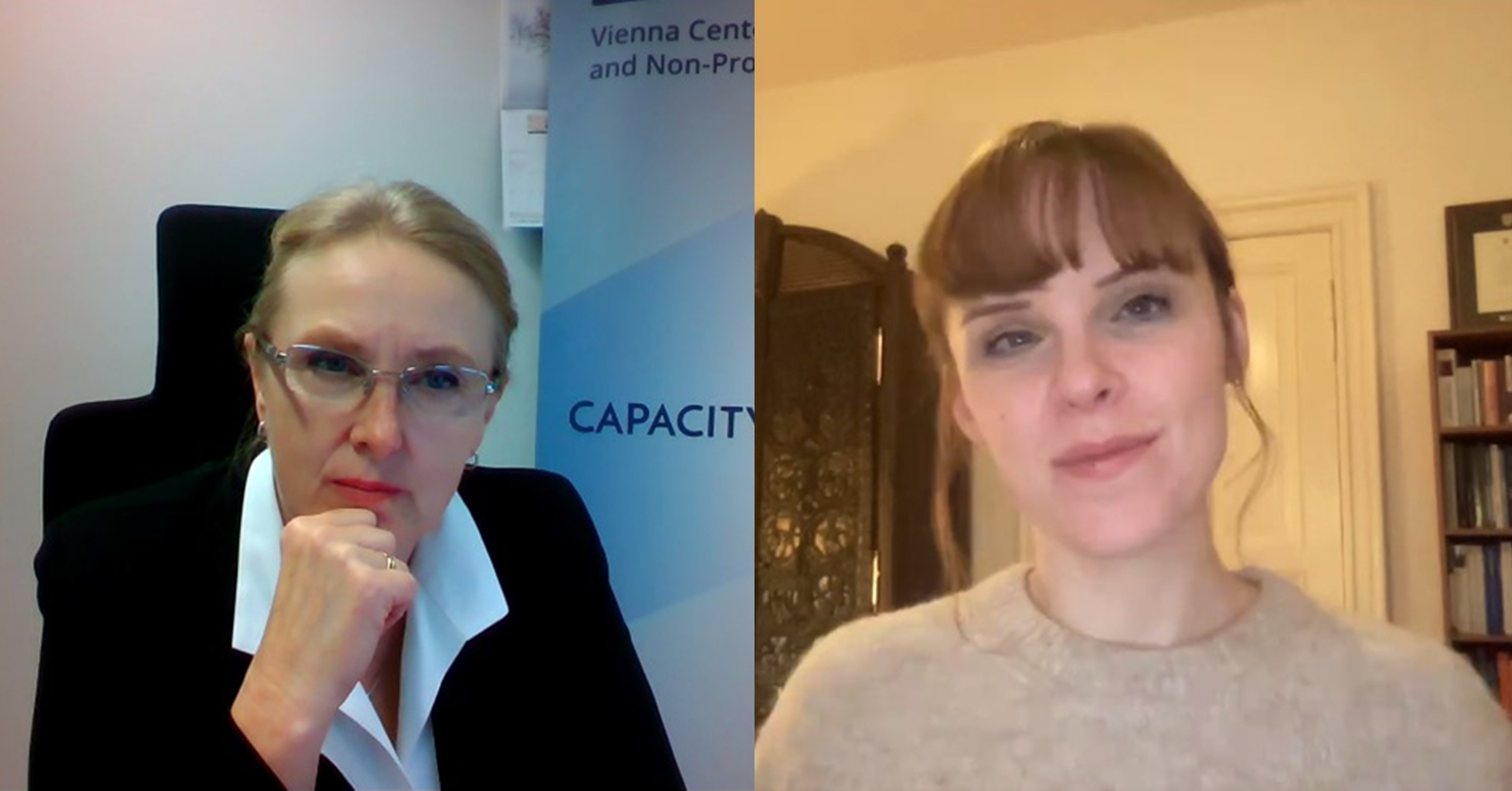
 In their new paper, VCDNP Visiting Research Fellow Ekaterina Lapanovich and Sara Bundtzen (Research and Policy Associate, Institute for Strategic Dialogue) argue that humanitarian and gender considerations should prominently feature in the debates about nuclear deterrence and disarmament at the 2022 Review Conference of the States Parties to the Treaty on the Non-Proliferation of Nuclear Weapons (NPT) and other multilateral fora.
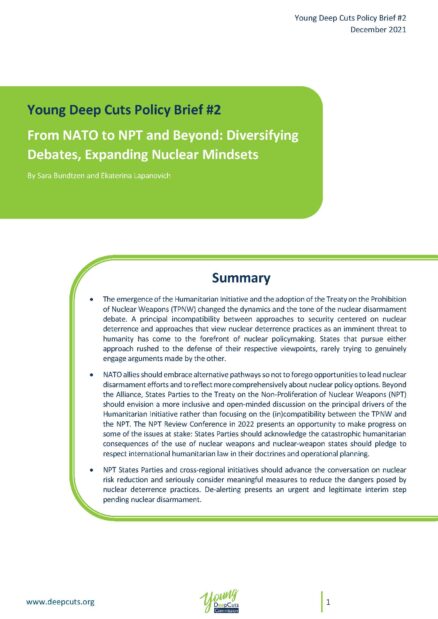
The paper is a policy brief published by the trilateral Young Deep Cuts Commission and titled “From NATO to NPT and Beyond: Diversifying Debates, Expanding Nuclear Mindsets.” The YDCC is a group of twelve emerging experts on nuclear arms control from Germany, Russia, and the United States, whose mission is to develop fresh ideas to strengthen and re-energize nuclear arms control and disarmament.
The authors argue that nuclear-weapon States (NWS) and non-nuclear weapon States (NNWS) alike should envision an inclusive and open-minded discussion on the principal drivers of the Humanitarian Initiative, one of which is the imperative for all States in any conflict to comply with international humanitarian law (IHL). Discussions should not be steered away towards the TPNW’s (in)compatibility with the NPT issue only. In this regard, they call on NATO allies to engage with NNWS and the civil society.
Further, the authors argue that all NWS should pledge to respect IHL principles in their nuclear doctrines and operational planning. In addition, NPT States Parties and cross-regional groupings should advance the ongoing conversation on various perspectives on nuclear risk reduction and consider de-alerting as a sensible step that will allow the global community to live with nuclear weapons as safely as possible pending their elimination.
Dismissal of humanitarian considerations risks reinforcing counterproductive blame games. States should step up to the changing realities and engage in debating ideas and practices related to the existential issue of nuclear weapons. Rather than keep waiting for a security environment conducive to disarmament to emerge on its own, the authors assert that it would be much more beneficial to engage in an inclusive dialogue and initiatives to foster nuclear disarmament.