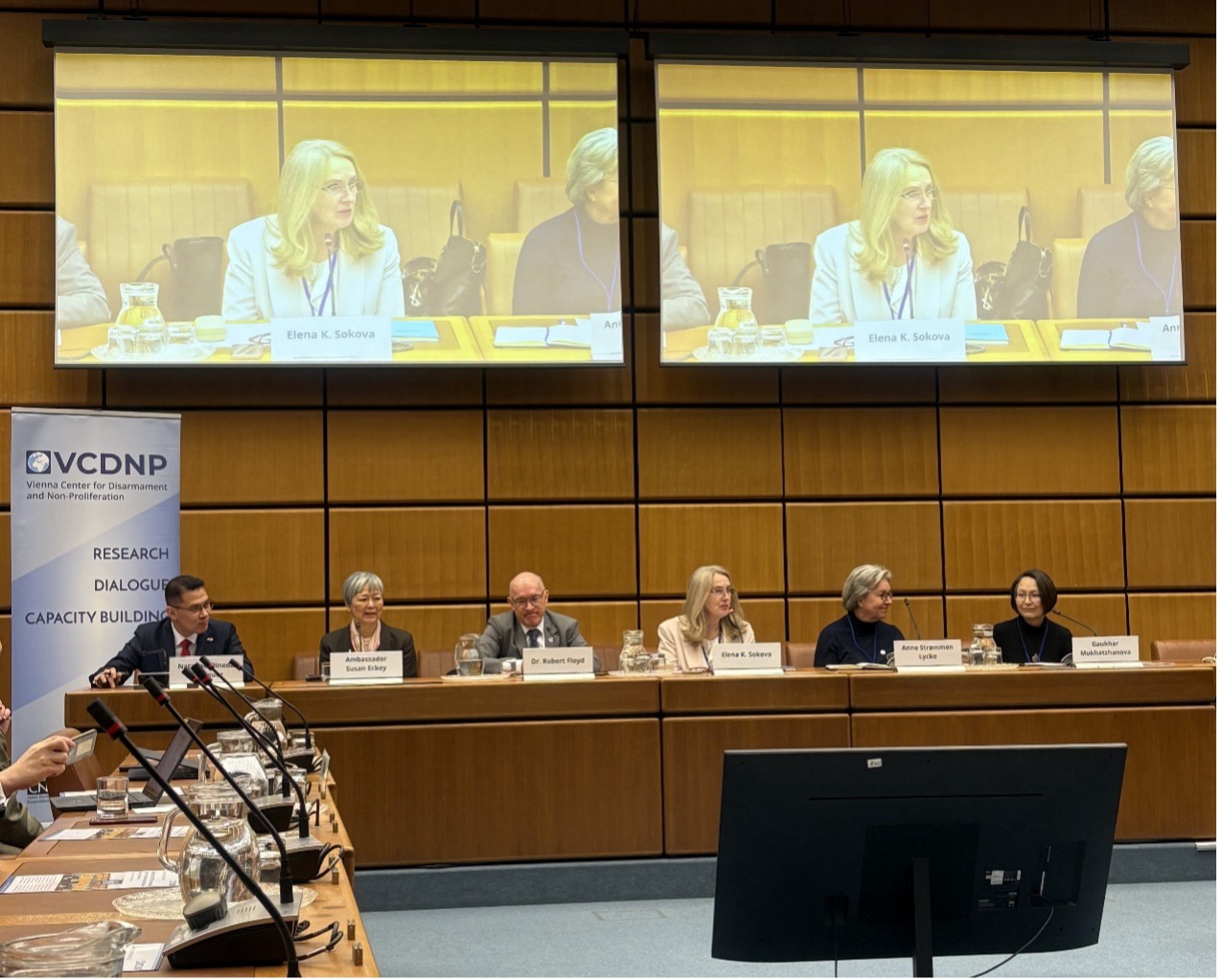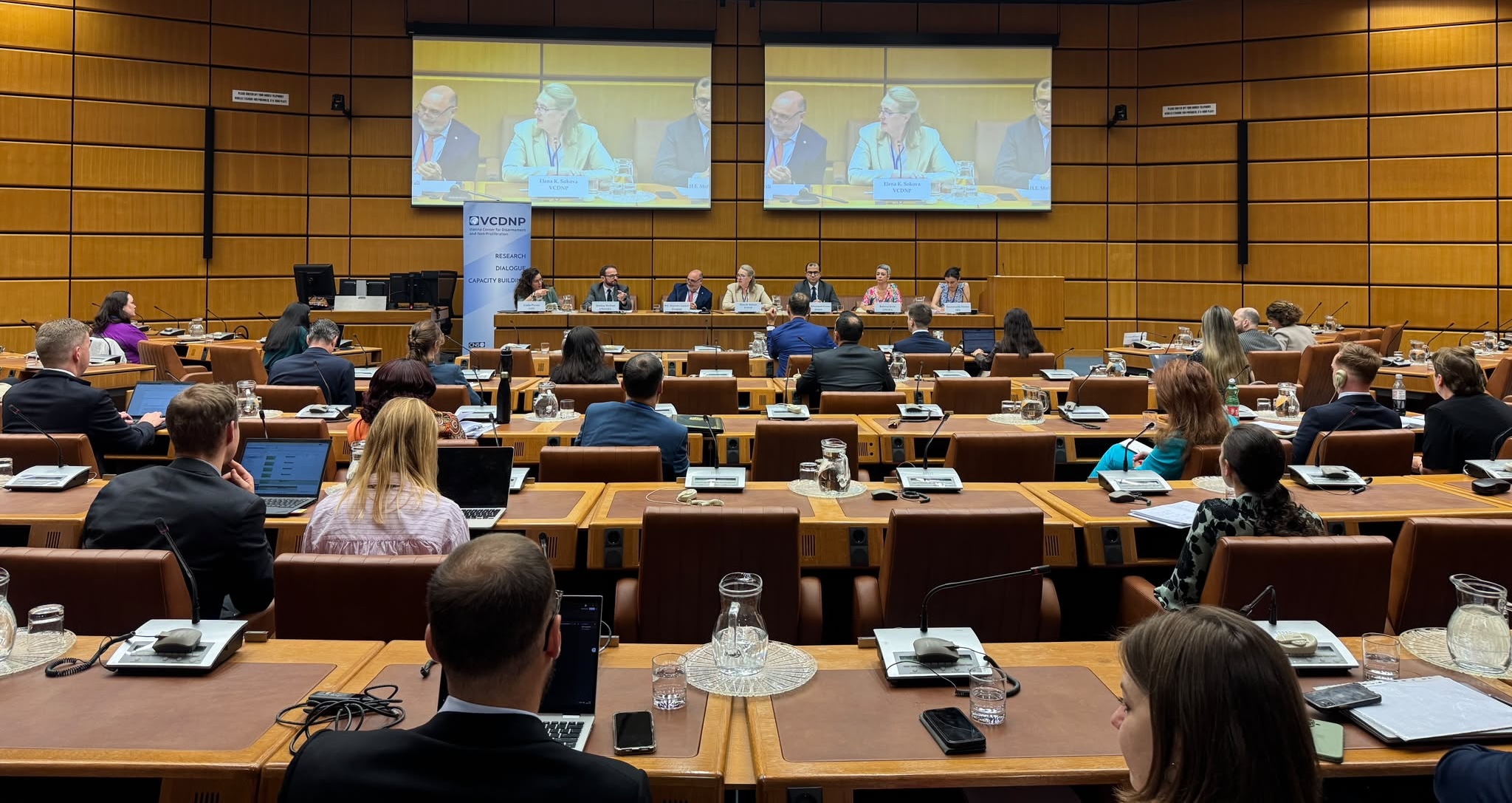
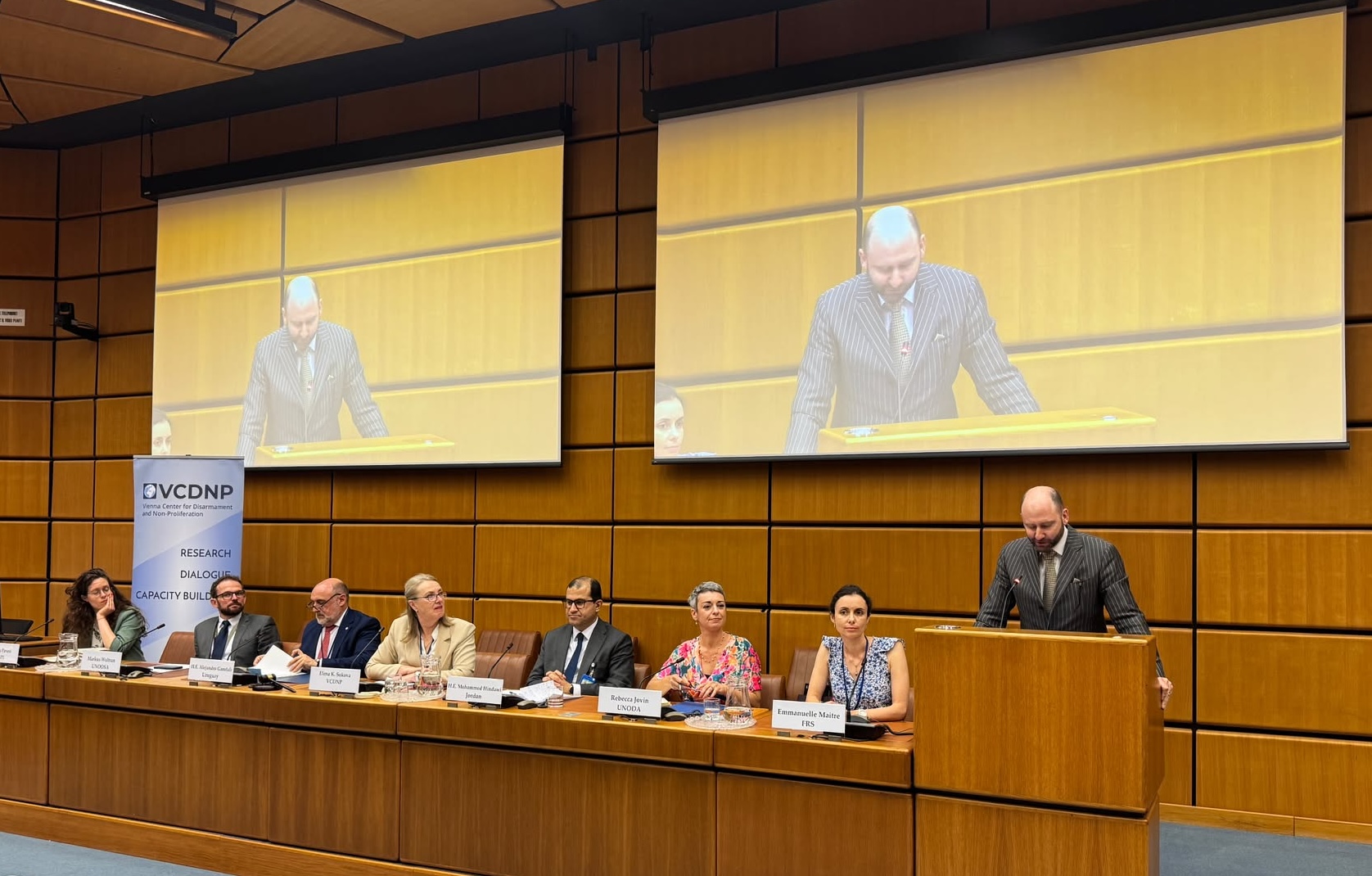
The VCDNP, the Fondation pour la recherche stratégique (FRS), the Permanent Mission of Uruguay to the UN (Vienna), the Permanent Mission of the Hashemite Kingdom of Jordan to the UN (Vienna), and the Federal Ministry for European and International Affairs of Austria co-organised a side event titled, “The Hague Code of Conduct against Ballistic Missile Proliferation (HCoC) and Space Launch Technologies: Opportunities and Concerns” at the Vienna International Centre on 28 May 2026.
The event brought together research experts, diplomats, and representatives from international organisations such as the UN Office for Outer Space Affairs(UNOOSA) and the UN Office for Disarmament Affairs (UNODA). The panel discussed the opportunities and concerns presented by evolving space launch technologies and other space and missiles developments.
The panelists were:
The session was moderated by VCDNP Executive Director Elena Sokova.
Established in 2002, the HCoC counts 145 voluntarily subscribing States, the Code commits subscribing States to limit the development and spread of ballistic missiles capable of carrying weapons of mass destruction. The Code also establishes transparency on space launches and space launch policies and facilitates visits to launch sites. States subscribing to HCoC also commit to ratifying and implementing three of the five space treaties, including the Outer Space Treaty.
The discussion began with an acknowledgement of the timeliness of the panel, and important issues were raised regarding the role of the Code in addressing conventional and cruise missiles, preventing non-state actors from acquiring missile technologies, and the impact of the increasing number of space launches by a diverse set of actors. These questions guided the rest of the session, as did considerations of how these factors impact the HCoCregime and the sustainable and peaceful use of outer space.
The panel noted that the question of who launches rockets and missiles – once the exclusive domain of States – has been fundamentally transformed by the emergence of commercial space actors. Panelists examined the increasing overlap between space launch vehicles and ballistic missile technology, noting that commercial rockets and intercontinental ballistic missiles are now regularly launched from the same facilities within hours of each other. Speakers highlighted opportunities to extend pre-launch notifications to cover reusable launch vehicles and to raise awareness among smaller commercial operators who may be less familiar with States’ obligations. It was noted that while no comprehensive multilateral agreement on missiles exists, the HCoC plays a meaningful role in filling that gap, as mentioned in the reports of two UN Groups of Governmental Experts in 2013 and 2024and demonstrated by broad support for the HCoC by non-Subscribing States voting in favor of UN resolutions supporting the Code.
Participants also discussed the relationship between the HCoC and the UN Committee on the Peaceful Uses of Outer Space (COPUOS), noting that the two bodies operate under distinct mandates. However, the nexus of safety, sustainability, and dual-use space technologies means their work is increasingly interconnected. Technical synergies around notification mechanisms and space situational awareness were identified as areas where closer cooperation could be beneficial.
It was also emphasised that while some HCoC transparency measures may be perceived by some as incompatible with national security interests, pre-launch notifications are not detrimental to national security and can in fact serve it. In this regard, the universalisation of the Code and broader participation in it would serve both individual States’ interests and global security.
In his closing remarks, Ambassador George-Wilhelm Gallhofer, representing the HCoC Executive Secretariat, observed that space has moved from the backdrop of non-proliferation work to its centre, with private industry reshaping a field once dominated by States. He urged that the international community cannot remain idle as the volume and diversity of launches and the number of entities launching them continues to grow, and expressed confidence that this important work would continue in the upcoming HCoC meeting and the year ahead.