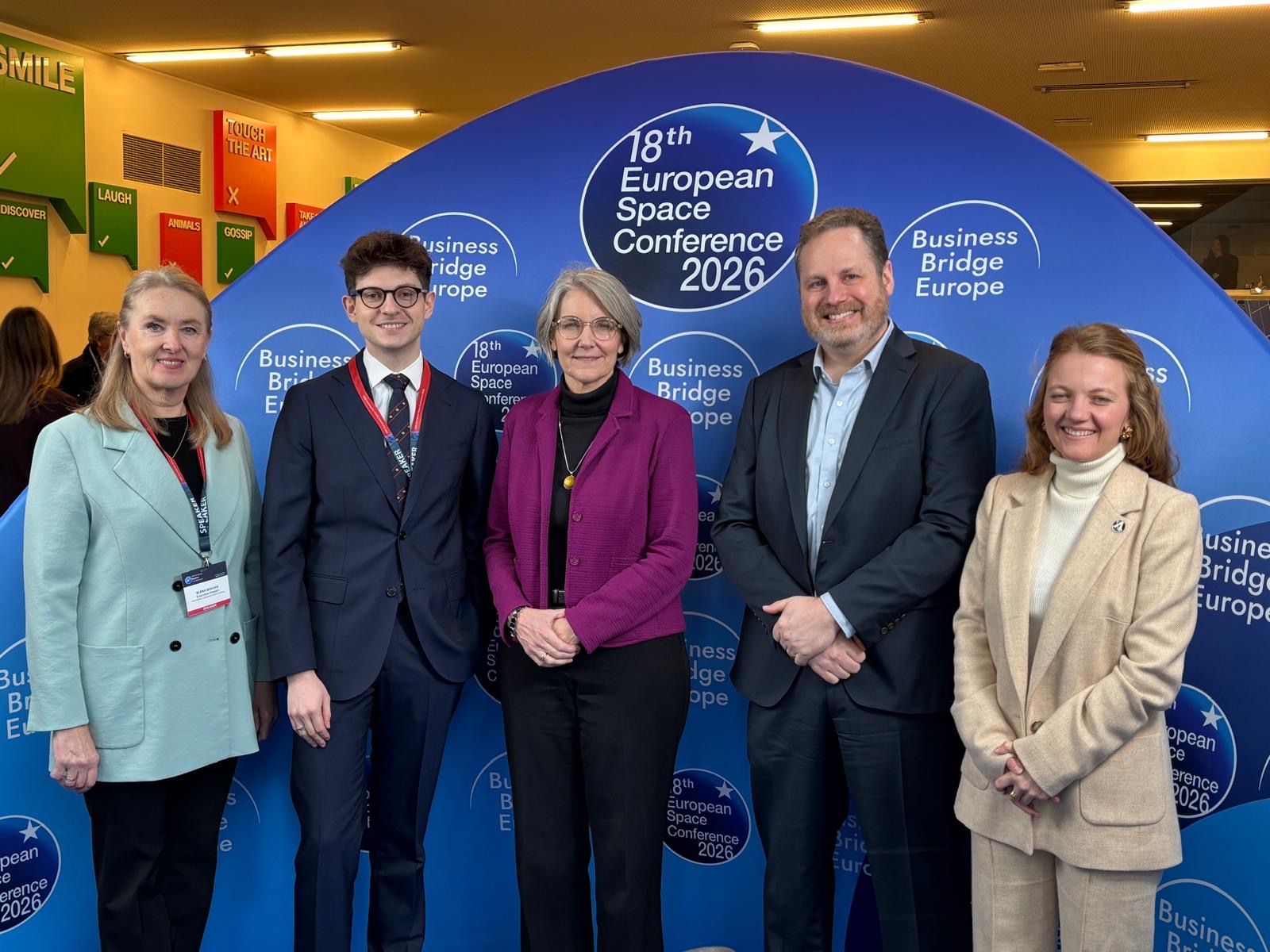
The VCDNP, in collaboration with the European External Action Service (EEAS), organised a panel discussion on connecting space industry and space defence actors to UN efforts for stability and security in space during the 18thEuropean Space Conference in Brussels, on 27 January 2026.
The discussion raised awareness of multilateral diplomacy to establish norms of responsible behaviour that reduce the risk of conflict in space at this key event for commercial innovators, defence officials, and developers of space capabilities for security and defence. The speakers highlighted the critical role that space industry can play by informing UN processes on how new technologies may change the security landscape in space and by working with governments to create standards for secure space operations.
Speakers
Marjolijn van Deelen, EU Special Envoy for Space
Louis Reitmann, Research Fellow, VCDNP
Brian Weeden, Director of Civil and Commercial Policy, Center for Space Policy and Strategy, The Aerospace Corporation
Morgan Lecas, Director of Strategy and Public Affairs, Astroscale France
The event was moderated by VCDNP Executive Director Elena K. Sokova.
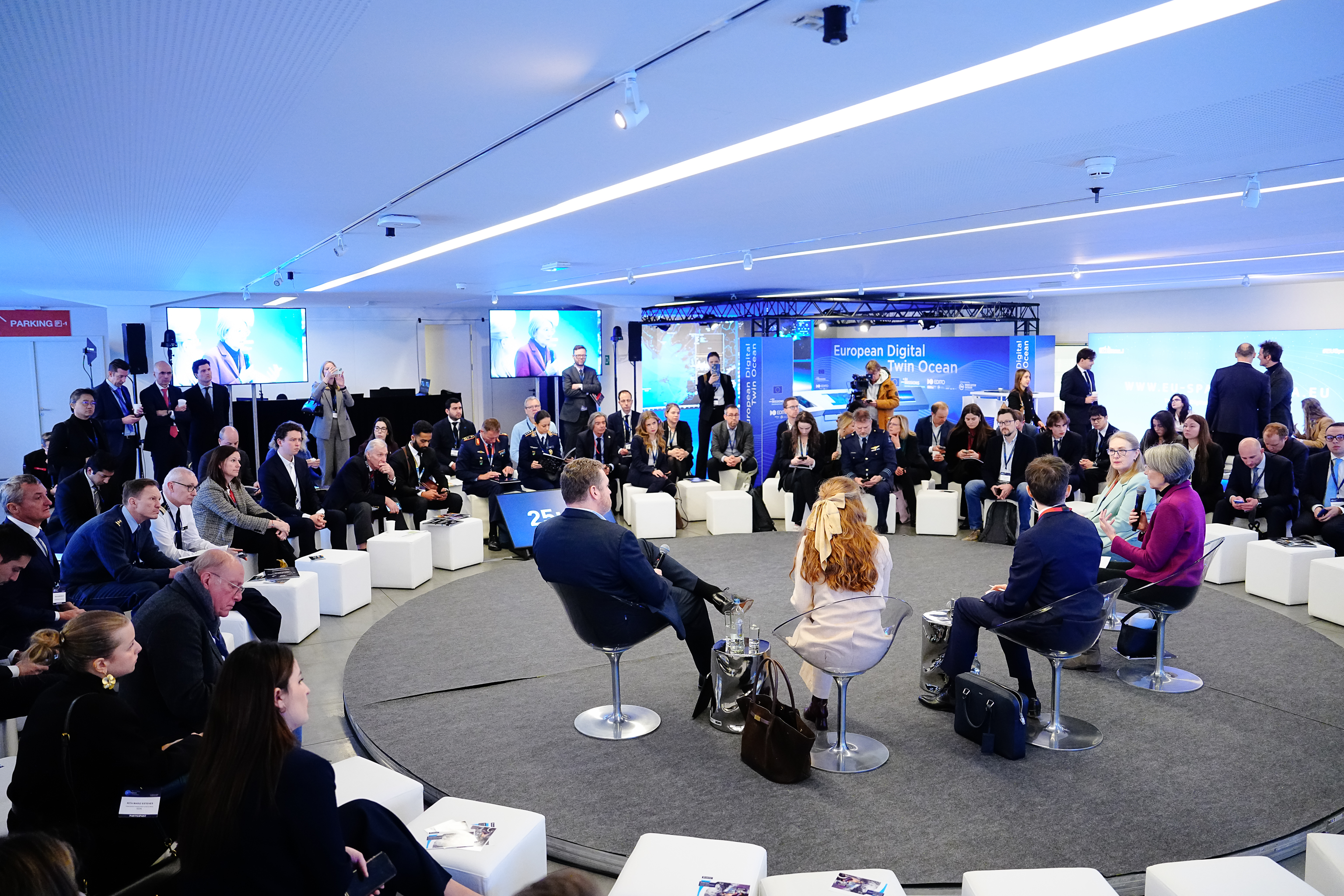
Ambassador van Deelen provided an overview of States’ efforts at the United Nations to supplement the existing legal framework with new instruments that can regulate threatening behaviour to prevent the dramatic consequences that uncontrolled escalation and conflict in space would have for the space-based services that our societies depend on. These efforts need to address diverse threats in space, considering the dual-use nature of many space assets, such as uncooperative rendezvous and proximity operations that could potentially be used in hostile and threatening ways, or jamming and spoofing of satellite signals. For the European Union, promoting responsible behaviour in space and enhancing the protection of space assets are two parts of a broader, integrated approach to space security, outlined in the EU Space Strategy for Security and Defence.
For the July 2026 session of the UN Open-Ended Working Group on the Prevention of an Arms Race in Outer Space, the European Union is seeking greater input from commercial and space defence actors: Which international norms and standards do they consider necessary for safer, more predictable operations in space? How can these norms be operationalised and implemented at the national and operator level?
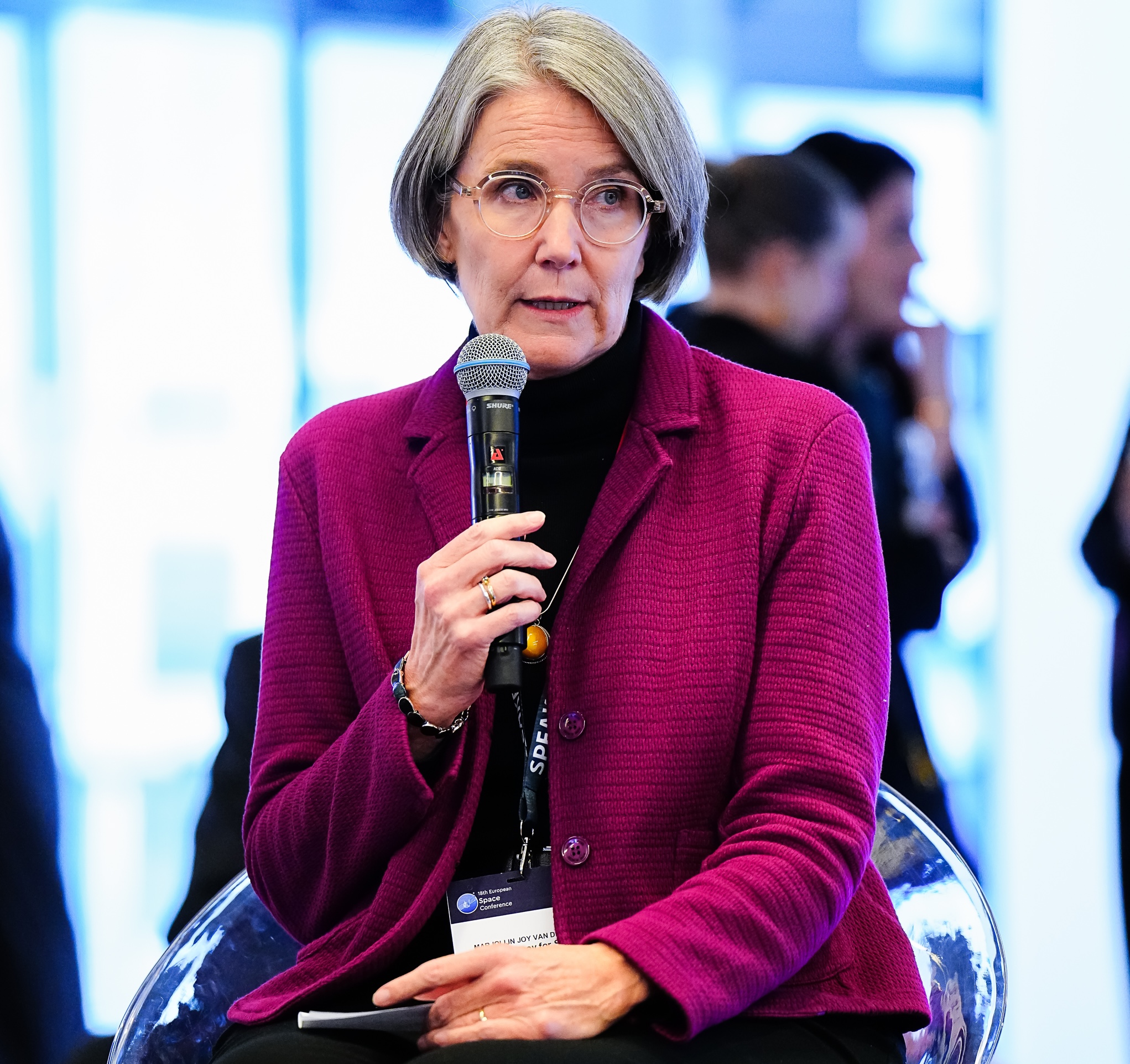
Louis Reitmann highlighted three key reasons why industry involvement in creating norms for space security is crucial:
1) Over 90% of objects in space are commercial. Therefore, commercial operations shape what is considered normal in space. Several industry actors have recognised this role; CONFERS, for example, is an industry group that has developed guidelines for safe rendezvous and proximity operations, one of the key space security issues discussed at the United Nations.
2) In space, the lines between governments and industry are blurry. Per Article VI of the Outer Space Treaty, governments are responsible for the activities of their space industries. Norms of behaviour shape not only State but also industry activities, from the capabilities designed into satellites, to launch procedures, operations, and how defence capabilities can be used.
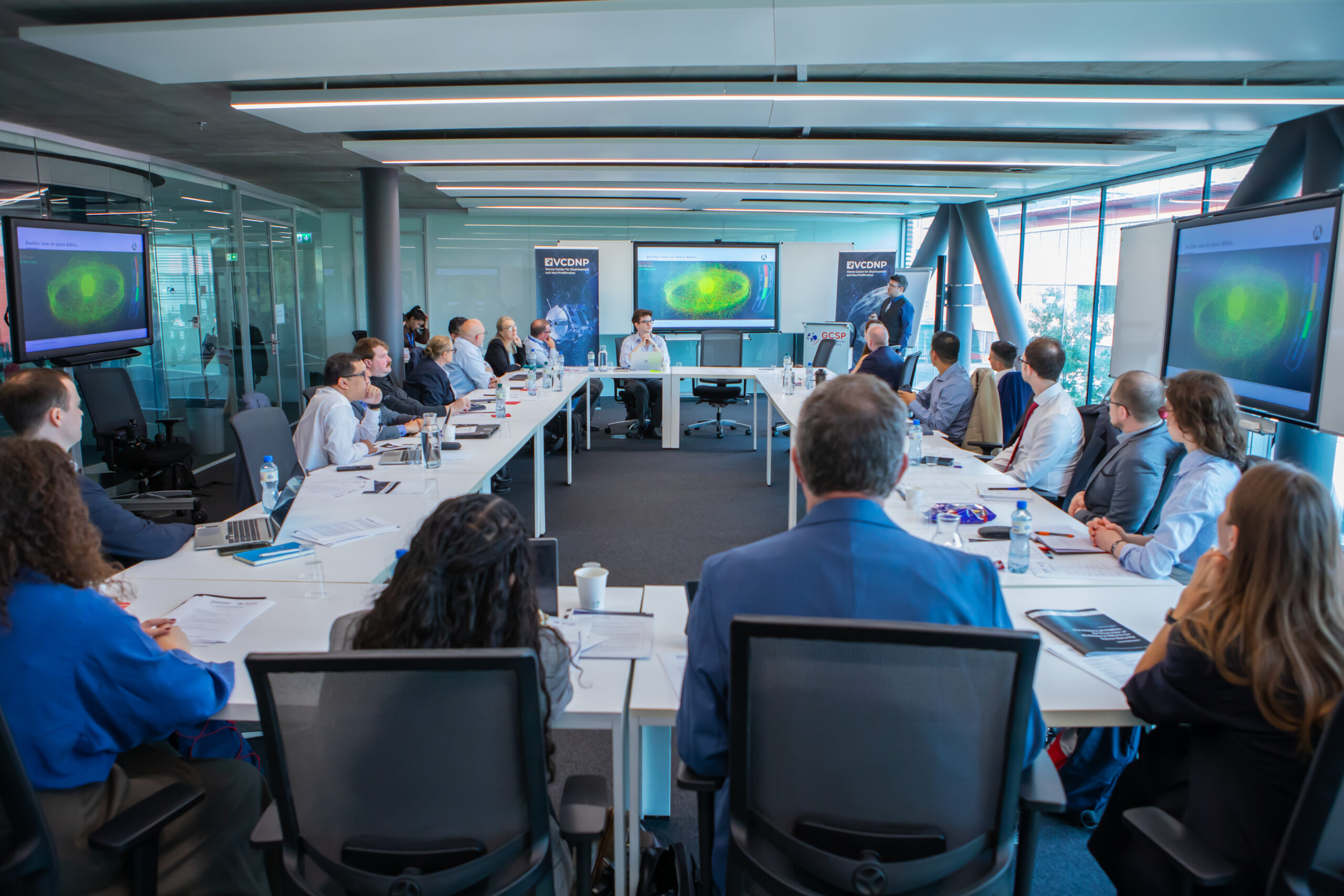
3) The operator’s perspective is key for developing actionable norms. To design guidance that operators are able to use, industry experts are needed to bring relevant technical details to high-level UN discussions. The value of having industry at the table was evident in a recent VCDNP workshop that brought together government and industry actors to develop measures to reduce the potential threats posed by rendezvous and proximity operations. The resulting proposals were particularly focused and action-oriented.
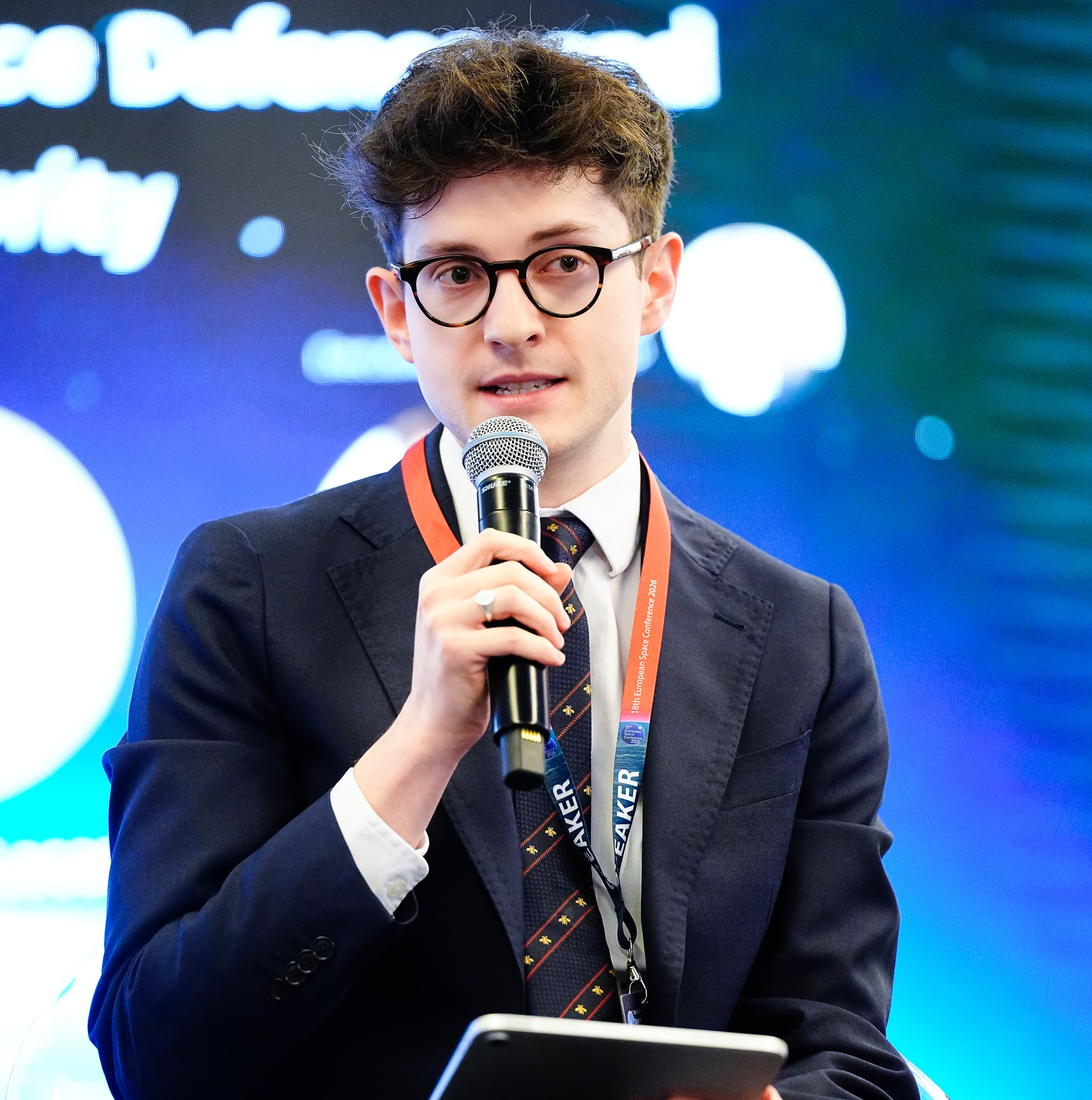
Brian Weeden highlighted industry-led technological innovations that are poised to alter threat calculations in space, underlining the importance of industry input into UN processes on space security. While only a theoretical possibility five years ago, there are now American, European, and Chinese mega constellations of satellites, with the US company Starlink owning ca. 10,000 objects in orbit. This strategic redundancy in satellites reduces the military utility of kinetic attacks, including direct-ascent anti-satellite weapons, bolstering deterrence.
Other innovations include autonomous course correction and collision avoidance, the availability of large amounts of data from satellites equipped with cameras and sensors to enhance monitoring and accountability for behaviour in space, as well as autonomous data gathering by Earth observation satellites, enabling faster detection of threatening activities on the ground.
While some of these developments could reduce the risk of conflict, targeting satellites to interrupt communications and navigation services has become a key feature of armed conflict on Earth, indicated by the sharp rise in electronic warfare and cyber-attacks against space objects in the wars in Gaza and Ukraine and the 2026 protests in Iran.
Morgane Lecas shared how Astroscale, a pioneer developer of in-orbit servicing solutions, is working with governments to ensure that peaceful rendezvous and proximity operations do not contribute to misunderstanding in space. Establishing norms of responsible behaviour, for example, in the guidelines developed by Japan and Astroscale, can help differentiate between normal and potentially threatening activities. In this way, norms of responsible behaviour can shield civil commercial activities against military targeting. To promote industry engagement with space security, norms developed at the UN level must also flow down into national regulations and guidelines.
Mutual awareness and coordination between industry, defence actors, and multilateral space security is increasingly important as space companies respond to the growing demand for services from armed forces. With customers in four countries, defence contracts are projected to make up over 50% of Astroscale’s future revenues. With a growing role in space defence, industry must play a direct role in multilateral efforts to preserve stability in space.
This event was made possible thanks to the financial support of the UK Foreign, Commonwealth & Development Office.