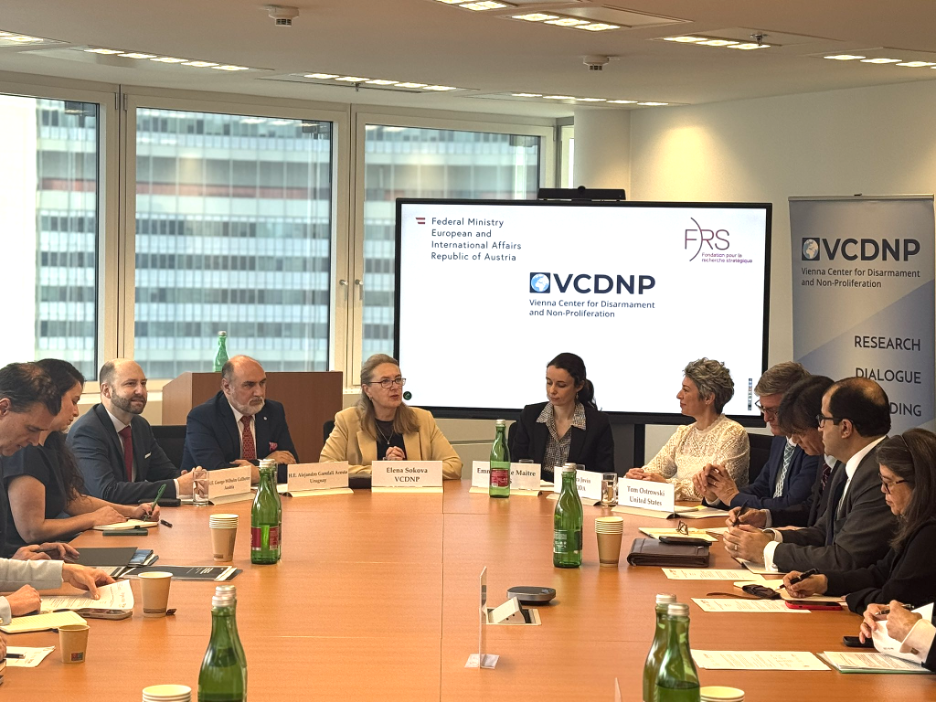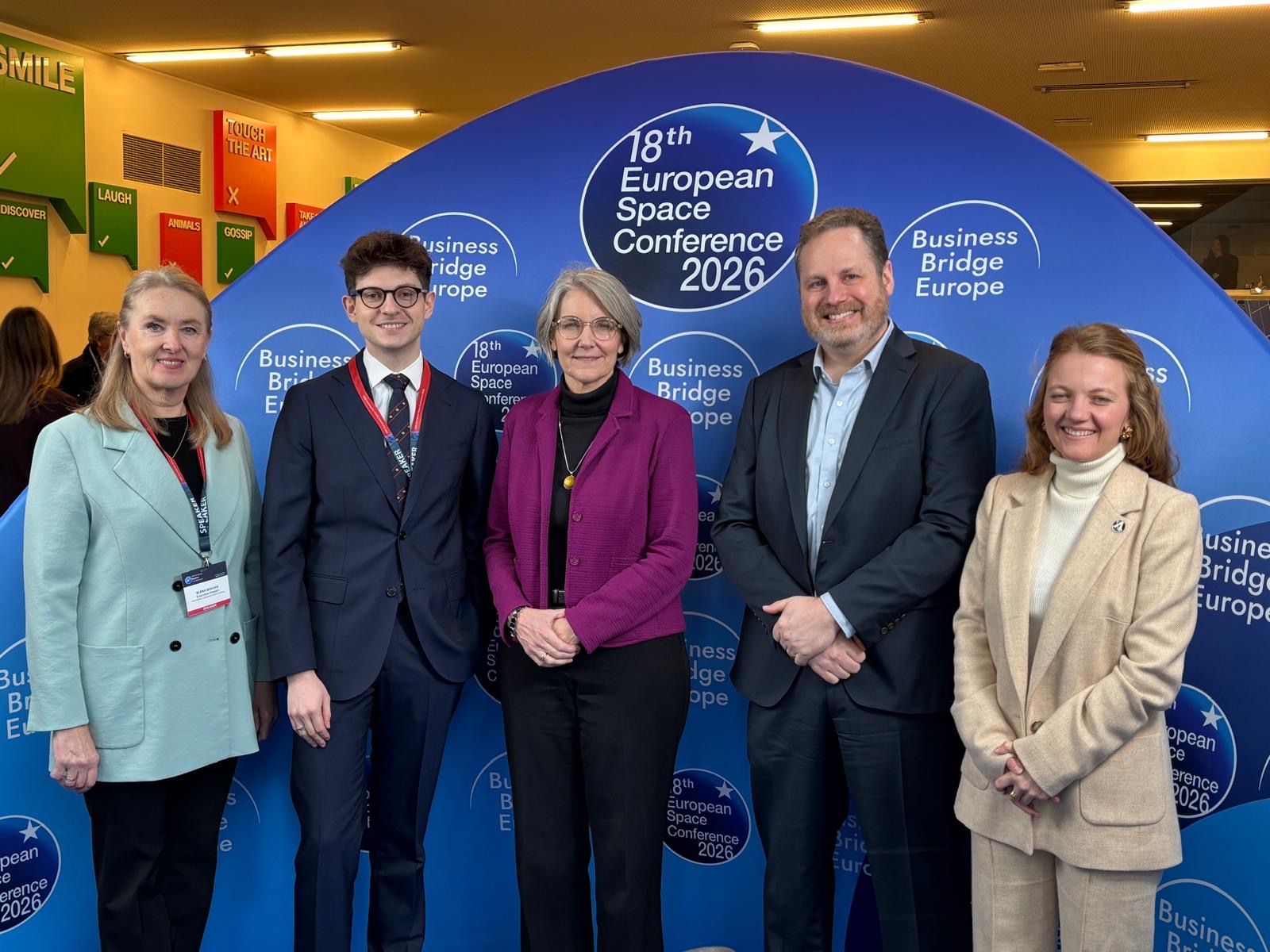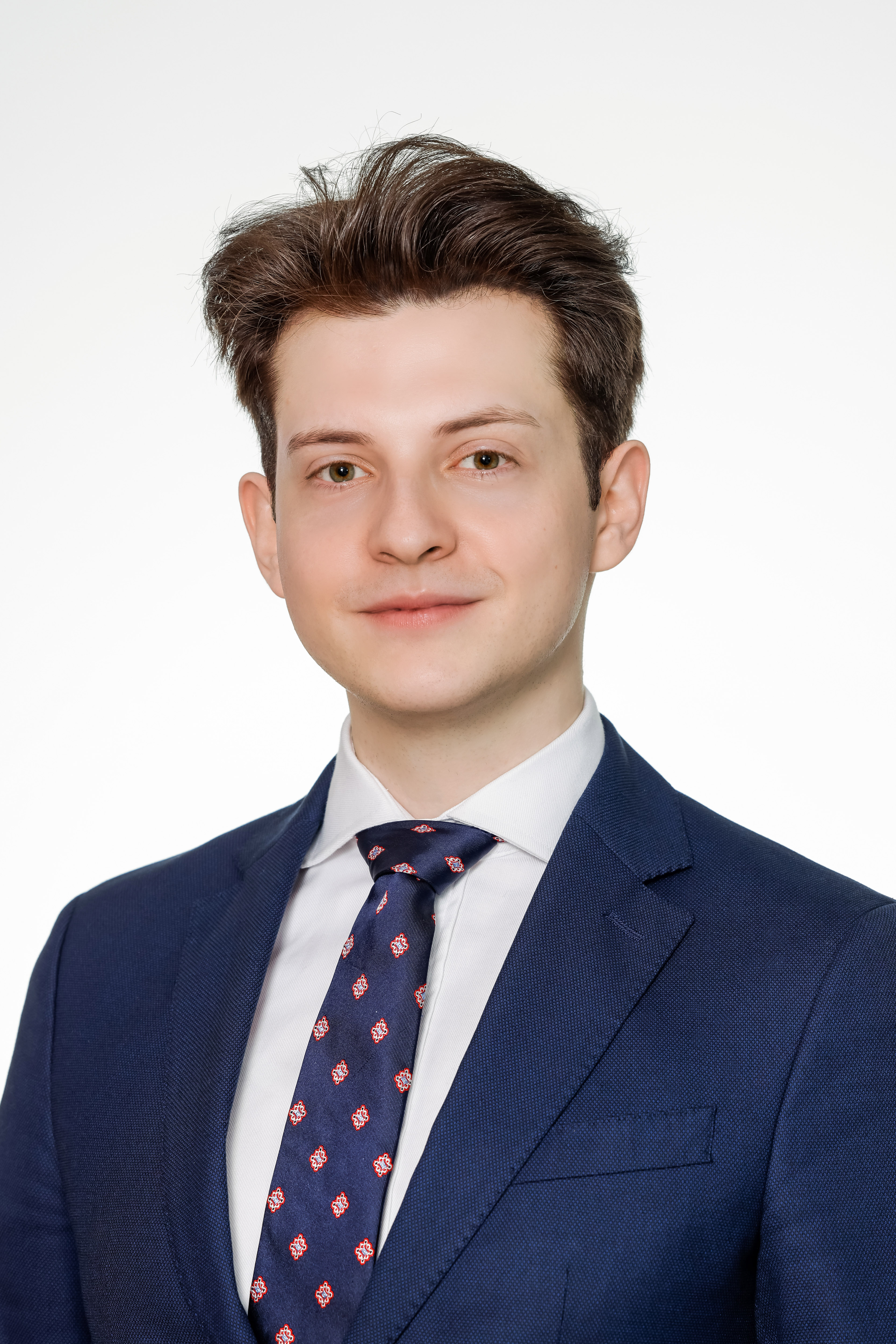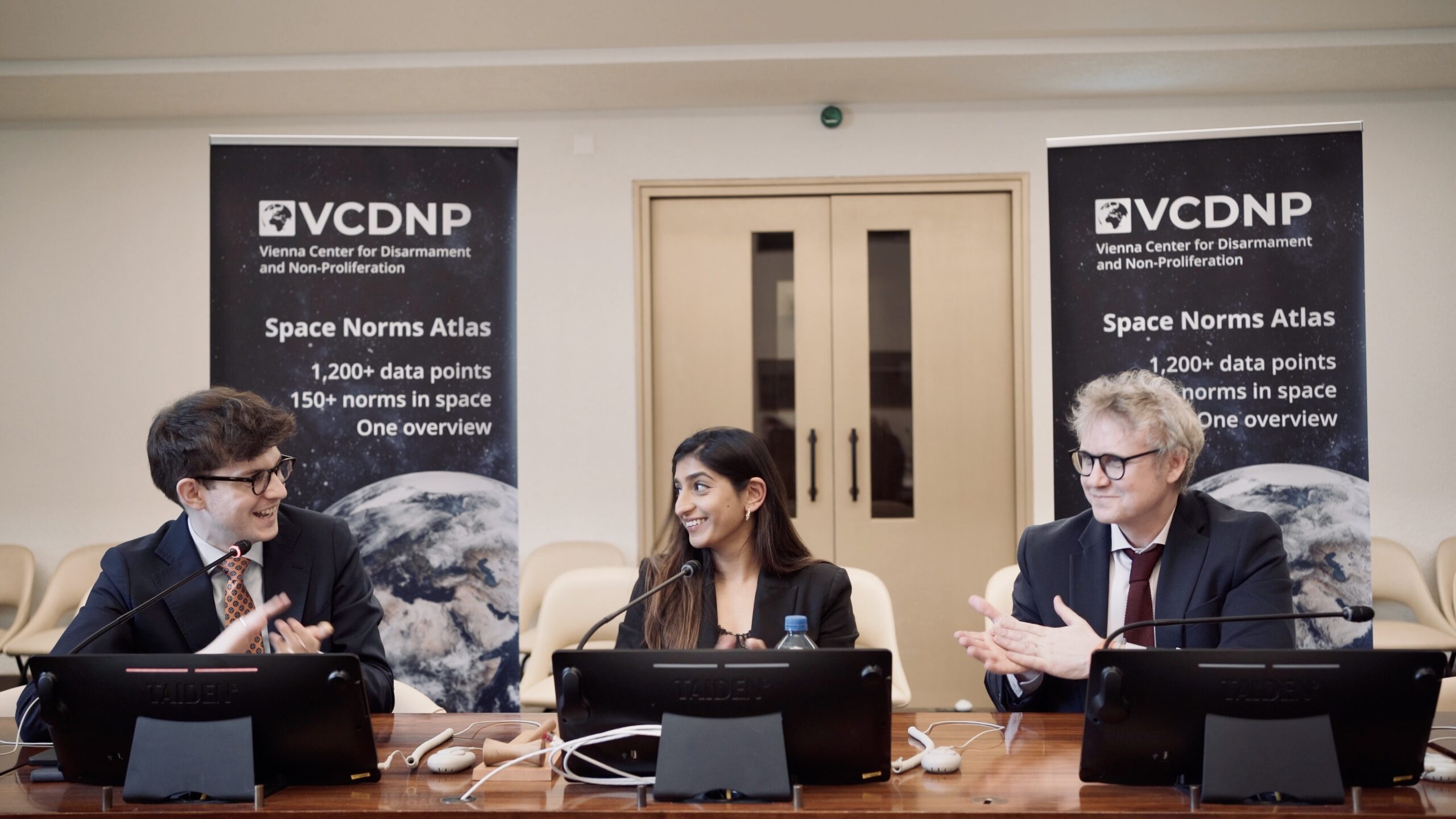
On 23 March 2026, Research Fellow Louis Reitmann introduced a new resource for diplomats and policy-makers working on space security during a VCDNP event at the Palais des Nations in Geneva.
The Space Norms Atlas is the first comprehensive overview of emerging norms for space security. Like an atlas, it maps 150 norms and standards for preserving stability and reducing the risk of conflict in space. Based on 1,200+ data points from UN processes on the prevention of an arms race in outer space (PAROS) since 2012, it provides a clear overview of States’ proposals for regulating behaviour in space and shows which proposals enjoy broad international support.
The event also featured a panel discussion, exploring current developments in the space threat landscape and their implications for multilateral space governance, with Clive Hughes, Head of Space Security and Advanced Threats at the UK Foreign, Commonwealth & Development Office, and Sabrina Alam, a seasoned space sustainability expert with previous positions at NASA, ESA, and the leading satellite operator SES, among others.
The event was opened by Ambassador David Riley, Permanent Representative of the United Kingdom to the Conference on Disarmament. Ambassador Riley underlined that, while not inevitable, the risk of escalation in space is growing more acute. Hence, States must take urgent action to prevent miscalculation and ensure predictable conduct.
He highlighted the important contribution of the Space Norms Atlas in providing a central overview of States’ proposals for space security mechanisms that, so far, have been dispersed in hundreds of records across years of UN meetings. He stressed that the Space Norms Atlas can help States move their discussions from principles to concrete proposals, especially in the Open-Ended Working Group on PAROS in All its Aspects.
Research Fellow Louis Reitmann shared key learnings from the Space Norms Atlas and how it can be used for:
1. Developing proposals for commitments and instruments: States can use the Space Norms Altas to develop proposals for commitments and instruments to be adopted. Each section in the report identifies opportunities for concrete outcomes that States can pursue flexibly, in the OEWG on PAROS, through coalitions of the willing in joint statements, or through the UN General Assembly.
2. Increasing meaningful participation: Based on the data examined, only 16 States, among them six developing countries, have made a contribution to more than one UN process on PAROS. Wider participation is needed to build a sustainable space security regime, but countries contemplating joining the conversation need assurance that the OEWG can yield meaningful outcomes. It is key that States have results-oriented substantive discussions at the upcoming OEWG sessions. States can also provide capacity-building to newcomer countries, supporting them in developing policies on space security that deliver on their development and security interests.
3. Consolidating support for norms on non-interference, restraint, and international humanitarian law in space: The Space Norms Atlas shows that fewer norms on non-interference with space systems and restraint in military activities in space have gained significant support among States. Proposals on IHL compliance in space have yet almost entirely been made by civil society. States should focus their efforts on achieving convergence on norms addressing these key issues.
4. Better data for better results: The Space Norms Atlas illustrates the value of data-driven insights. States would benefit from more resources that offer data analysis, for example, on the implementation of transparency and confidence-building measures in space activities by different countries.


Additionally, participants heard from diplomats in the audience on how they believe the Space Norms Atlas can facilitate their work. They highlighted its particular value as a resource for delegations with limited capacity and for developing countries by “contributing to a safer and more inclusive space environment”. Ambassador Carlos Foradori, Permanent Representative of Argentina to the United Nations in Geneva and Chair-designate of the OEWG on PAROS, commended the VCDNP’s work in delivering “a valuable manual and guide that certainly will enrich our multilateral conversations with essential ingredients.”
During the panel discussion on the changing threat landscape in space, Clive Hughes noted the explosive growth of satellites and especially of dual-use objects in orbit, against the backdrop of severe geopolitical tensions, as driving miscalculation and escalation risk. These developments introduce greater uncertainty into decision-making and expand the harmful impacts of potential incidents in space. At the same time, this could provide an impetus for States to achieve broad agreement to prevent further destructive anti-satellite testing at upcoming sessions of the OEWG – with the prospect of up to 20,000 satellites in orbit by the end of 2026, the safety risks posed by debris created through intentional actions would be unacceptable.
Sabrina Alam highlighted that the increasing production of dual-use assets by commercial providers is driven by government demand for off-the-shelf capabilities that can be quickly deployed, rather than developing military assets over several years. A root cause for this is that governments see critical services for civilian and military purposes, including Earth observation and communication, as increasingly vulnerable as harmful interference with space objects is becoming more common. Amid this focus on strengthening and protecting capabilities in space, there is still insufficient engagement with risk reduction, transparency, and communication with other space actors.
The conversation continued at a diplomatic reception, organised by the VCDNP, where delegates to the OEWG on PAROS as well as representatives of countries interested in expanding their engagement on space security had an opportunity to exchange expectations and ideas for the third session of the OEWG.

The project and the launch event were made possible thanks to financial support by the UK Foreign, Commonwealth & Development Office.