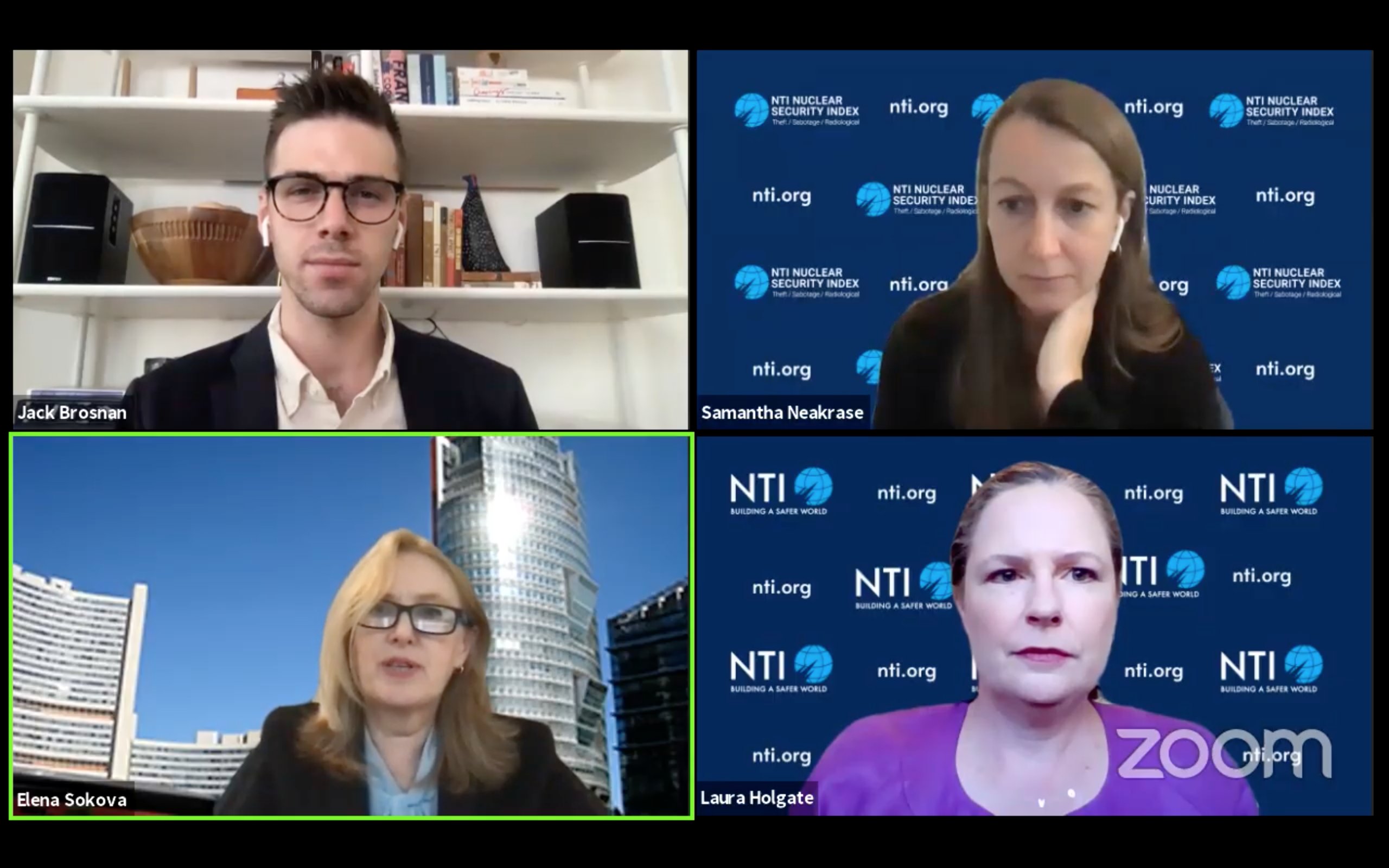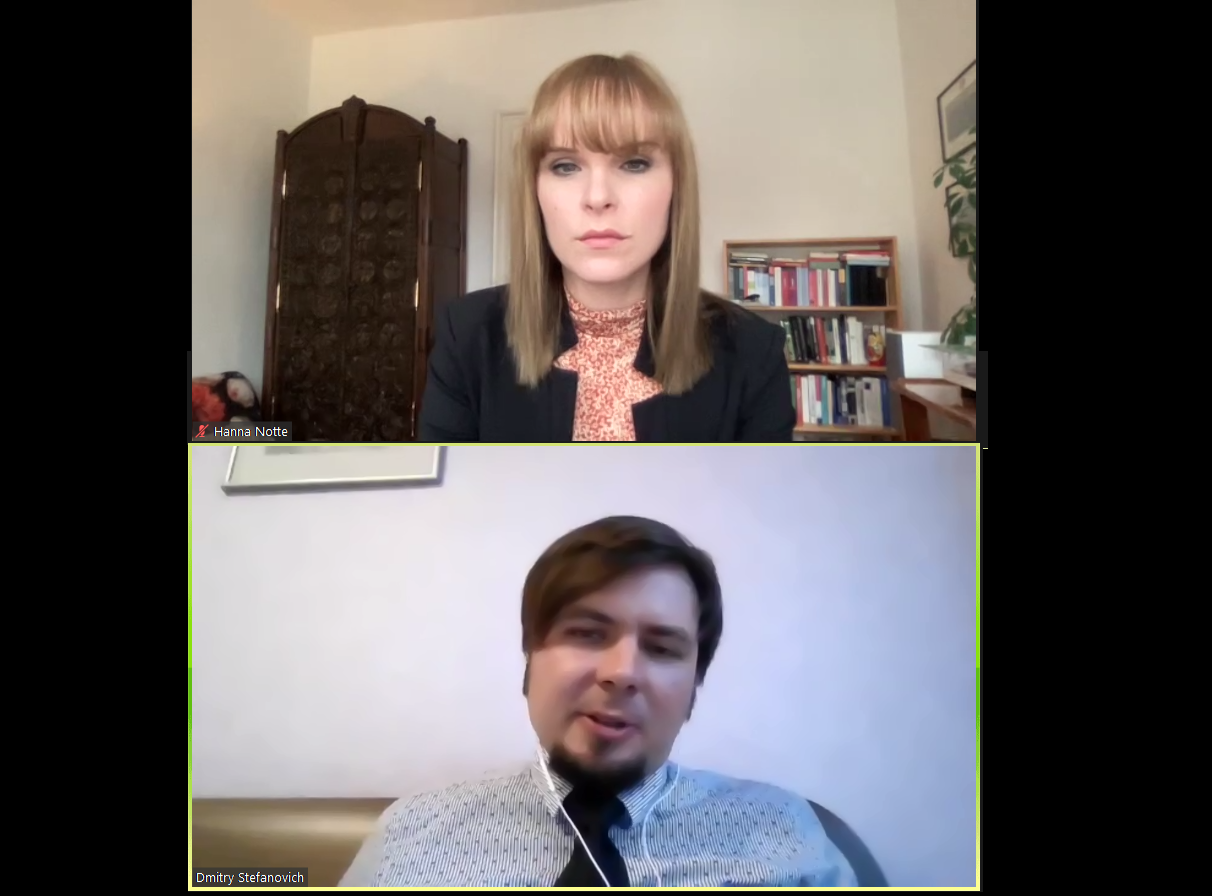
On 20 April 2026, the Vienna Center for Disarmament and Non‑Proliferation (VCDNP) hosted a panel discussion titled “Quantum Technologies and Security of Nuclear Materials and Facilities.” The panel explored the potential impact of emerging quantum technologies on the nuclear sector, focusing particularly on the new opportunities and challenges they may pose for nuclear security. The event was held in a hybrid format, with participants joining both in person and online.
Moderated by VCDNP Senior Fellow Dr. Sarah Case Lackner, the panel discussion was opened by VCDNP Executive Director Ms. Elena K. Sokova. The panel featured:
Ms. Sokova opened the discussion by underscoring the importance of understanding the concrete potential and risks associated with quantum technologies for the nuclear sector, and what these technologies are likely to mean for the future of nuclear security.
The panellists stressed that the term "quantum technologies" covers a broad range of technologies, typically grouped into three categories: quantum communications, quantum computing, and quantum sensing. All are likely to be relevant to the nuclear sector, though on different timelines, and each will pose distinct challenges, both from a technology-adoption perspective and from a security one.
Quantum computing, in particular, could bring significant risks and benefits, though on a still-unclear timeline. Expert estimates from the panel ranged from technology readiness in as little as 7 years to 15 or more. Its potential to aid in the modelling of complex phenomena could be a game-changer, enabling breakthroughs in material and reactor design, particularly for future fusion reactors. However, the ability of future quantum computers to break many commonly used cryptographic algorithms is likely to pose significant challenges to the security of nuclear facilities as well as for critical infrastructure in the financial, energy, and other sectors, and for law enforcement.

Many quantum sensing applications, on the other hand, are much nearer to commercial deployment, including in the nuclear sector. They are already being tested and used in some cases, and the main remaining challenges to deployment are the readiness and resilience of the supply chain for these technologies, as well as current affordability levels.
Nuclear security challenges associated with quantum technologies, as with other emerging and disruptive innovations, will require careful mitigation, with national nuclear regulators playing a central role. The rapid pace of technological change worldwide, spanning not only quantum technologies but also fields such as artificial intelligence, is prompting some nuclear regulatory bodies to explore more anticipatory and adaptive approaches than those currently in place. The International Atomic Energy Agency (IAEA) plays a key role in communicating the benefits and risks of new technologies for nuclear security, including for quantum technologies, and in supporting Member States and their national nuclear regulatory bodies in developing and implementing relevant nuclear security programmes.
During the Q&A session, panellists addressed questions from the audience on issues such as the creation or expansion of international regulatory bodies for quantum technologies, trust and integrity of information in increasingly automated data systems, and the role of the private sector in developing quantum technologies. The session concluded with panellists underscoring the importance of the quantum–human nexus, emphasizing that humans must remain the central and final users of these technologies.