In May 2026, States Parties to the Treaty on the Non-Proliferation of Nuclear Weapons (NPT) will meet for the 11th Review Conference under exceptionally difficult circumstances. In a commentary for the European Leadership Network (ELN), VCDNP Senior Research Associate Federica Dall’Arche reflects on Italy’s perspective on the Treaty and underscores the need for strong European support and leadership in sustaining and reinforcing the NPT framework.
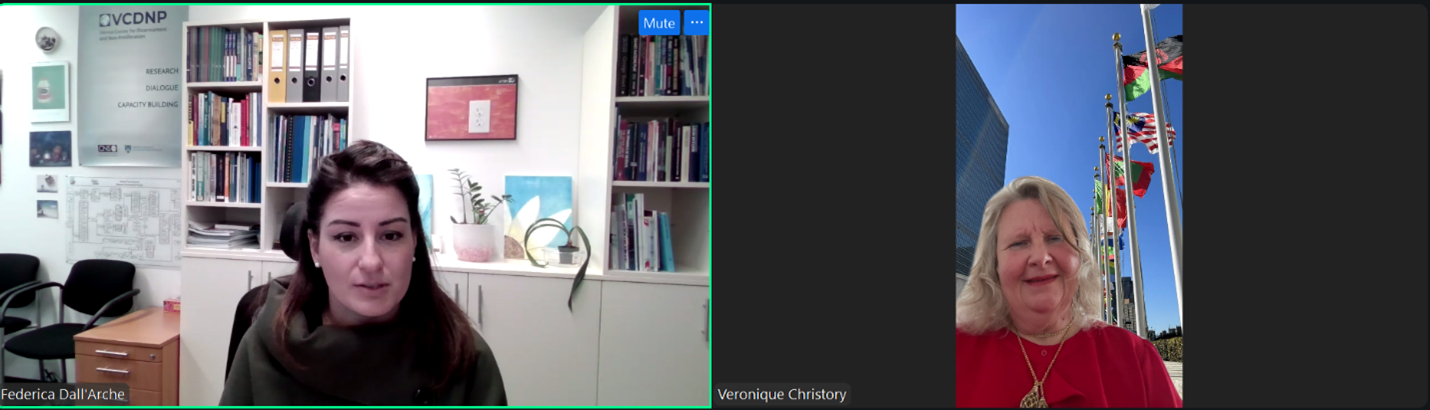
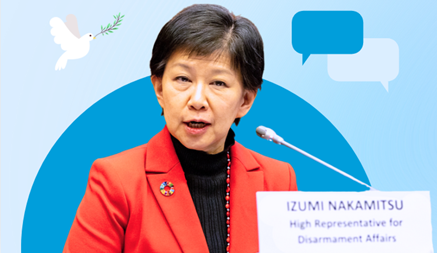
As a part of the Young Women and Next Generation Initiative (YWNGI), the VCDNP hosted a webinar featuring Véronique Christory, Senior Arms Advisor at the International Committee of the Red Cross (ICRC), on the ICRC’s role in negotiating the Treaty on the Prohibition of Nuclear Weapons (TPNW).
The Vienna Center for Disarmament and Non-Proliferation (VCDNP) is recruiting an intern for summer 2026, under the Japan Chair for a World without Nuclear Weapons programme. Eligible applicants must be Japanese nationals. The VCDNP is an international non-governmental organisation based in Vienna, Austria. The Center conducts research, facilitates dialogue, and builds capacity on nuclear disarmament and non-proliferation […]
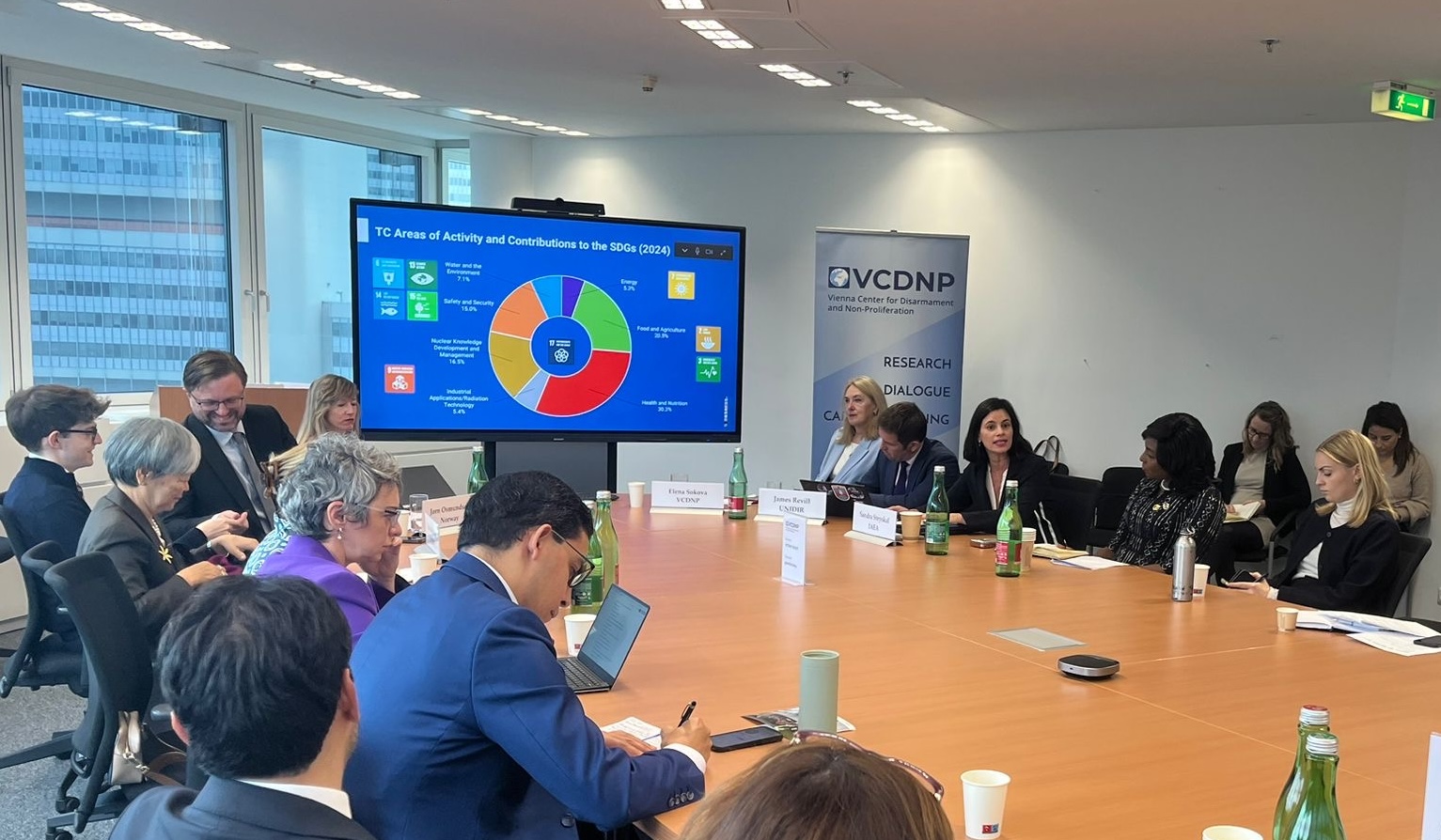
The VCDNP hosted a workshop to explore needs and ways to strengthen capacity-building efforts in the nuclear field, in collaboration with the UN Institute for Disarmament Research (UNIDIR) and the Permanent Mission of Norway.
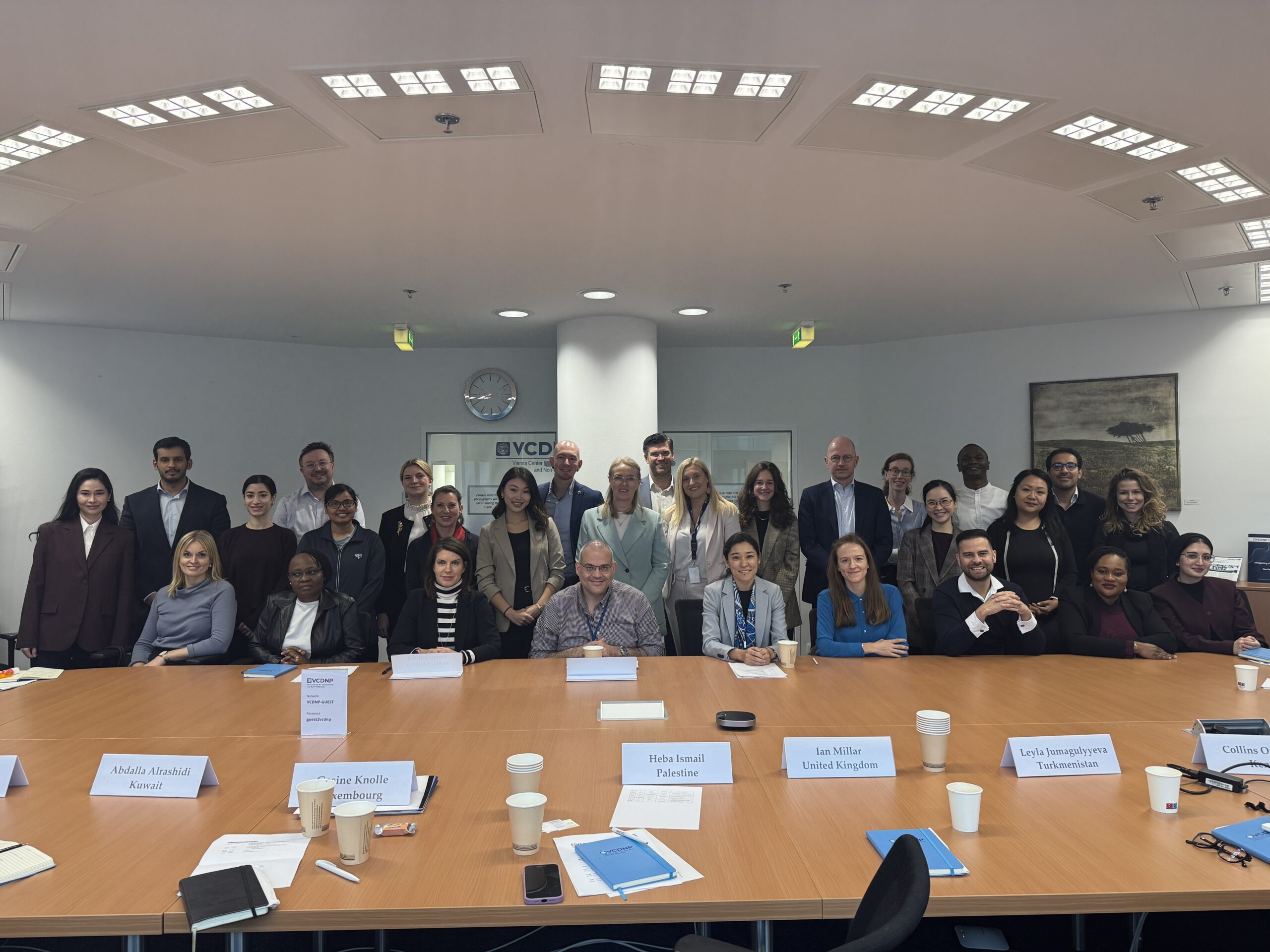
The VCDNP hosted its 30th intensive short course on nuclear non-proliferation and disarmament, training 24 diplomats, officials, and other practitioners representing 23 countries.
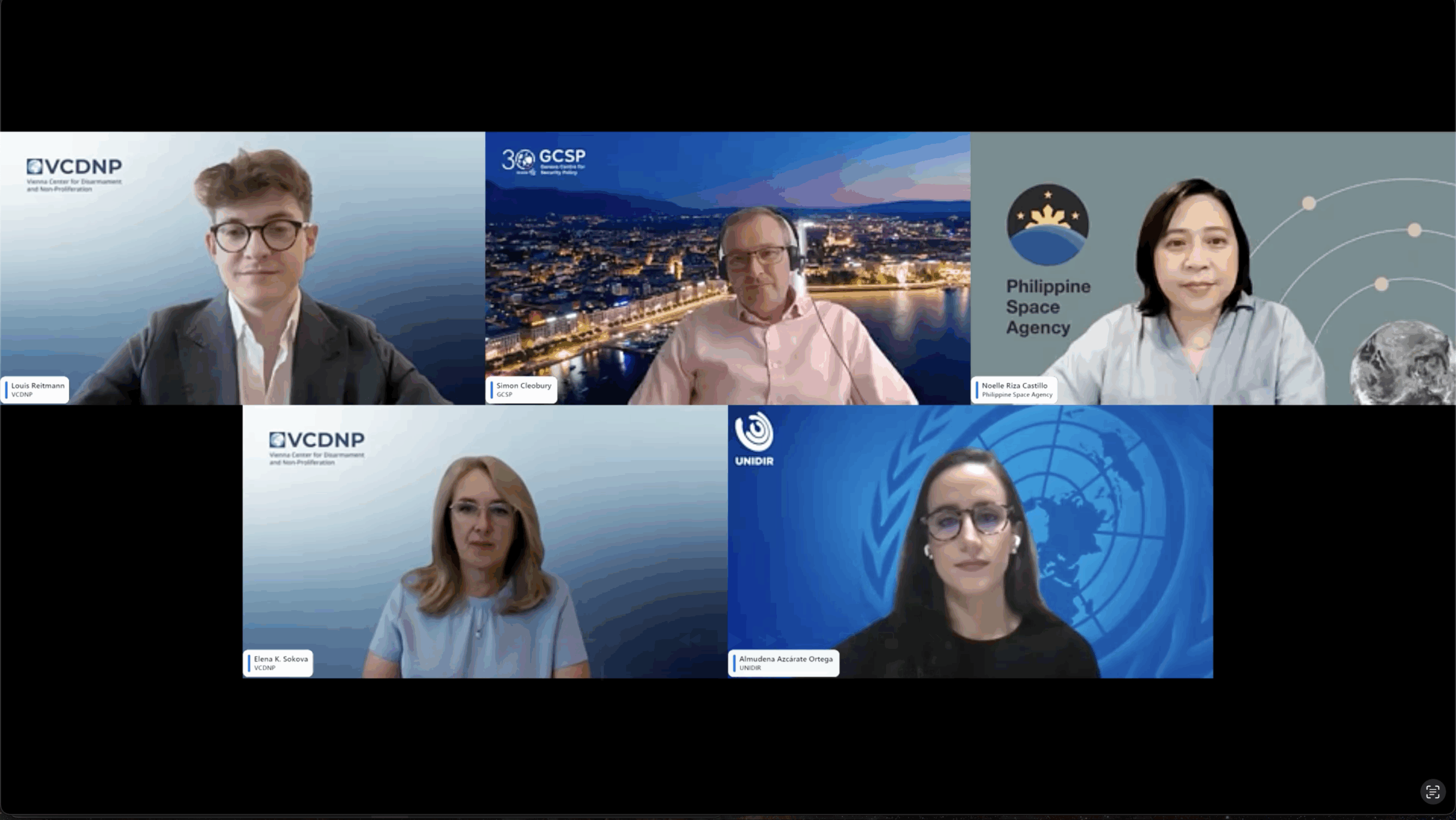
The VCDNP presented its inaugural publications on space security at an online event, featuring presentations by Research Fellow Louis Reitmann and a panel discussion with leading governmental and non-governmental experts on the prevention of an arms race in outer space.
In two papers, Research Fellow Louis Reitmann provides a summary of multilateral processes for PAROS since 1978 and proposes a results-oriented and form-flexible approach to boost space threat reduction.
Senior diplomats, officials from international organisations, and non-governmental experts discussed the state of the international nuclear non-proliferation regime, the implications of recent events, and prospects for the 2026 Non-Proliferation Treaty Review Conference.
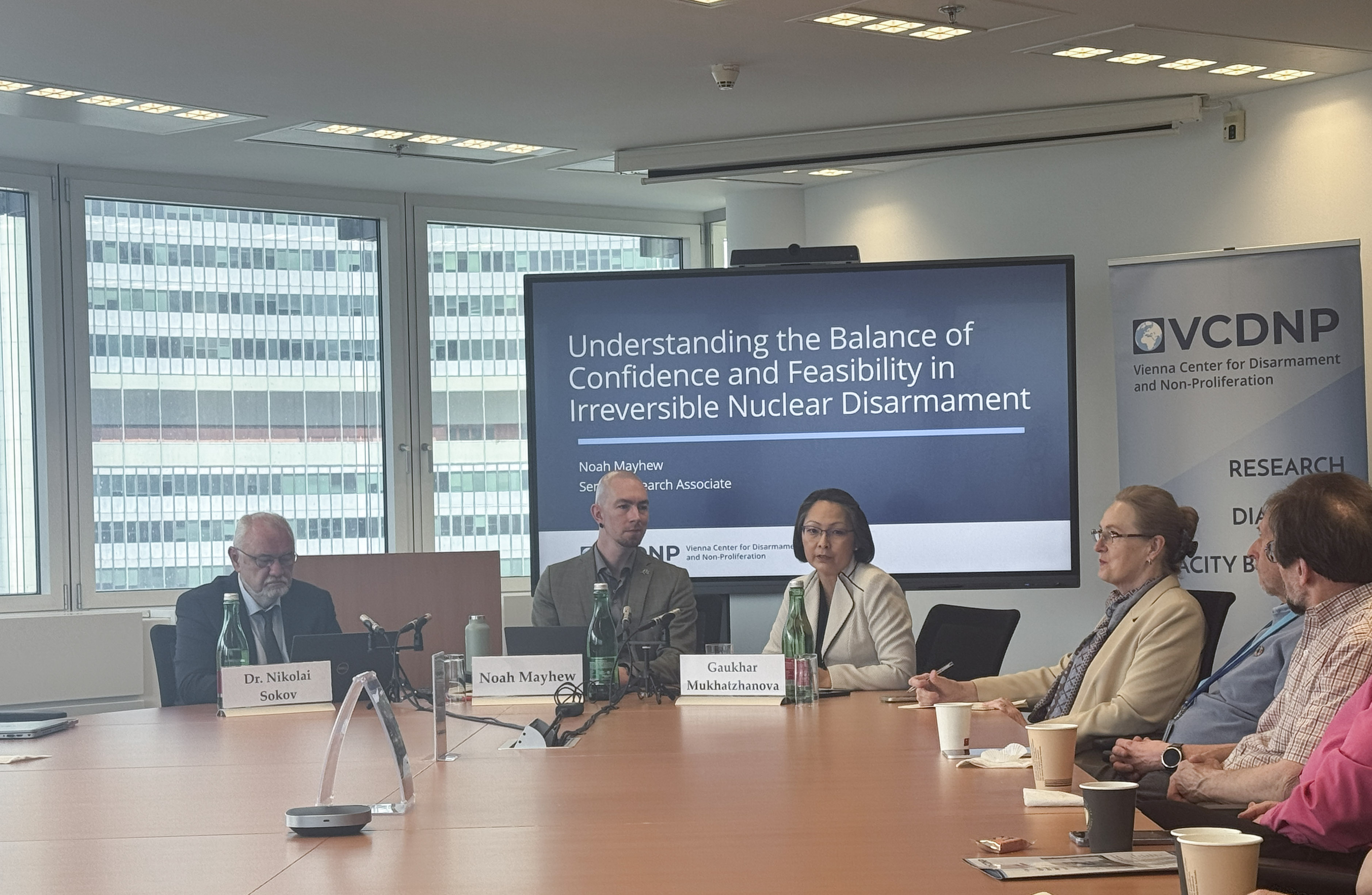
The VCDNP hosted a seminar to introduce a new report that maps the political, legal, and normative pathways to advancing irreversible nuclear disarmament for NPT States Parties.
A new study authored by Senior Research Associate Noah Mayhew, Senior Fellow Dr. Nikolai Sokov, and Dr. Adam Bernstein explores political, legal, and normative considerations that NPT States Parties could consider for irreversibility in nuclear disarmament.
In this edition of the Governing the Atom brief series, Senior Research Associate Noah Mayhew and Senior Fellow Dr. Nikolai Sokov describe the development of the principle of irreversibility in nuclear disarmament.
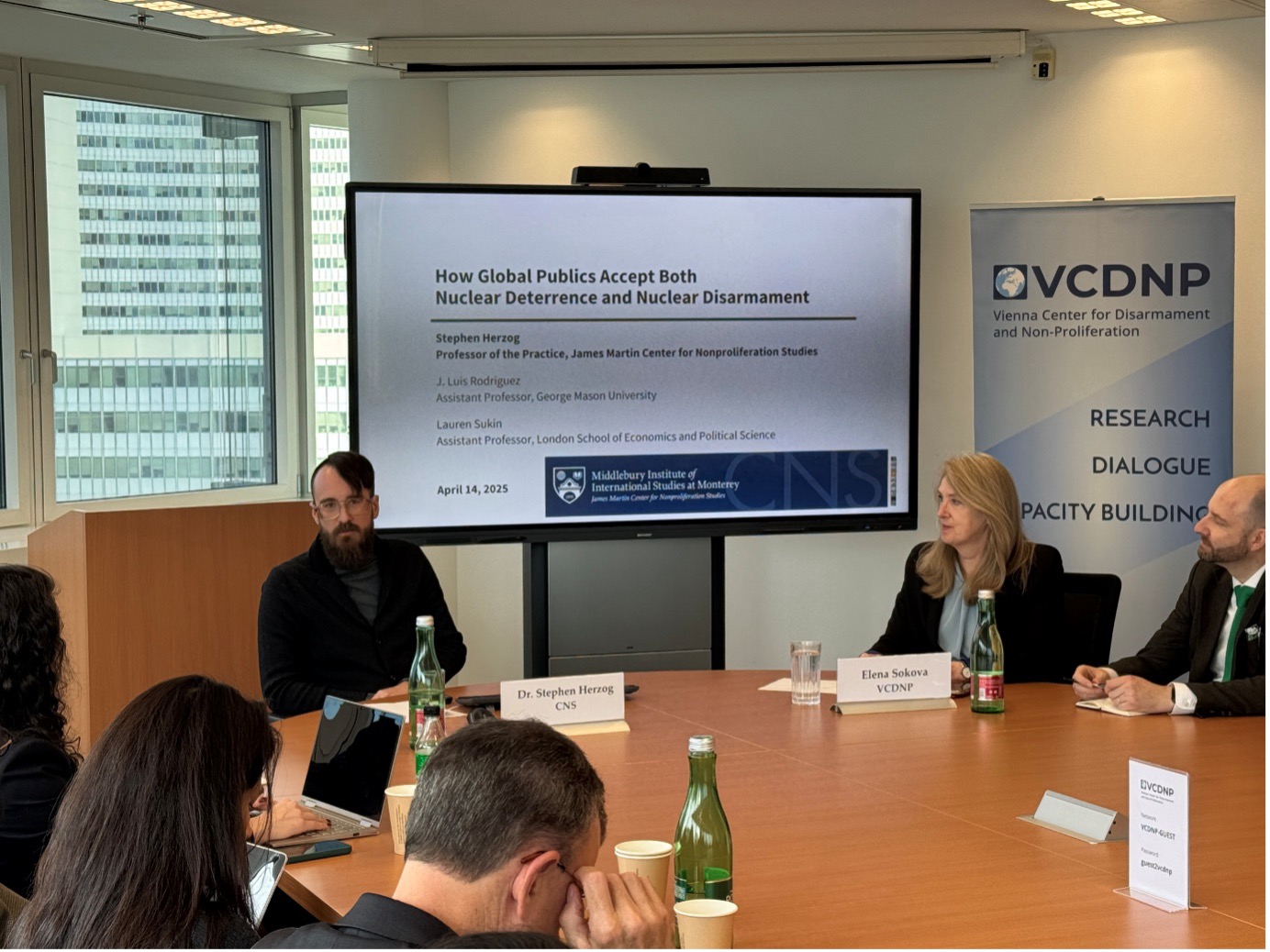
The VCDNP hosted a seminar featuring Dr. Stephen Herzog of the James Martin Center for Nonproliferation Studies, who presented striking new findings from a global survey of public views on nuclear weapons possession and use.
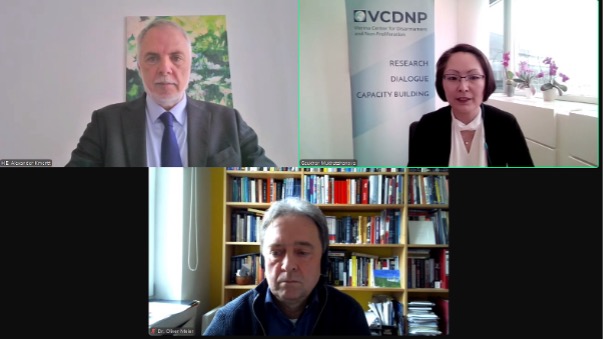
The VCDNP held a webinar discussing the report on articulating security concerns of TPNW States Parties, featuring Ambassador Alexander Kmentt of Austria as presenter and Dr. Oliver Meier of the European Leadership Network as a discussant.
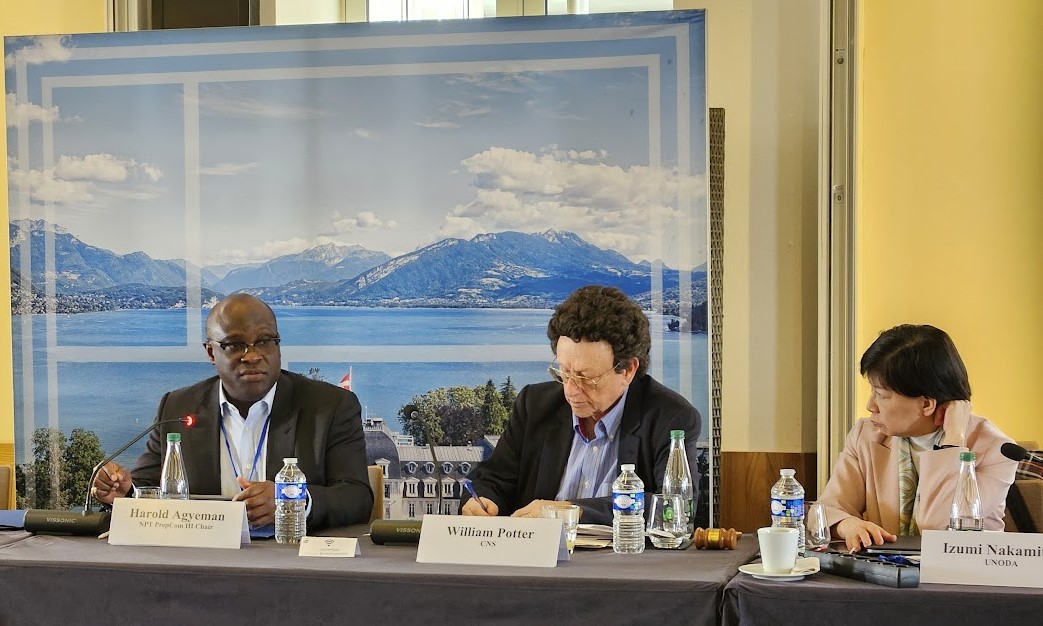
On 20 and 21 March, over 60 senior diplomats, international organisations officials, and non-governmental representatives gathered in Annecy, France to discuss key issues for the third session of the Preparatory Committee of the 2026 NPT Review Conference.
To provide the best experiences, we use technologies like cookies to store and/or access device information. Consenting to these technologies will allow us to process data such as browsing behavior or unique IDs on this site. Not consenting or withdrawing consent, may adversely affect certain features and functions.
Functional Always active
The technical storage or access is strictly necessary for the legitimate purpose of enabling the use of a specific service explicitly requested by the subscriber or user, or for the sole purpose of carrying out the transmission of a communication over an electronic communications network.
Preferences
The technical storage or access is necessary for the legitimate purpose of storing preferences that are not requested by the subscriber or user.
Statistics
The technical storage or access that is used exclusively for statistical purposes.The technical storage or access that is used exclusively for anonymous statistical purposes. Without a subpoena, voluntary compliance on the part of your Internet Service Provider, or additional records from a third party, information stored or retrieved for this purpose alone cannot usually be used to identify you.
Marketing
The technical storage or access is required to create user profiles to send advertising, or to track the user on a website or across several websites for similar marketing purposes.