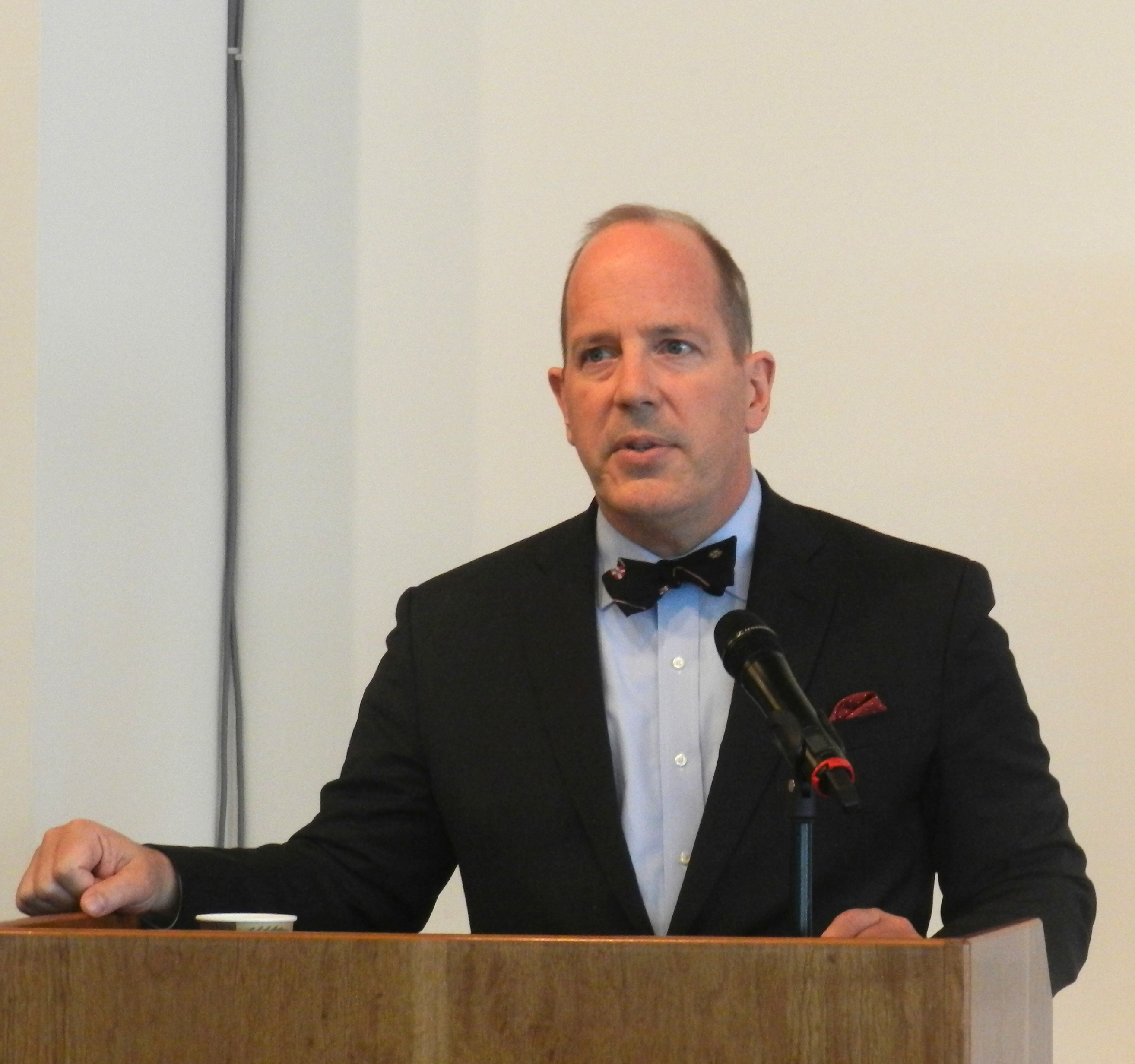
On 19 September, the VCDNP, in cooperation with the Permanent Mission of Japan to the International Organizations in Vienna, hosted a seminar with the US Assistant Secretary of State Dr Christopher Ford on The Strategic Logic of US Iran Policy.
In his remarks, Assistant Secretary Ford discussed the rationale for the current US Administration’s policy with regard to Iran. He underscored US concerns with Iran’s motivations for the pursuit of its nuclear program, past history of withholding information about its activities, and Iran’s recent steps going beyond the limits imposed by the Joint Comprehensive Plan of Action (JCPOA) on its enrichment activities. He further argued that the JCPOA – whatever one’s assessment of it might be – is “irrelevant” to the US concerns about Iran’s nuclear program and intentions in the long term.
Assistant Secretary Ford also referenced a recent statement to the International Atomic Energy Agency’s (IAEA) Board of Governors by the Agency’s Acting Director General Cornel Feruta, raising questions about the completeness of Iran’s current reporting to the IAEA. Dr Ford then called on the international community to work together on ensuring Iran’s full cooperation with the IAEA and compliance with safeguards obligations.
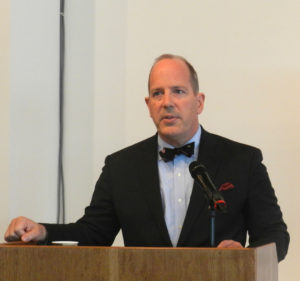
Discussing the US approach to a long-term solution, Assistant Secretary Ford outlined a multi-pronged vision: 1) no enrichment and reprocessing activities in Iran at any time; 2) full disclosure by Iran of past weaponization activities in return for more comprehensive access to the “benefits of peaceful applications of nuclear technology”; 3) extensive IAEA verification and monitoring, going beyond both the Comprehensive Safeguards Agreement and the Additional Protocol, 4) Iran should not develop or possess missiles that can carry more than a 500 kg payload to a distance of more than 300 km, and 5) the comprehensive deal should be in the form of a legally binding agreement rather than plan of action. Dr Ford explained that in return for Iran’s acceptance of the above limitations, as well as other conditions, the United States would remove all sanctions and offer full restoration of diplomatic and economic relations with Iran.
During the question and answer session, a range of issues was brought up, including the history of JCPOA negotiations, the purpose of recent US sanctions on Iran’s political leaders, current U.S. perspectives on arms control, and the progress of the new US initiative Creating an Environment for Nuclear Disarmament.
Full text of Assistant Secretary Ford’s remarks can be found here.