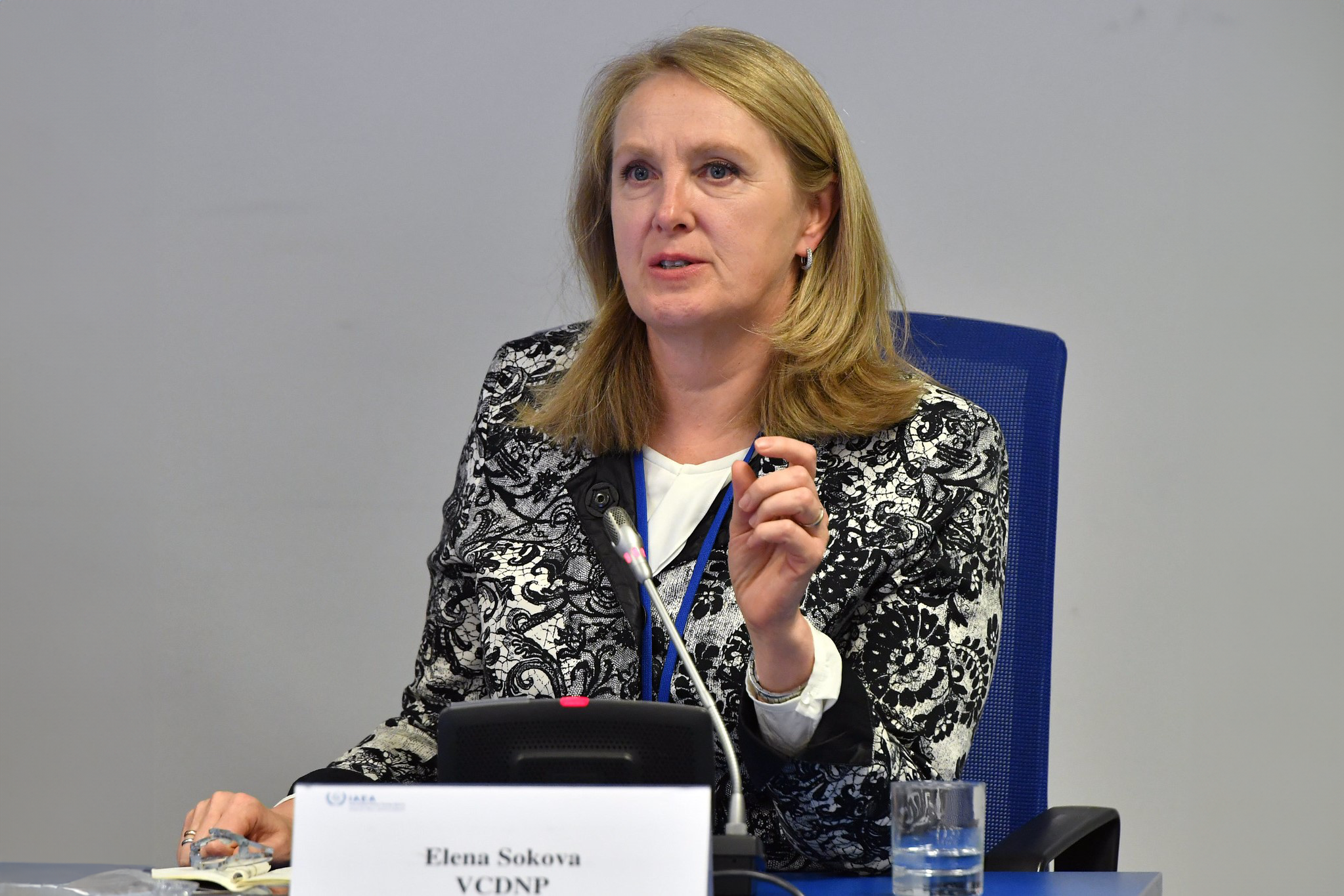
On 1 September, the VCDNP convened a seminar, AI in Nuclear Forensics and Radiological Crime Scene Management, bringing together perspectives on the challenges and opportunities AI can bring to nuclear forensics and radiological crime scene management from law enforcement, the judicial system, and international organisations. The event was held in a hybrid format, with participants joining both in person and online.
The seminar was moderated by VCDNP Emerging Technologies Programme Director Dr. Sarah Case Lackner, and featured a discussion with three expert panellistss:
Dr. Case Lackner opened the discussion by noting that AI has become ubiquitous in our lives in ways that would have been unimaginable just three or four years ago. The same is true in nuclear forensics and crime scene management, where scientists and technicians already use AI to support the analysis of radioactive material. Noting the panellists' diverse professional backgrounds, she invited them to share how AI is currently being used and discussed in the field, and then to explore the opportunities and challenges it presents for nuclear forensics and crime scene management, with particular attention to law enforcement, prosecutors and judges, and international cooperation.

During the discussion, Ms. Lai focused on law enforcement aspects. For example, she noted that isotope identification is the most significant current application of AI, with AI-enabled tools now allowing law enforcement to conduct some analyses at the crime scene that previously required a full laboratory.
Mr. Minks drew on his experience as a prosecutor and as a judge to focus on the implications for legal professionals, highlighting both the risks and the potential benefits. Notably, he observed that the growing sophistication of AI-generated content is making it increasingly difficult for judges and prosecutors to determine whether AI has been used to manipulate evidence, but that at the same time, AI can be useful in summarising and explaining highly technical subjects to prosecutors and judges involved in cases concerning nuclear or radioactive material.

Finally, Mr. Lazarev, focusing on the role of international organisations, noted that international cooperation has a role to play in responding to the challenges posed by AI, underscoring the ways existing structures support national law enforcement and legal systems, including through UNODC's Counter-Terrorism Legal Training Curriculum.
During the Q&A session, panellists addressed audience questions on issues spanning the admissibility of AI-supported analysis in court, the cybersecurity of AI tools used by law enforcement, and AI use by non-state actors.
This event was made possible with the generous support of Global Affairs Canada.