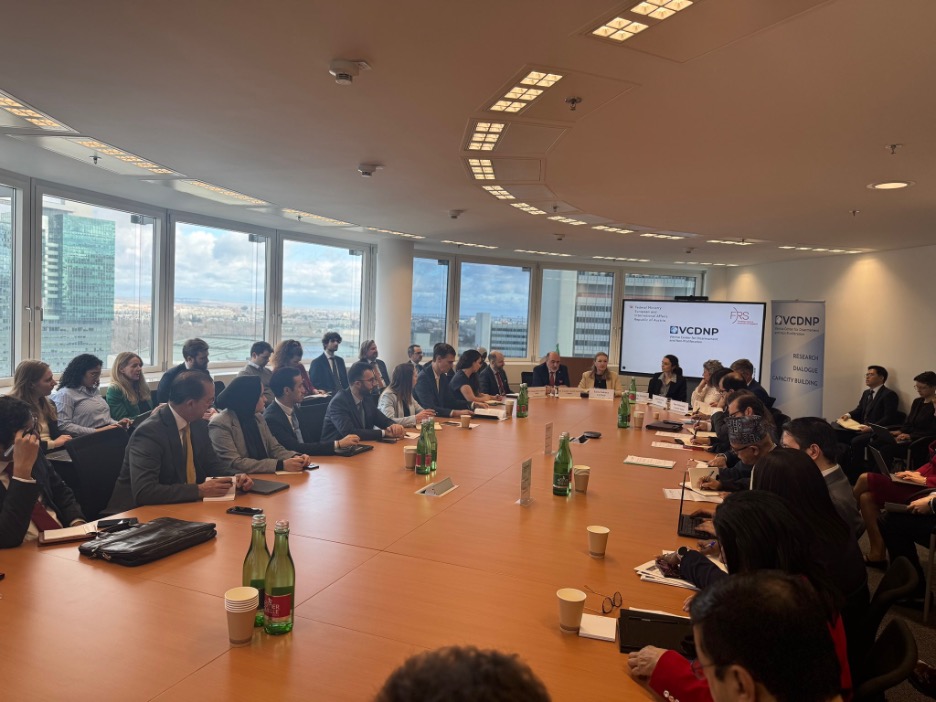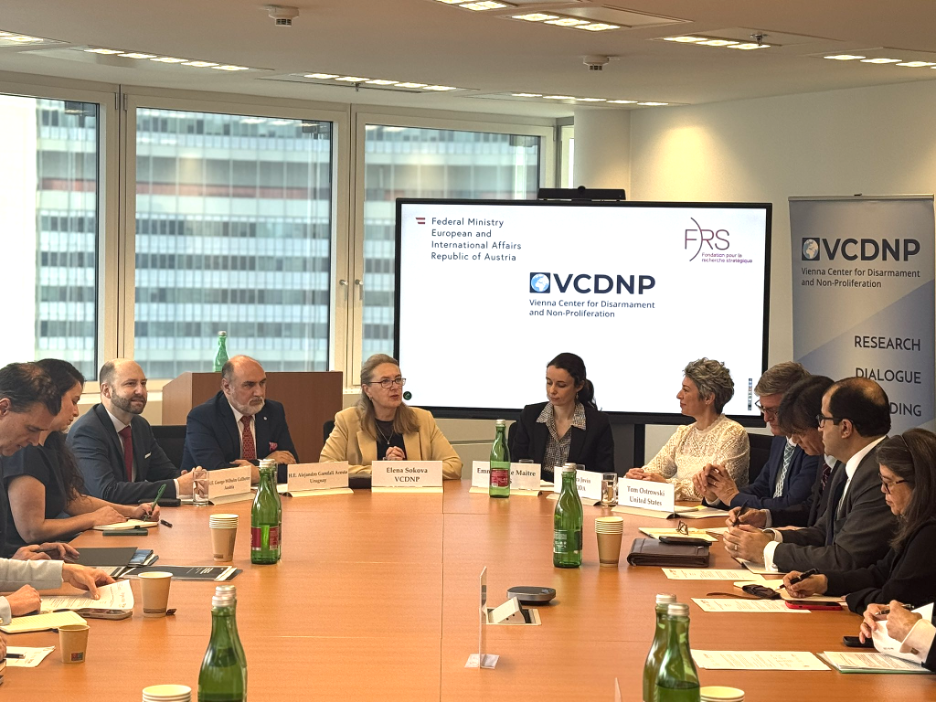
The VCDNP welcomed ambassadors and diplomats from a wide variety of countries to a workshop on the Hague Code of Conduct against Ballistic Missile Proliferation (HCoC), co-organised with the Austrian Federal Ministry for European and International Affairs, the Permanent Mission of Uruguay to the United Nations in Vienna, and the Fondation pour la recherche stratégique (FRS), on 24 February 2026.
The workshop explored new proliferation challenges facing HCoC, including cruise missiles, UAVs, and light aircraft, which are currently not covered by the Code. At the same time, HCoC is growing in relevance as the only multilateral instrument for transparency and confidence-building and non-proliferation of a weapons category that is capable of delivering weapons of mass destruction and is becoming increasingly accessible. Participants also heard about the palpable benefits that HCoC provides to Subscribing States, such as access to pre-launch notifications in the context of missile tests and space launches.
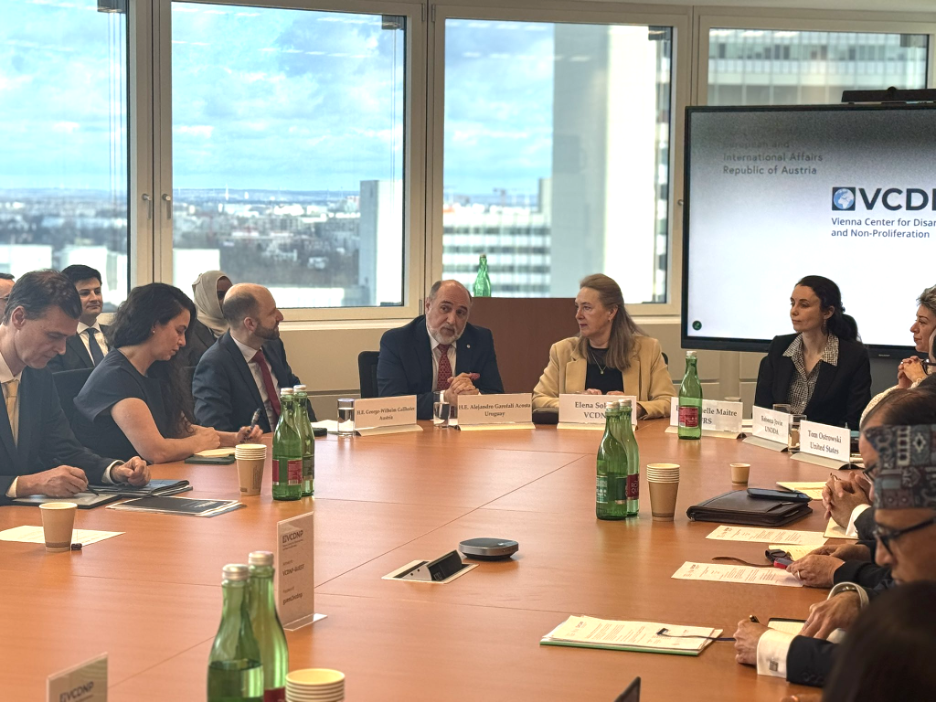
Participants were welcomed by Elena Sokova, VCDNP Executive Director, Ambassador Alejandro Garofali Acosta of Uruguay, Chair of the Hague Code of Conduct, and Ambassador George-Wilhelm Gallhofer, Head of the Department of Disarmament, Arms Control, and Non-Proliferation at the Austrian Foreign Ministry.
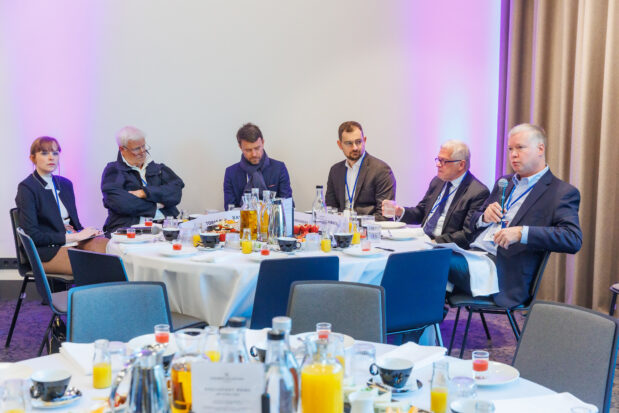
Focusing on the relevance of HCoC in the current security environment, the workshop’s first panel considered possibilities its further development to address new missile and related technologies and enhance its effectiveness for international security. The speakers also noted the broad international support, shown also by many non-Subscribing States voting in favour of UN resolutions supporting the Code. The panel also addressed some misperceptions about subscribing to the Code, which comes with reduced reporting requirements for States without missile programmes but provides information that is critical to national security and usually does not require ratification by the legislature. The speakers also highlighted the value of the Code’s annual declarations, including to Subscribing States that do not themselves have a ballistic missile programme; they noted that the declarations offer States advanced notification of launches and more specific and detailed information than is available through open sources. Additionally, the panelists discussed the Code’s role in providing “rules of the road” for missile testing and space launches in the absence of robust, universal global norms about such operations.
The speakers were:
The session was moderated by VCDNP Executive Director Elena Sokova.
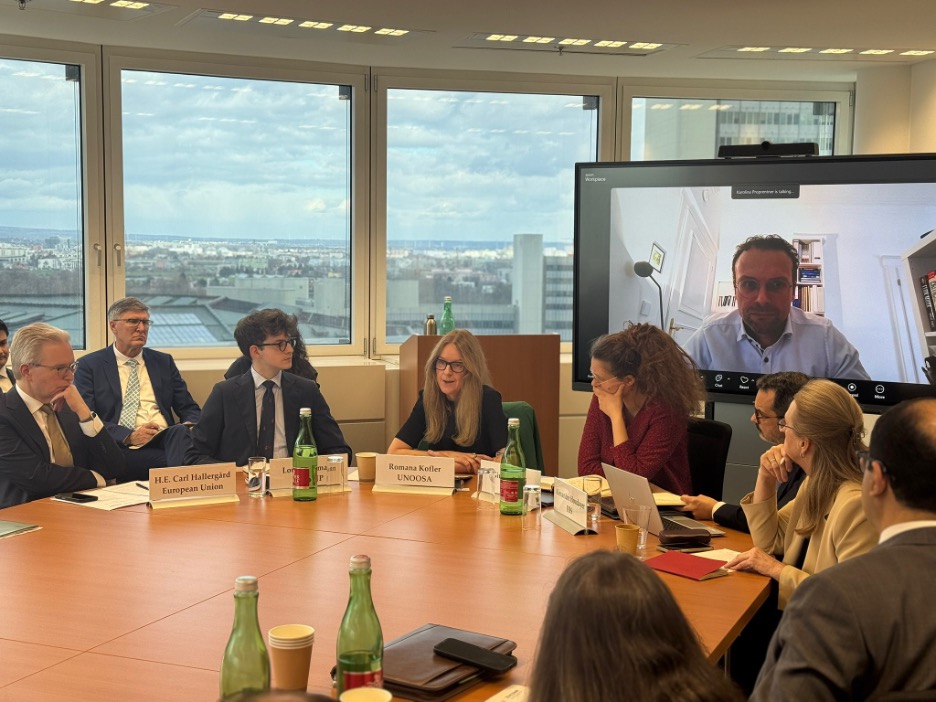
The second panel focused on connections between missiles and space launch technologies. It was noted that the rapid growth in space launches, driven by new space industry giants like SpaceX, the emergence of space programmes in more countries, and the advent of micro- and nano-launchers are driving proliferation risks. A particular challenge are space launch start-ups whose technology may be acquired by malicious actors – especially the advanced electronics of guidance and control systems in modern launchers could be diverted for missile development.
Panelists also examined the lessons that international efforts for the prevention of an arms race in outer space can draw from HCoC as a successful intergovernmental process. The measures taken through HCoC – pre-launch notifications, regular reporting, and launch site visits – are mentioned as important transparency and confidence-building measures in the reports of two UN Groups of Governmental Experts in 2013 and 2024, both adopted by consensus. The panelists also noted HCoC’s contribution to international space governance given the commitment that Subscribing States make to accede to and abide by three major space treaties: the Outer Space Treaty, the Registration Convention, and the Liability Convention.
The speakers were:
The session was moderated by VCDNP Research Fellow Louis Reitmann.
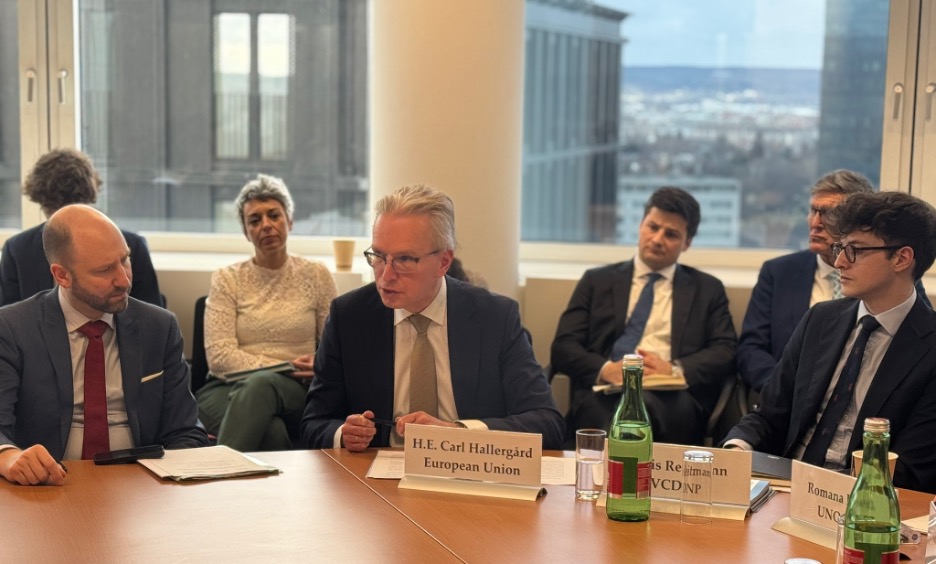
In his closing remarks, Ambassador Carl Hallergård, Head of the EU Delegation to the International Organisations in Vienna, underscored the EU’s long-standing political and financial support for the Code and its commitment to promoting its universalisation, full implementation, and effective functioning. Stressing the serious security risks posed by ongoing missile proliferation, including transfers to support Russia’s war against Ukraine, the Ambassador called on all states to subscribe to the Code and work together to strengthen international security and stability.