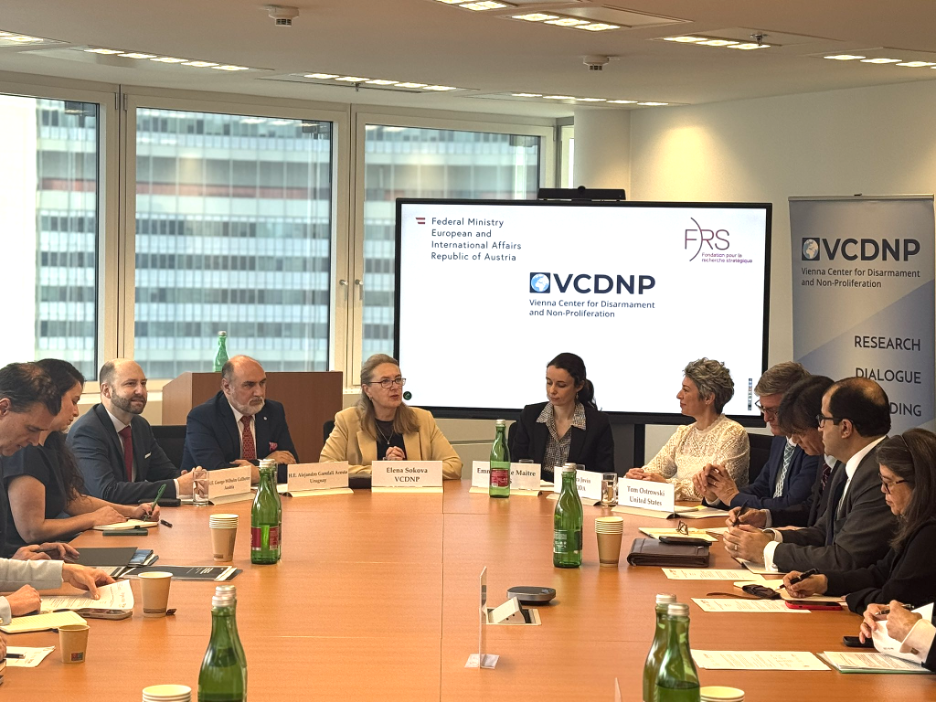
The VCDNP, the Austrian Foreign Ministry, the Permanent Mission of Uruguay, and the Fondation pour la recherche stratégique hosted a workshop on the Hague Code of Conduct against Ballistic Missile Proliferation (HCoC) and its role within the international arms control and non-proliferation architecture.
In May 2026, States Parties to the Treaty on the Non-Proliferation of Nuclear Weapons (NPT) will meet for the 11th Review Conference under exceptionally difficult circumstances. In a commentary for the European Leadership Network (ELN), VCDNP Senior Research Associate Federica Dall’Arche reflects on Italy’s perspective on the Treaty and underscores the need for strong European support and leadership in sustaining and reinforcing the NPT framework.
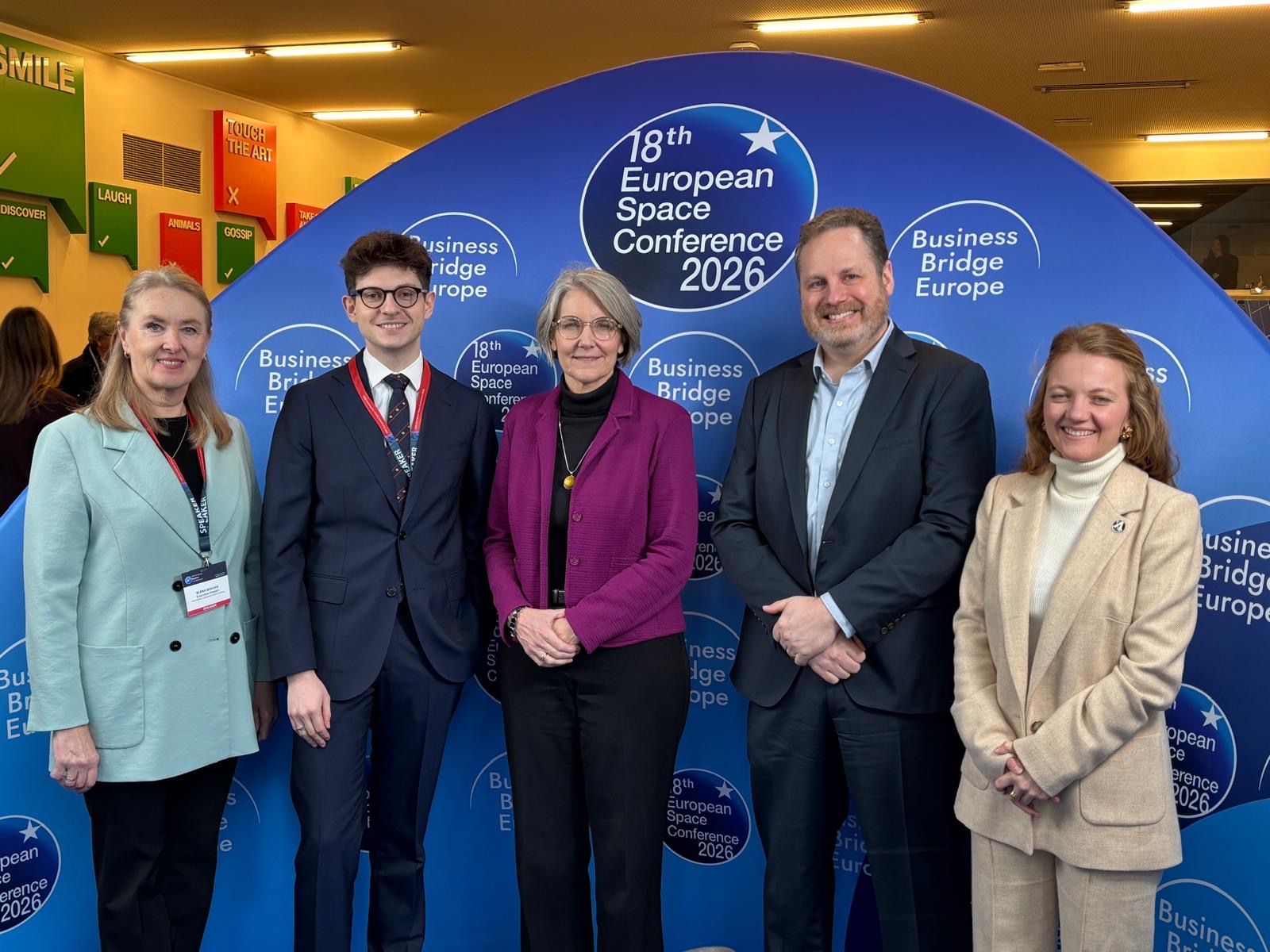
The VCDNP and the European External Action Service (EEAS) organised a panel discussion at the 18th European Space Conference in Brussels to highlight the important contributions that space industry and defence actors can make to UN processes for stability and security in space.
Dr. Natasha Bajema and VCDNP’s Mara Zarka examine the intersections between AI and WMD, with an outlook of how this space may change over the next ten years. The paper offers a guide to thinking about this emerging threat space and provides policy recommendations to mitigate future threats.
The VCDNP has published three papers by cyber security, data security, and artificial intelligence experts on the Internet of Things and artificial intelligence The papers provide useful information for policymakers and industry considering the impact of increased digitisation in nuclear facilities.
VCDNP experts Dr. Sarah Case Lackner and Mara Zarka address the intersection of the Internet of Things, AI, and nuclear security, providing policymakers with recommendations on how to best harness IIoT and AI while maintaining robust nuclear security in an increasingly digital world.
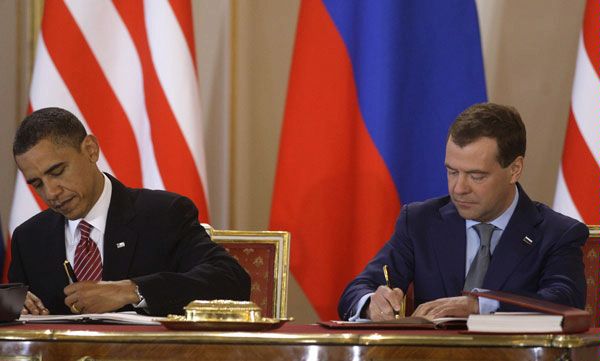
VCDNP Senior Fellow Dr. Nikolai Sokov analyses what will be lost with the passing of New START, as well as the proposal by Russian President Vladimir Putin to continue observing the Treaty’s quantitative and qualitative limits in the absence of a verification regime.
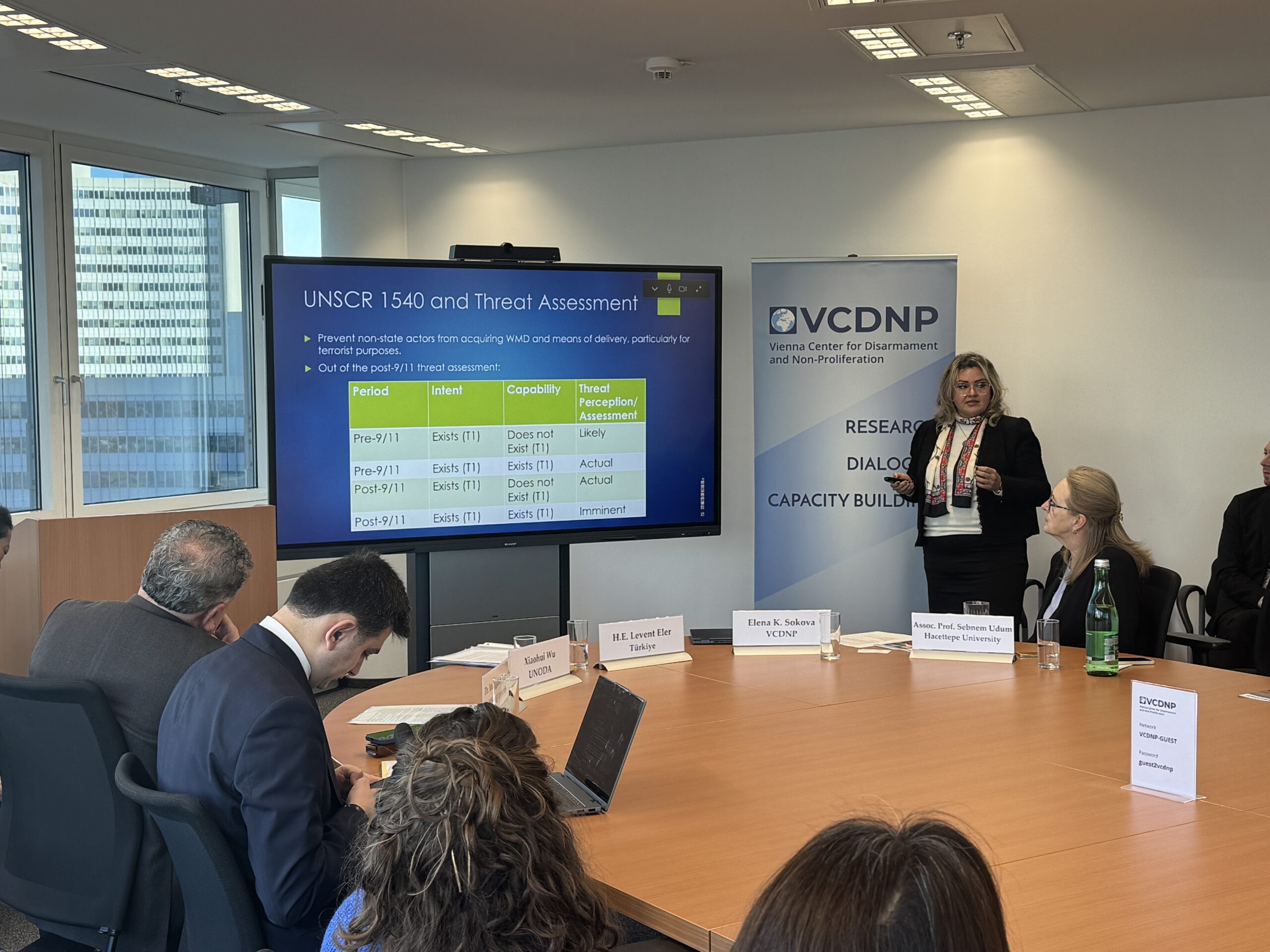
The VCDNP hosted a panel discussion on the impact of UN Security Council Resolution 1540 on non-proliferation education and capacity-building initiatives, in collaboration with UNODA and the Permanent Mission of Türkiye to the United Nations in Vienna.
VCDNP’s Dr. Sarah Case Lackner and AI safety researcher Zaheed Kara authored a report on the risks of frontier AI to the security of nuclear materials and facilities, featuring insights from a series of consultations held between the nuclear security and AI communities.
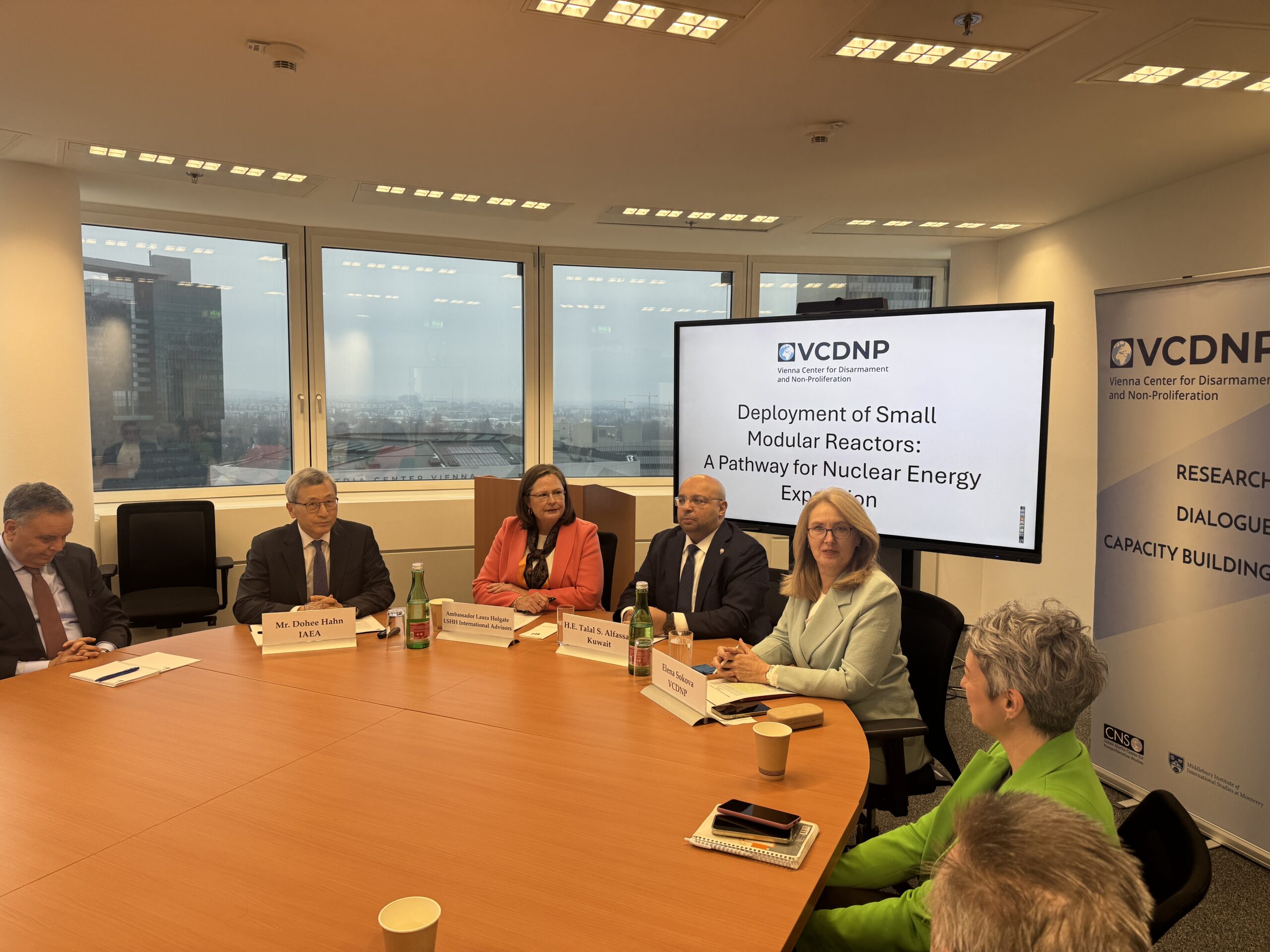
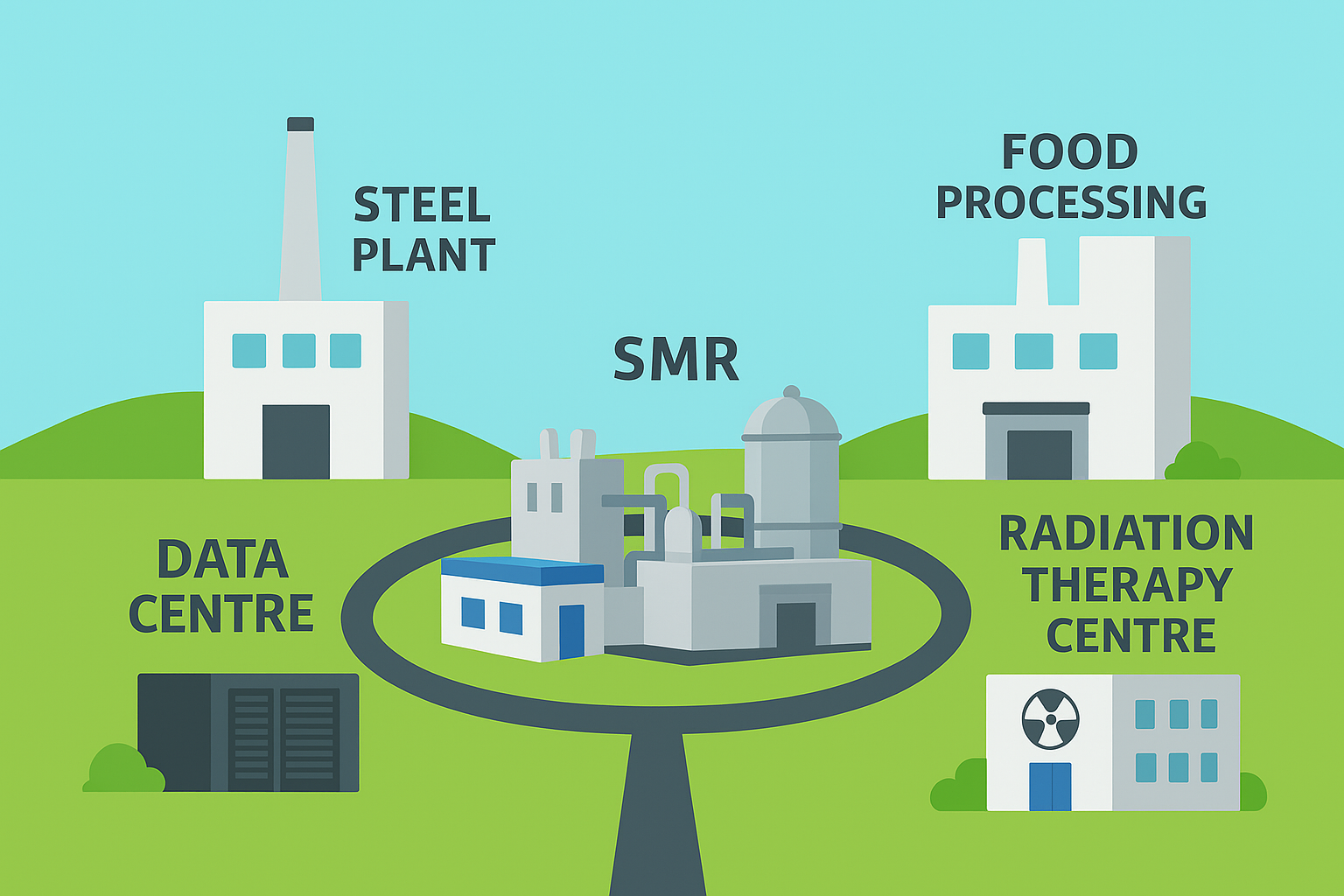
In a new Sustainable Solutions brief, VCDNP experts explain key features of SMRs and explore how SRMs could open the door to nuclear power for developing countries.
In the first brief of the new Emerging Tech series, Senior Fellow Dr. Sarah Case Lackner and AI researcher Zaheed Kara explain the origins, benefits, shortcomings, and potential future developments of AI models and systems.
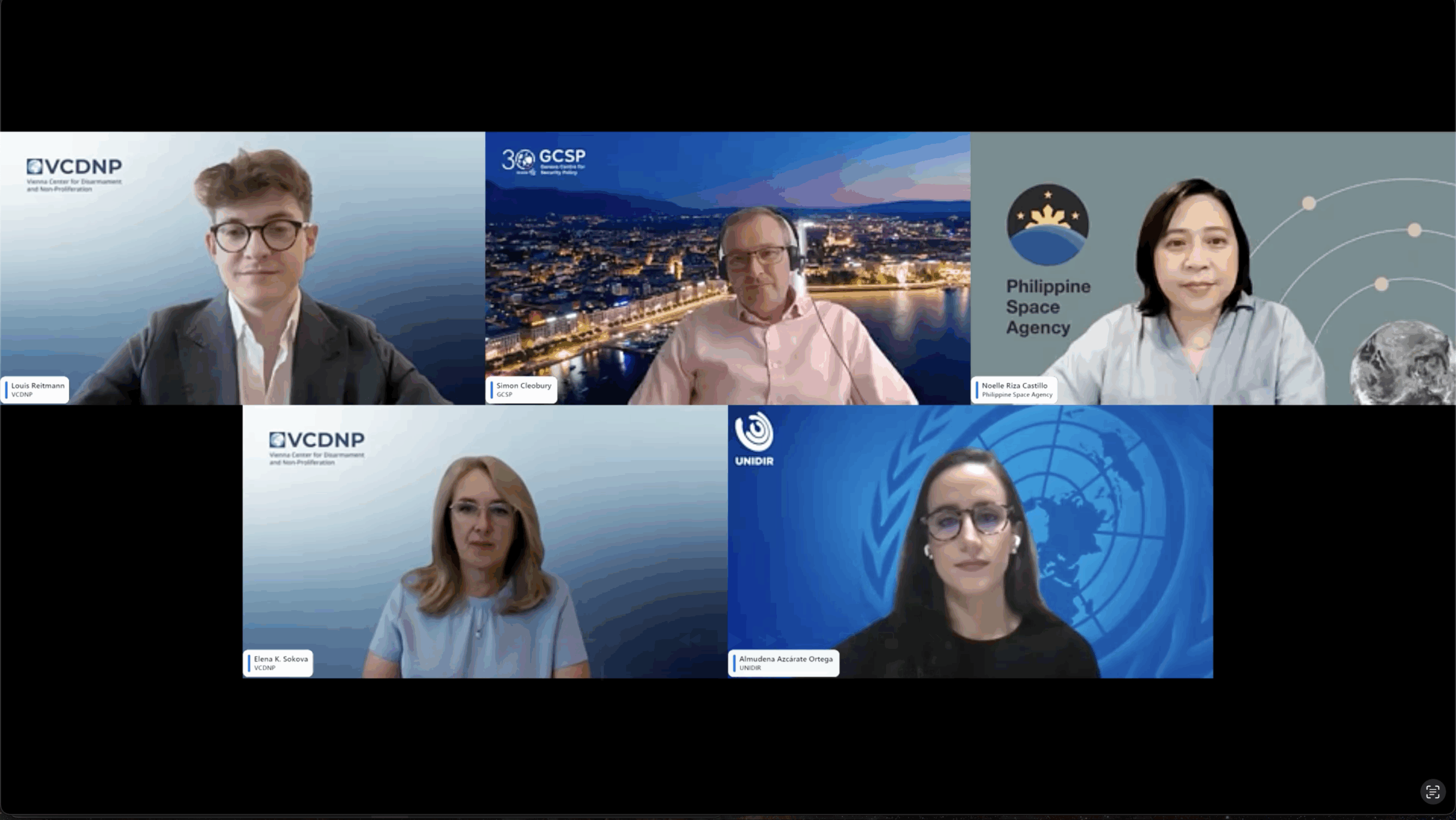
The VCDNP presented its inaugural publications on space security at an online event, featuring presentations by Research Fellow Louis Reitmann and a panel discussion with leading governmental and non-governmental experts on the prevention of an arms race in outer space.
Senior diplomats, officials from international organisations, and non-governmental experts discussed the state of the international nuclear non-proliferation regime, the implications of recent events, and prospects for the 2026 Non-Proliferation Treaty Review Conference.
To provide the best experiences, we use technologies like cookies to store and/or access device information. Consenting to these technologies will allow us to process data such as browsing behavior or unique IDs on this site. Not consenting or withdrawing consent, may adversely affect certain features and functions.
Functional Always active
The technical storage or access is strictly necessary for the legitimate purpose of enabling the use of a specific service explicitly requested by the subscriber or user, or for the sole purpose of carrying out the transmission of a communication over an electronic communications network.
Preferences
The technical storage or access is necessary for the legitimate purpose of storing preferences that are not requested by the subscriber or user.
Statistics
The technical storage or access that is used exclusively for statistical purposes.The technical storage or access that is used exclusively for anonymous statistical purposes. Without a subpoena, voluntary compliance on the part of your Internet Service Provider, or additional records from a third party, information stored or retrieved for this purpose alone cannot usually be used to identify you.
Marketing
The technical storage or access is required to create user profiles to send advertising, or to track the user on a website or across several websites for similar marketing purposes.