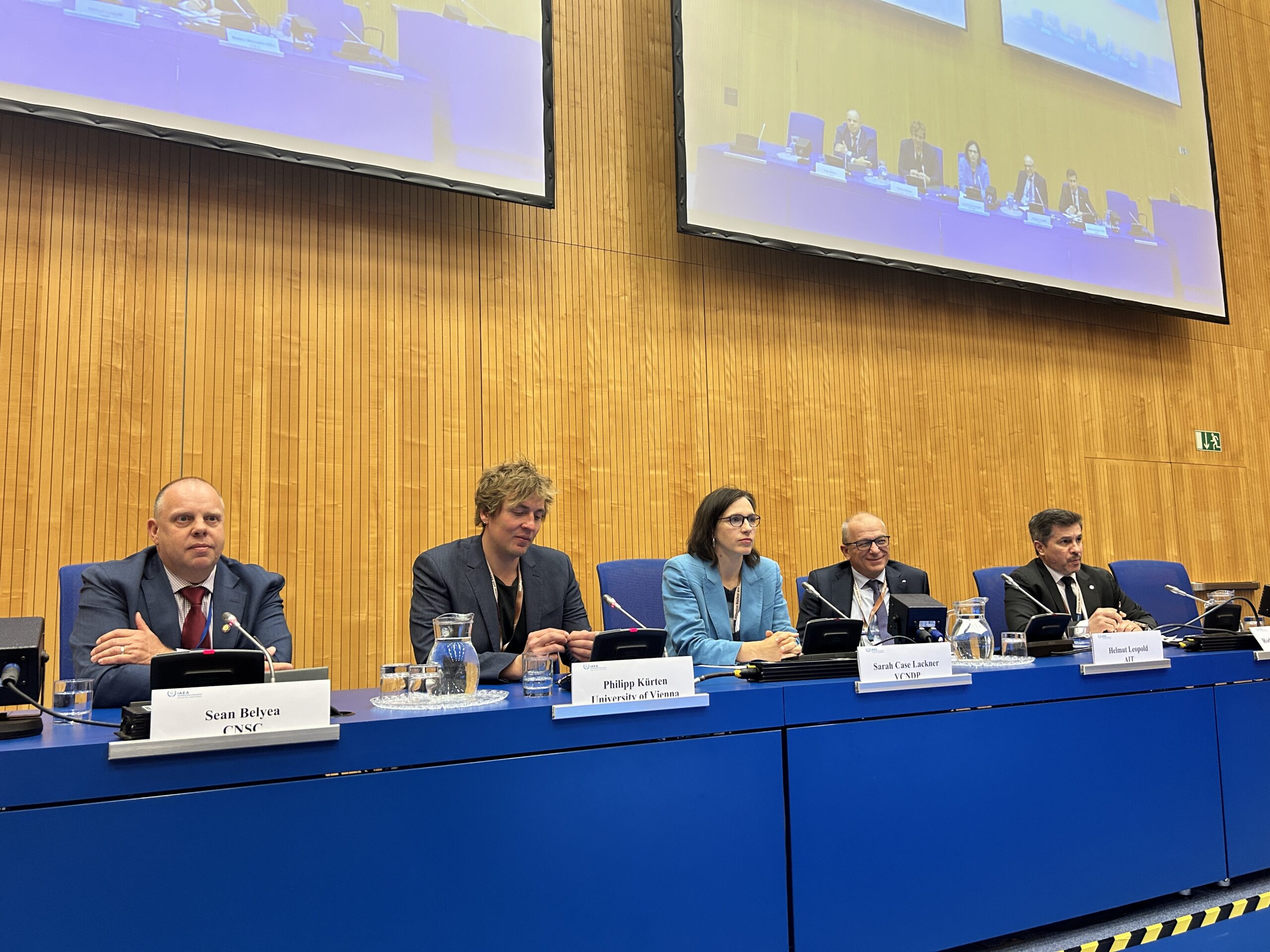
On 29 April 2026, the VCDNP held a side event at the International Atomic Energy Agency (IAEA) International Conference on Effective Nuclear and Radiation Regulatory Systems, focused on artificial intelligence (AI), quantum sensing, computing and encryption, and outer space technologies and their impact on the civilian nuclear sector.
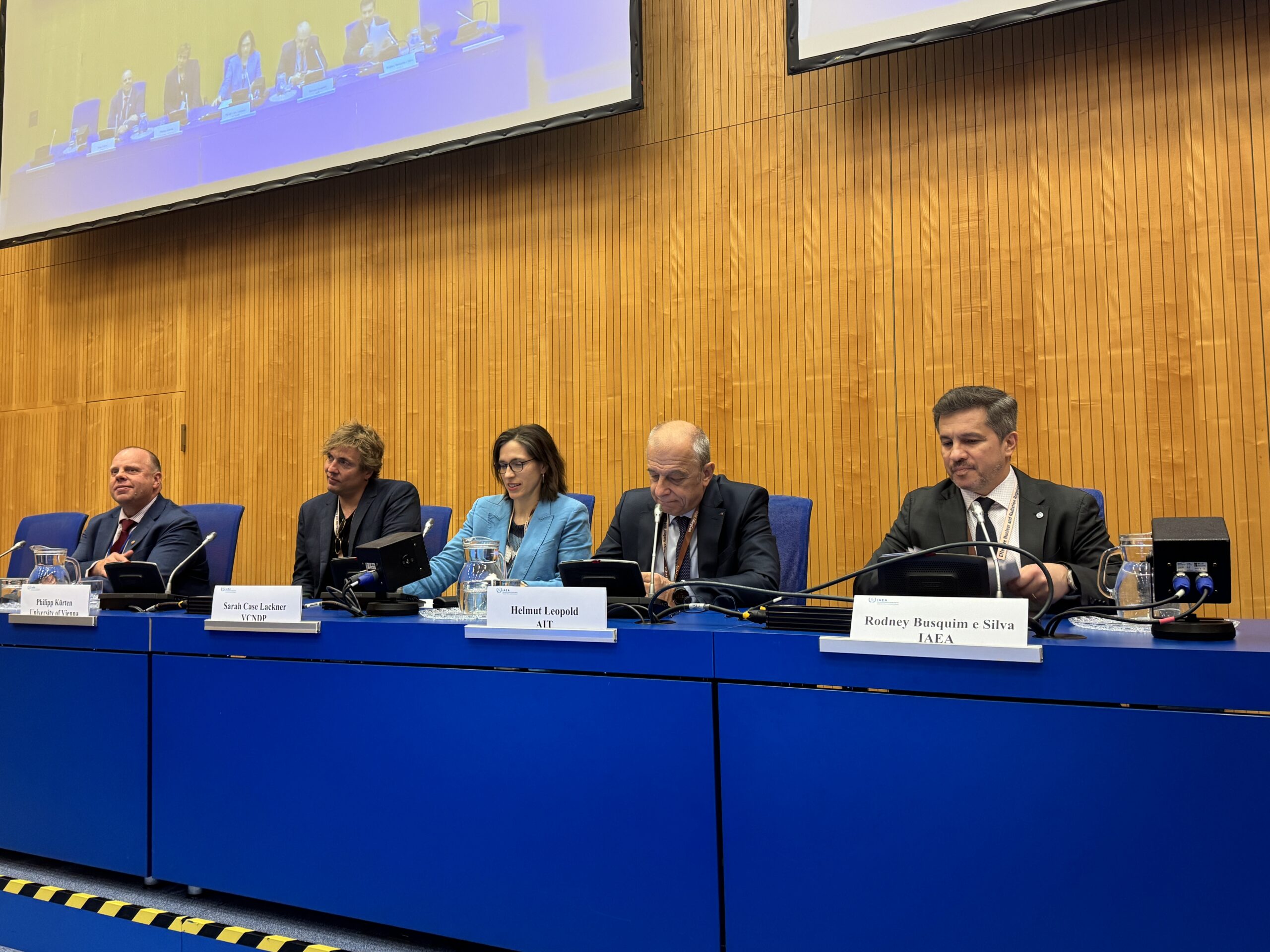
The event opened with remarks from VCDNP Senior Fellow and Emerging Technologies Lead Dr. Sarah Case Lackner, who introduced the technologies under discussion before presenting the panellists. Speakers included:
Dr. Busquim began by outlining proposed applications of AI in the nuclear sector, such as real-time anomaly detection, optimisation of reactor performance, enhanced safety scenarios and response planning. However, he also noted that the use of AI applications in the nuclear sector also presents numerous challenges for regulators and the IAEA that need to be carefully considered. These challenges include data security, capacity building, and the need to keep up, especially in terms of licensing, with the rapid pace of advancements and change that come with AI.
Mr. Helmut Leopold then delineated three categories of quantum technologies: quantum computing, quantum communications, and quantum sensing. While Mr. Leopold noted that significant investment isbeing put towards quantum computing, in the near term, quantum sensing is likely to be most relevant to the nuclear industry. However, he also underscored that, despite the long lead time before quantum computing becomes commercially available, the nuclear industry, like all critical industries, needs to prepare now for its ability to break many of the encryption algorithms we use today, given “harvest now, decrypt later” strategies. He highlighted briefly the potential of both quantum key distribution and post-quantum encryption to contribute to mitigating this challenge.
Mr. Philipp Kürten discussed the impact of space technologies on the nuclear field. He noted that satellites remain key to international monitoring systems, including for assessing both geopolitical and environmental risks. He emphasised the need for stronger governance in the space sector, as the primary legally binding instrument remains the 1967 Outer Space Treaty, which may no longer be fit for purpose, given the increasingly rapid pace of development that the sector is currently experiencing.
Finally, Mr. Sean Belyea of the CNSC brought a nuclear regulatory perspective to the panel. He underscored the conflicting priorities of regulators: fully understanding technologies being implemented while also ensuring they don’t stifle innovation. In response to ongoing efforts to integrate AI into nuclear facilities, he noted that AI can often introduce new and unpredictable failure points and argued that regulators need to be cognisant of how the technology could affect future events. He further stressed that there are numerous ways to use AI to improve response plans without directly implementing AI systems within nuclear plants.
The event closed with an audience question-and-answer session, with panellists discussing issues such as data security, human factors in AI implementation, risk scenarios for quantum decryption, and the impact of frontier AI models.