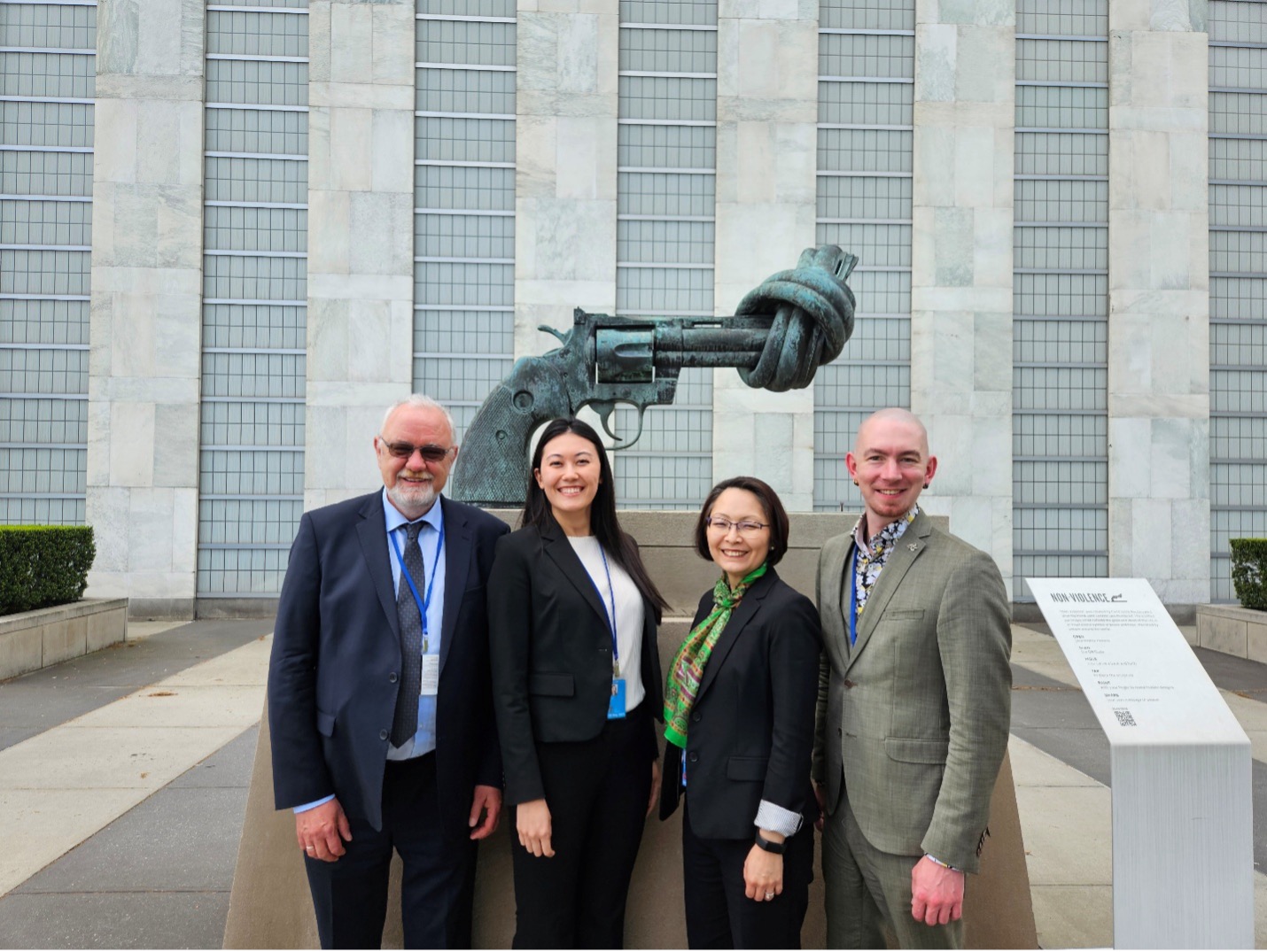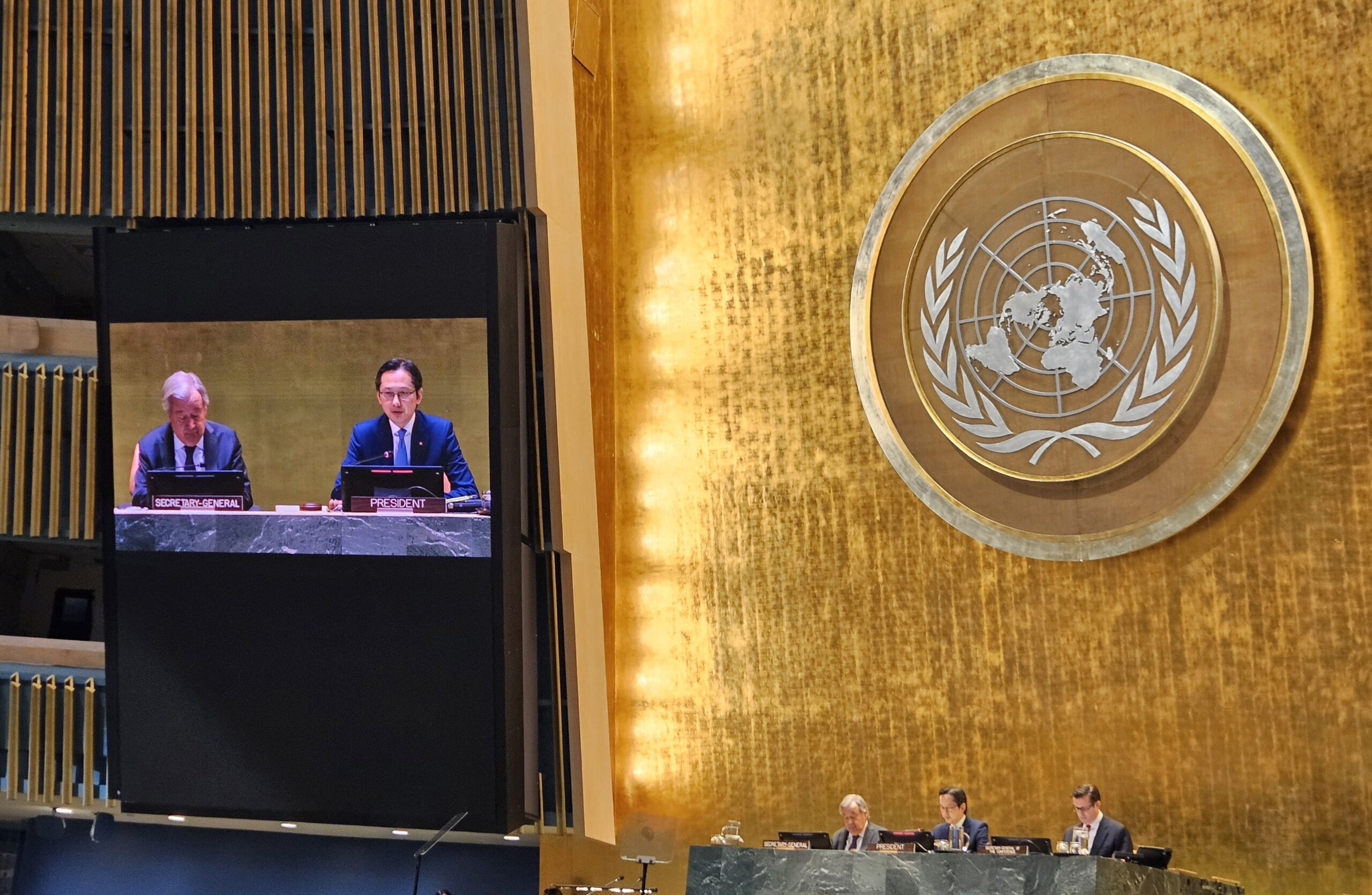
VCDNP experts under the Japan Chair for a World without Nuclear Weapons programme presented research findings on the multilateral discourse on the norm against the use and threat of nuclear weapons during the first week of the 11th Review Conference for the Treaty on the Non-Proliferation of Nuclear Weapons (NPT) in New York. VCDNP experts also shared their perspective on a range of disarmament and non-proliferation topics at six side events held by different governments and civil society organizations.
Perspectives on the Nuclear Taboo in the Multilateral Context
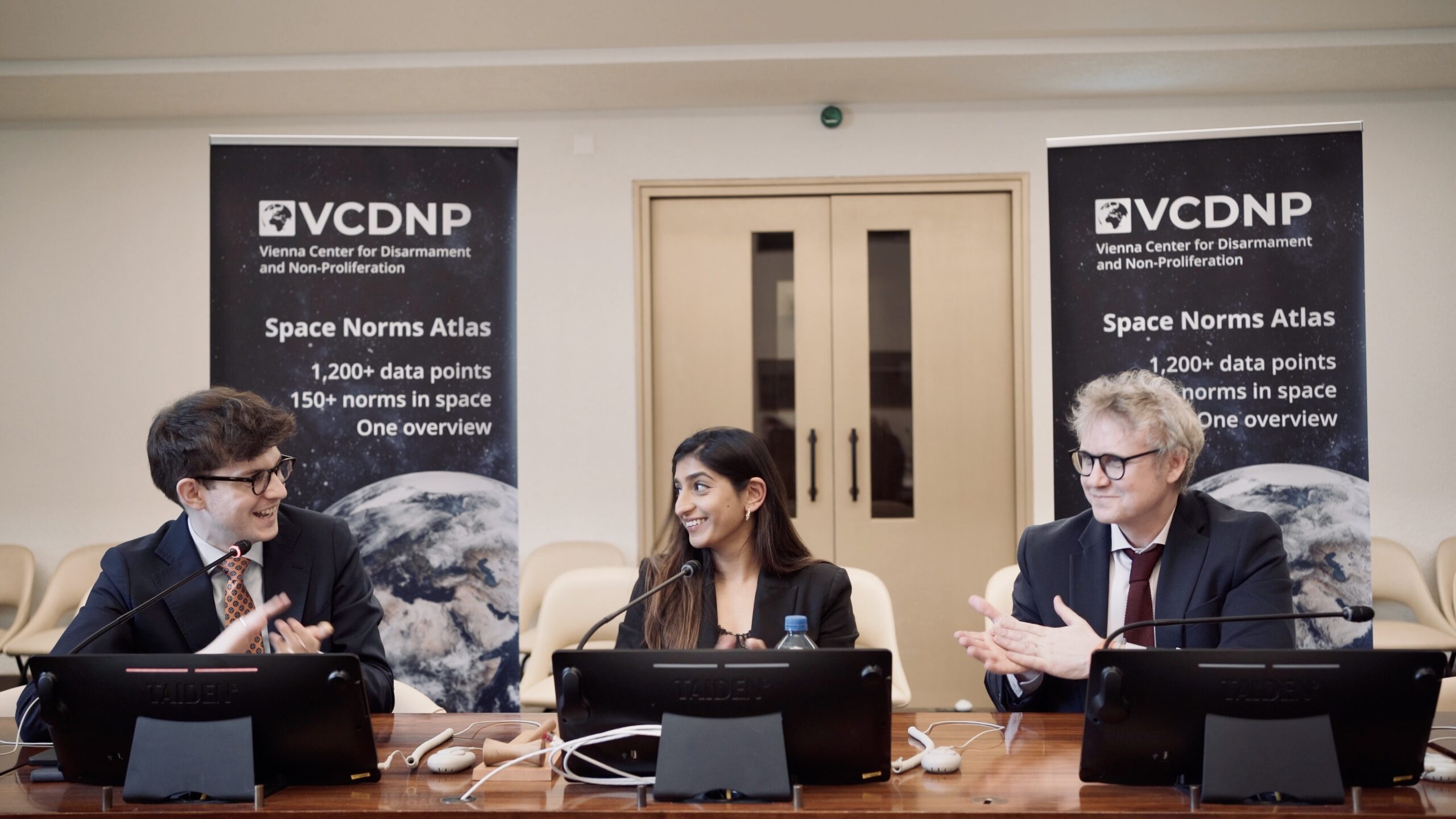
On 30 April, the VCDNP, in cooperation with the government of Japan, convened a side event to share the results of a study on NPT States Parties’ views on the nuclear taboo. As delegations to the Review Conference work towards a reaffirmation of first principles of the Treaty, the study has generated valuable insights into States’ shared understandings and diverging interpretations of the nuclear taboo.
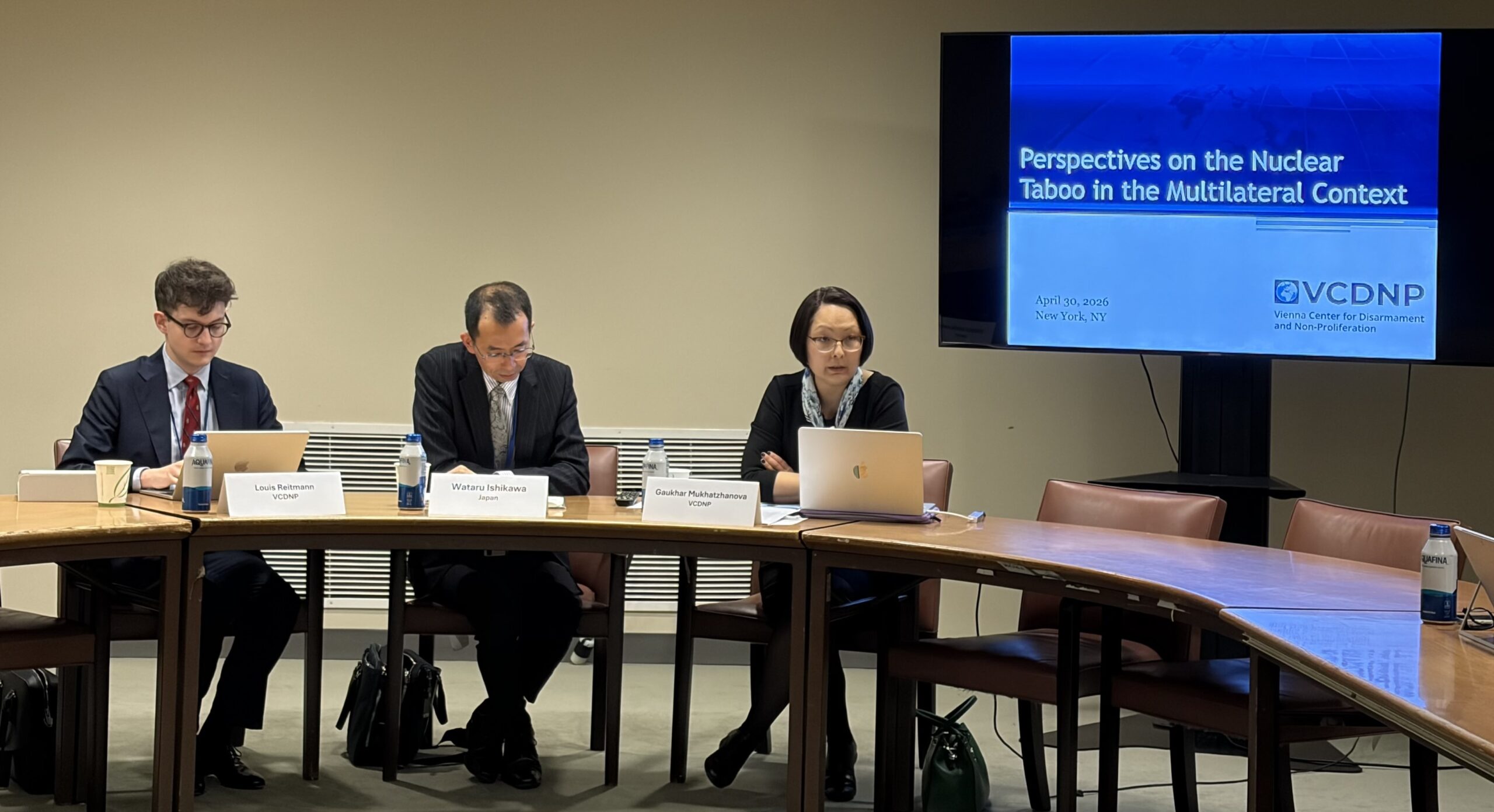
In his opening remarks, Mr. Wataru Ishikawa, Director of the Arms Control and Disarmament Division at the Ministry of Foreign Affairs of Japan, highlighted his country’s strategic vision behind establishing three Japan Chairs, including at the VCDNP: to support research on ways to overcome the dichotomy between deterrence and disarmament and promote realistic and pragmatic efforts towards a world without nuclear weapons. The VCDNP’s research on the nuclear taboo aligns with Japan’s efforts to maintain the memory of the hibakusha and ensure that nuclear weapons are never used again.
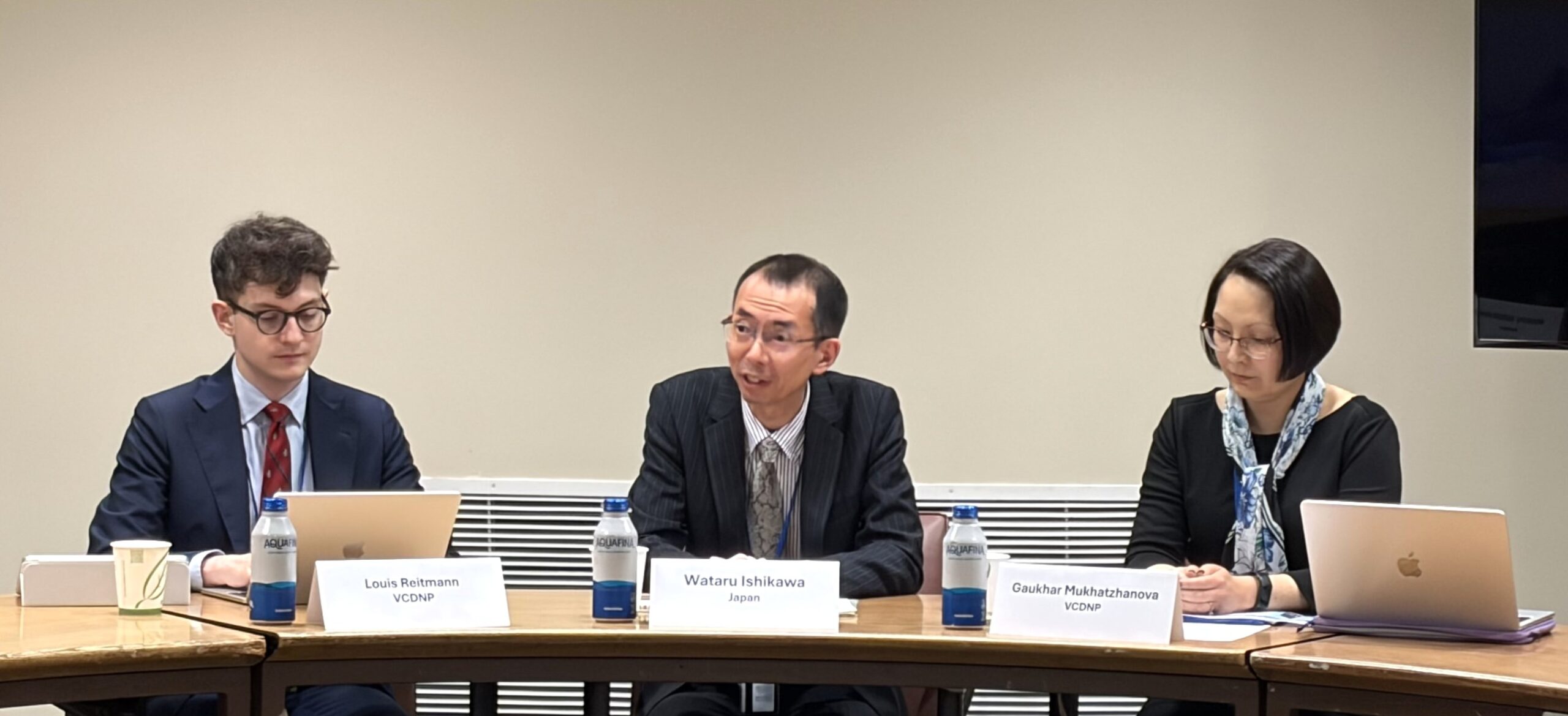
VCDNP Research Fellow Louis Reitmann provided an overview of the knowledge landscape on the nuclear taboo, highlighting the works by Nina Tannenwald that popularised the concept in the 2000s along with the different ideas that have emerged to explain why nuclear weapons have not been used since 1945. He further discussed how archival evidence showed that decisions had been shaped by concerns about the human suffering caused by nuclear weapons use, about public opinion, and maintaining alliances, as well as by leaders’ personal beliefs.
Ms. Gaukhar Mukhatzhanova presented the results of data-driven analysis of national statements in the NPT review process between 2010 and 2024 and interviews with delegates from a wide variety of countries. The study maps the evolution of States’ discussions of nuclear use and threats over time, with major spikes in references to these terms following the rise of the Humanitarian Initiative and negotiation of the Treaty on the Prohibition of Nuclear Weapons (2017) and Russia’s invasion of Ukraine (2022).
The findings indicate that while the aversion to the use of nuclear weapons is fairly universal, States’ interpretations of the meaning of the nuclear taboo vary and are often predicated on whether they rely on (extended) nuclear deterrence. While some States see the nuclear taboo as a norm against any use, and sometimes even possession, of nuclear weapons, others define it as a record of non-use since 1945. Many States agreed that threats of use should be part of the taboo, but there were different views on what constitutes explicit and implicit threats.
The study shows that many States are reluctant to use the term “nuclear taboo” in formal statements, presumably due to the ambiguities as to its exact meaning. However, as the 11th Review Conference sets out to find common ground, there is an opportunity for States Parties to affirm a shared understanding that it is in the interest of all humanity that nuclear weapons are never used again.
International Group of Eminent Persons for a World without Nuclear Weapons (IGEP)
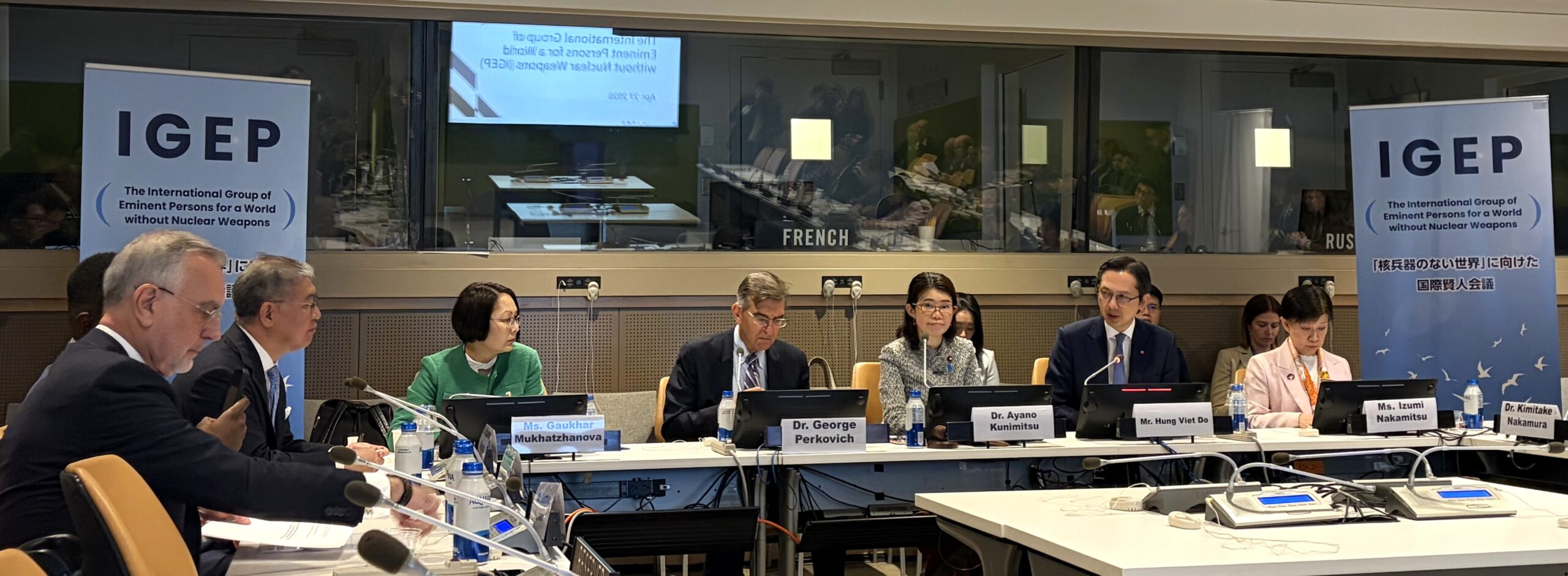
On 27 April, Ms. Mukhatzhanova participated in a side event hosted by Japan to discuss the recommendations of the International Group of Eminent Persons (IGEP), and how they could inform deliberations at the 2026 NPT Review Conference. Event speakers included Dr. Ayano Kunimitsu, State Minister for Foreign Affairs of Japan, UN High Representative for Disarmament Affairs Ms. Izumi Nakamitsu, President of the 11th Review Conference Ambassador Do Hung Viet, and select IGEP members.
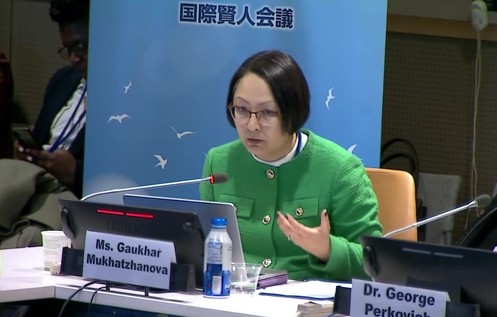
Commenting on the areas where practical progress appeared most possible in present circumstances, Ms. Mukhatzhanova highlighted transparency and accountability and the work on nuclear disarmament verification. She noted that the increasingly detailed discussions not only on strengthening the reporting by nuclear-weapon States (NWS), but also on improving the feedback and making better use of the reports for both the review of implementation of the Treaty and planning next steps. While some differences persist, particularly regarding the scope and frequency of reporting obligations, she highlighted that the growing convergence on these discussions since 2023 and ongoing technical work on disarmament verification shows that practical steps can advance even in the absence of political will.
Mayors for Peace Youth Forum
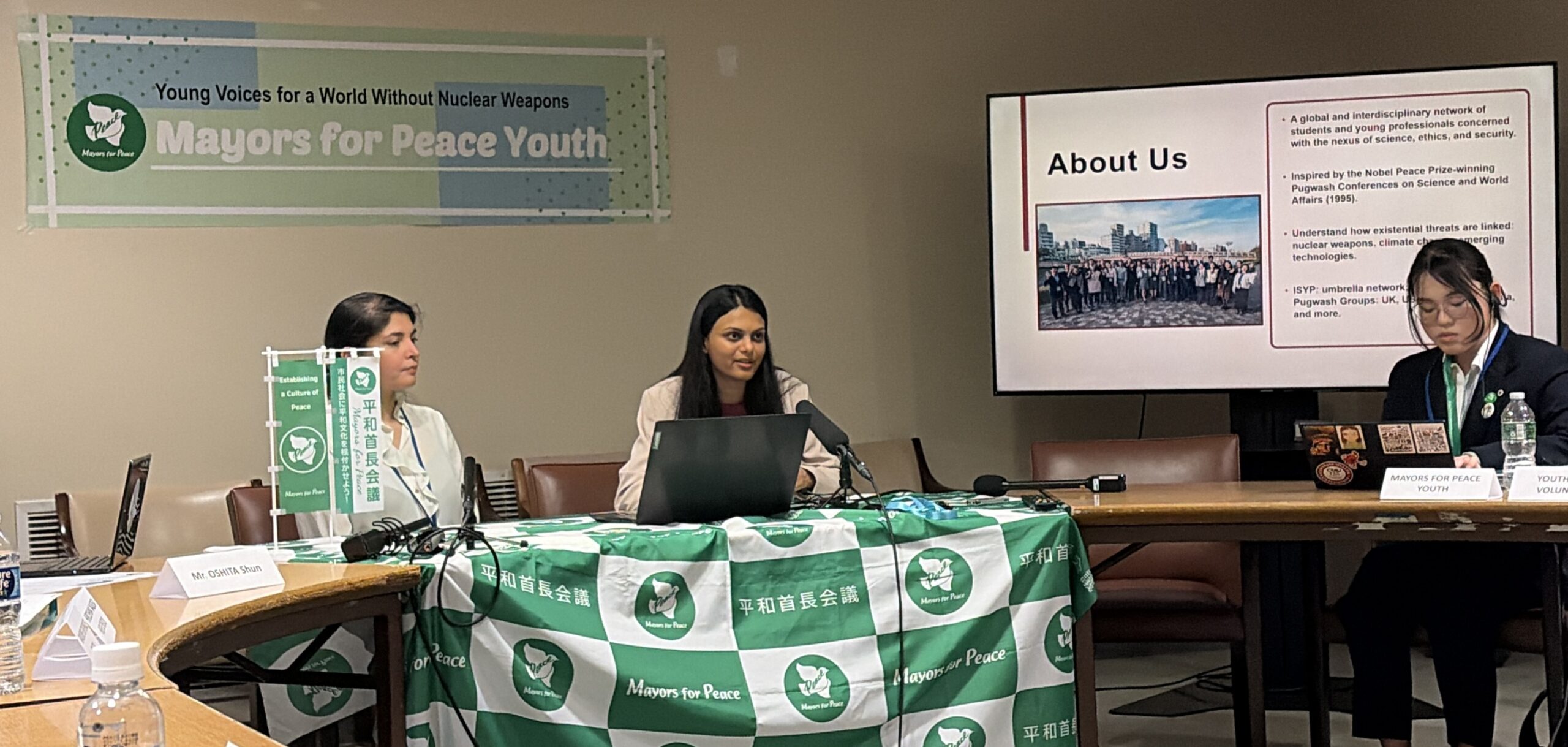
Japan Chair Fellow Ms. Sanaa Alvira spoke at the side event organised by the Mayors for Peace on 28 April, where she highlighted the work of the International Student/Young Pugwash (ISYP) in advancing cross-national Track II dialogue on the nexus of nuclear risks, emerging technologies, and climate change. She highlighted the importance of providing platforms for students and young professionals to engage with the broader societal implications of scientific developments and shared her perspectives on the important role of youth in contributing to a world free of nuclear weapons.
Preventing Backsliding on Nuclear Disarmament
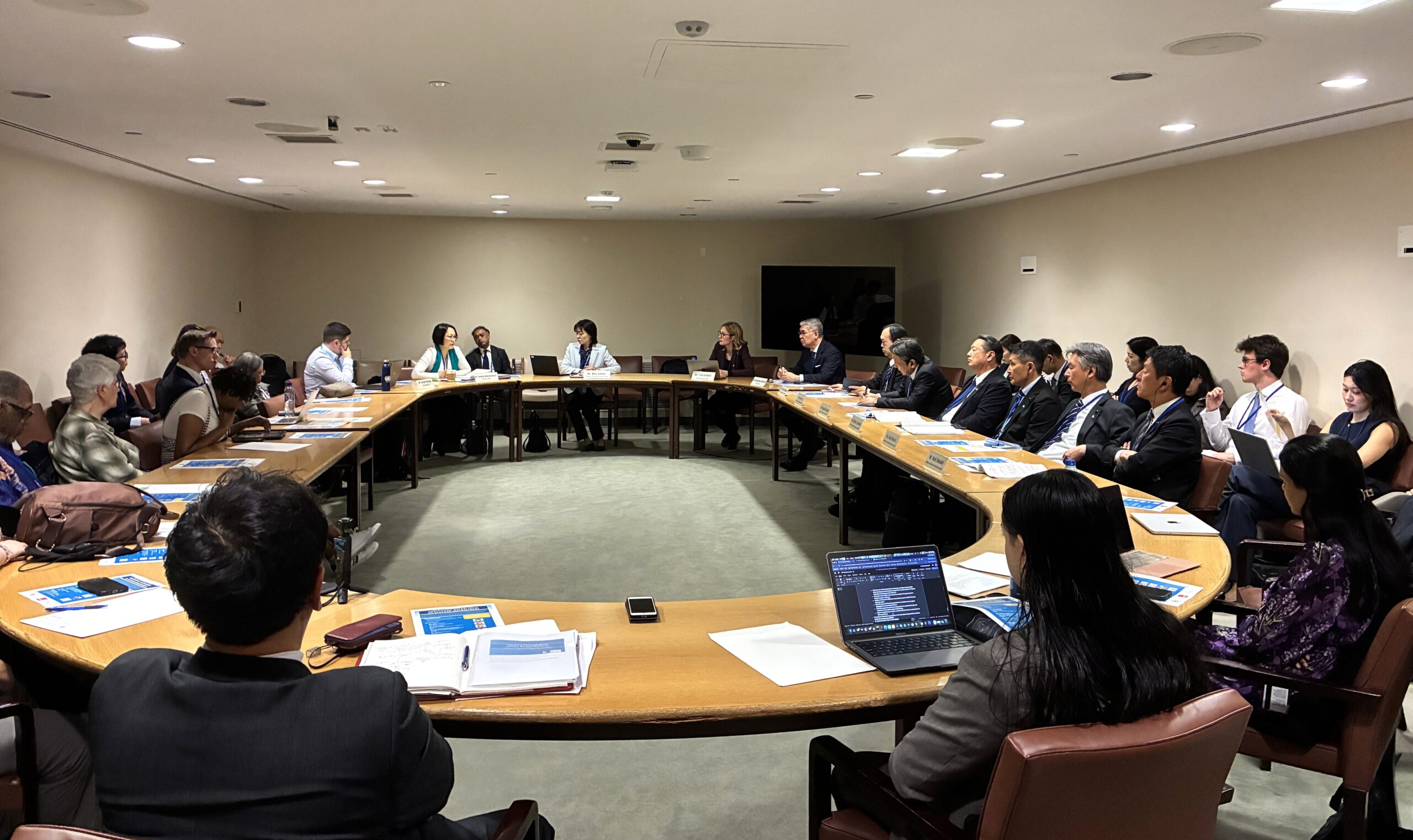
On 29 April, Ms. Mukhatzhanova joined a side event, which presented an interim report on a SIPRI-led project examining public discourse on nuclear deterrence in Germany, Japan, Poland, South Korea, and other countries. The event was organised by the Hiroshima Prefecture and the Hiroshima Organization for Global Peace (HOPe), who commissioned the study. Ms. Mukhatzhanova referenced findings from earlier studies led by the James Martin Center for Nonproliferation Studies, which had concluded that barriers to the acquisition of nuclear weapons were strong and included normative constraints, economic disincentives, and leadership personalities. Commenting on the preliminary findings of the SIPRI study, she noted with concern the erosion of such disincentives and the growth of trends that might enable nuclear proliferation.
Preventing the Erosion of the NPT Regime
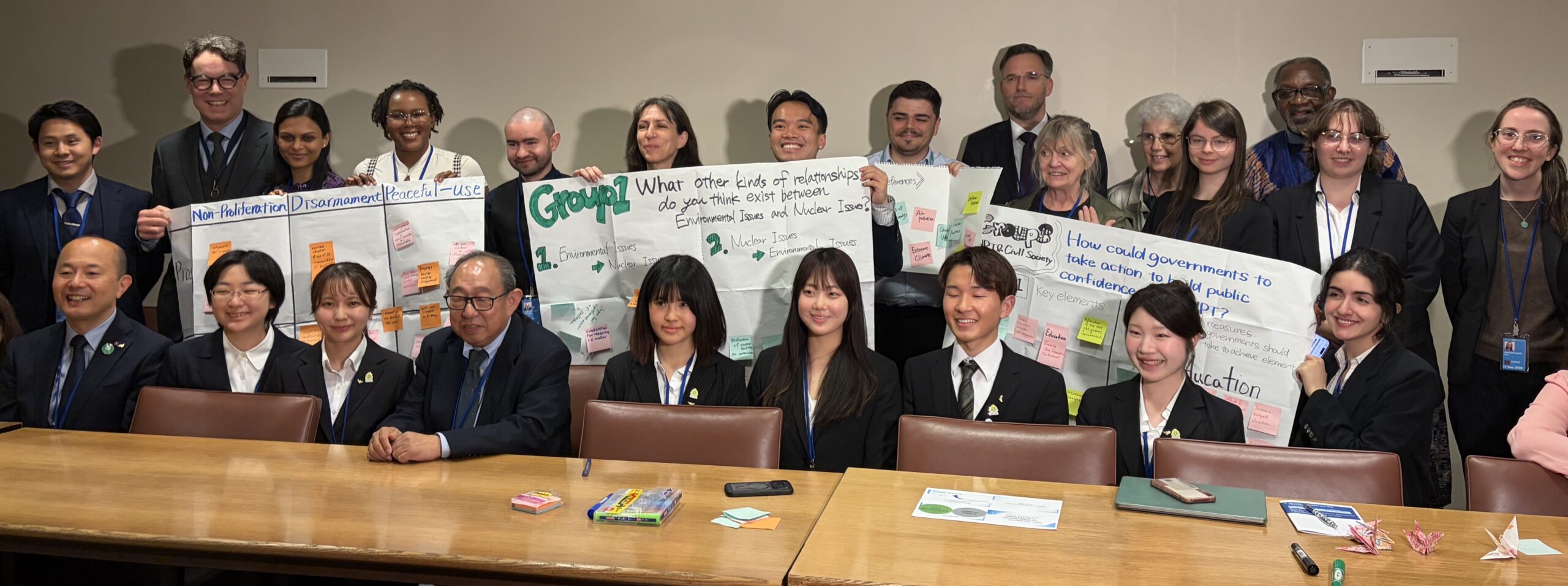
Ms. Sanaa Alvira contributed to a side event organised by the Nagasaki Youth Delegation on preventing the erosion of the NPT regime on 29 April, where she spoke about the growing relevance of the AI-nuclear nexus. She noted increasing recognition among States Parties of both the risks and benefits of AI, and its impact on all three pillars of the NPT. She highlighted the role of the NPT not just as a treaty but also a forum for collectively examining these impacts and for shaping norms on the responsible application of AI in the nuclear field.
Insights from the 2026 Hiroshima Report
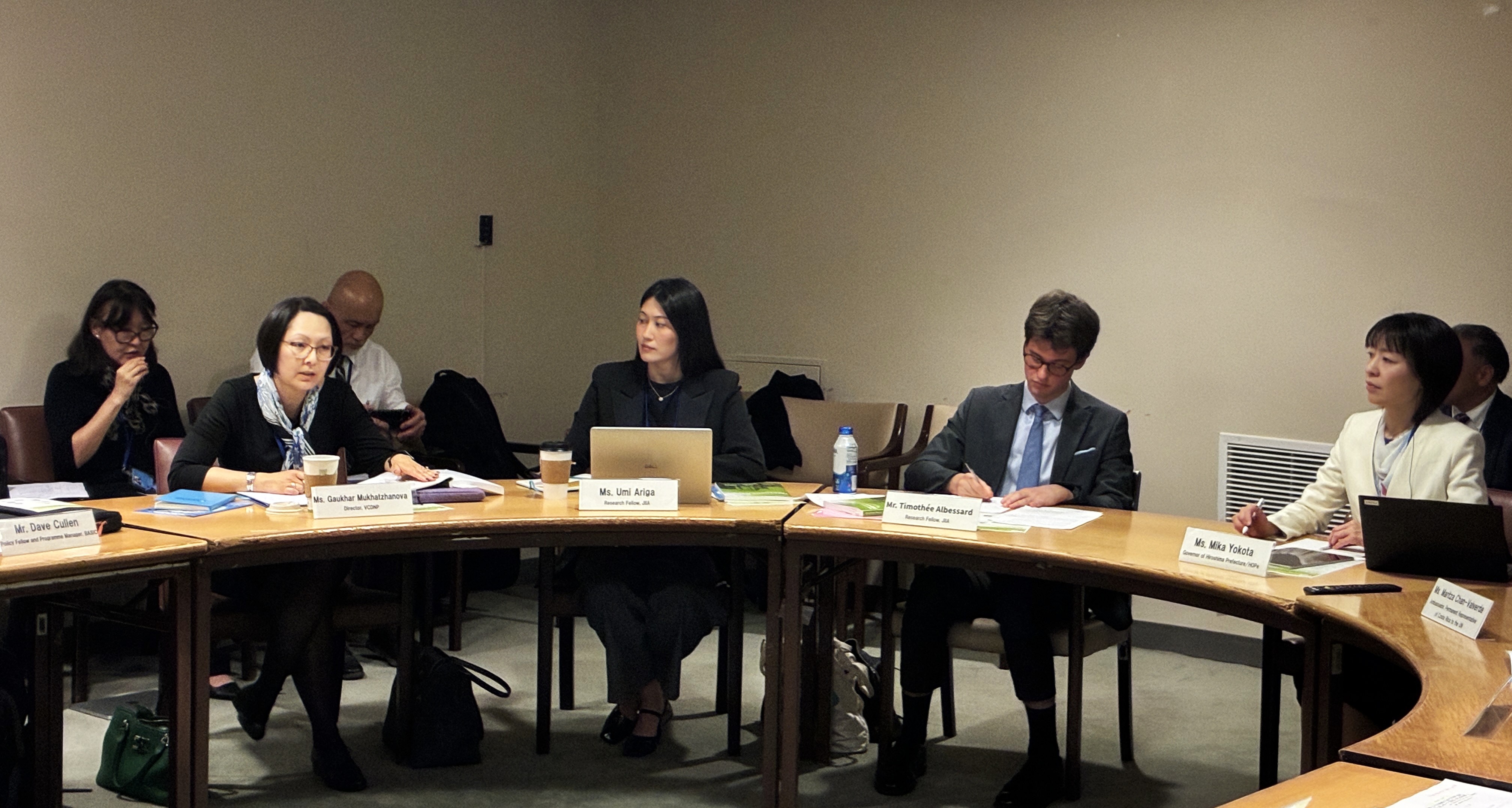
On 30 April, Ms. Mukhatzhanova provided commentary on the 2026 edition of the Hiroshima Report – an annual publication analysing key events in nuclear disarmament and non-proliferation – during a side event organised by the Japan Institute of International Affairs (JIAA) and Hiroshima Prefecture,. One of the report’s co-authors is Ms. Umi Ariga, former Japan Chair Fellow at the VCDNP and current research fellow at JIIA. Ms. Mukhatzhanova provided comments on the report’s methodology and highlighted the value of NPT monitoring projects by civil society organisations, which may see growing interest from States Parties given the momentum for strengthening transparency and accountability during the current review cycle.
Taking Concrete Steps to Enhance Transparency and Accountability in the NPT Review Process
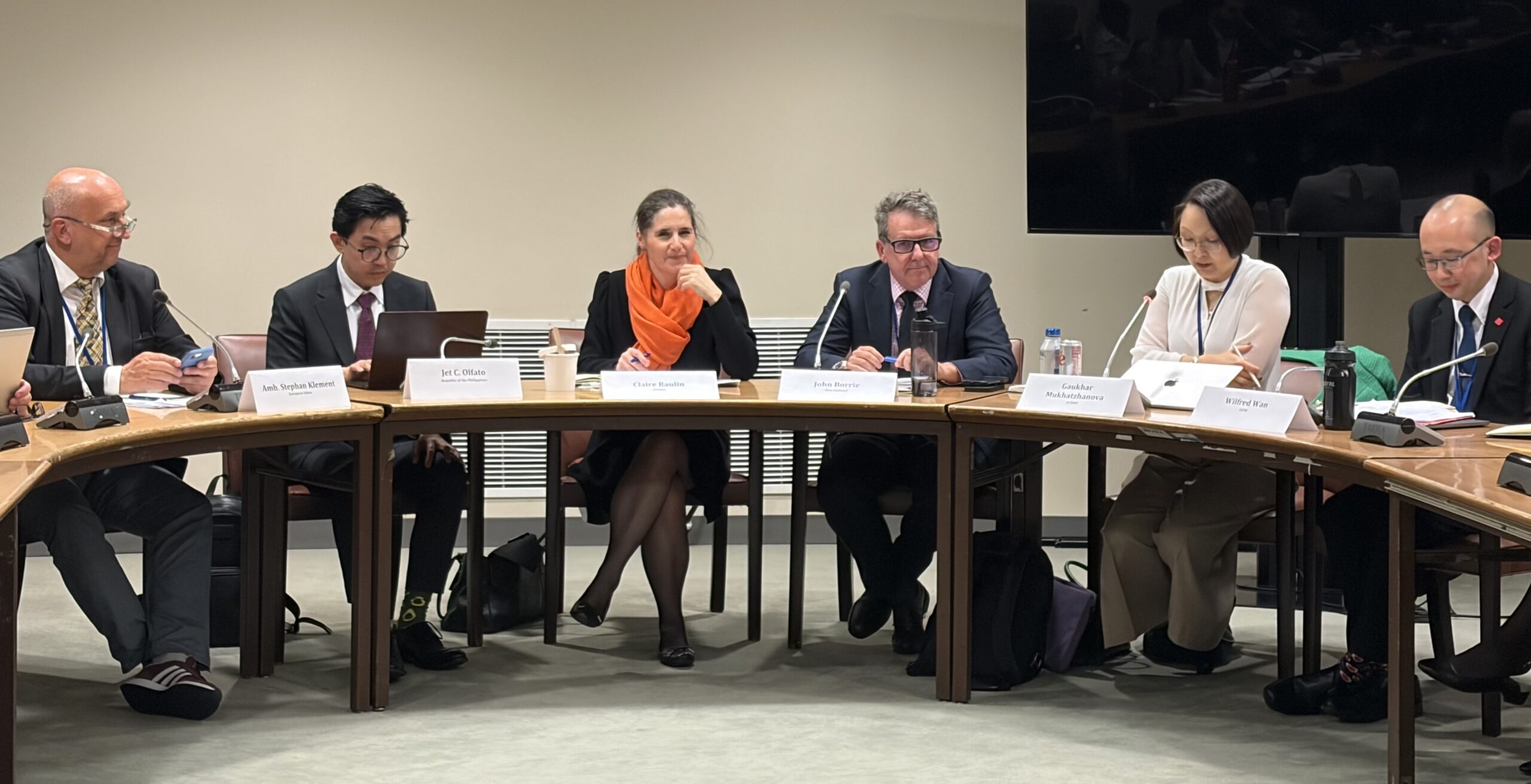
On 1 May, Ms. Mukhatzhanova participated in a side event organised by the European Union and SIPRI, which examined how States Parties could implement the various proposals and ideas that have been put forward to enhance transparency and accountability in the NPT review process. She highlighted a broad convergence of views among States Parties, on the need for regular reporting by the NWS on the implementation of disarmament commitments, as well as institutionalization of interactive discussions of such reports as part of the review process. On the other hand, she noted the remaining areas of disagreement, particularly China’s and Russia’s resistance to proposals on enhanced reporting and suggested that non-aligned States could play a bridge building role in finding common ground for a decision on transparency and accountability at the 2026 Review Conference.
The VCDNP thanks the Government of Japan for its generous support of the Japan Chair for a World without Nuclear Weapons programme.