VCDNP Fact Sheet on End of Life Management of Sealed Radioactive Sources

9 January 2020 • 
Briefs and Factsheets, Peaceful Uses, Publications
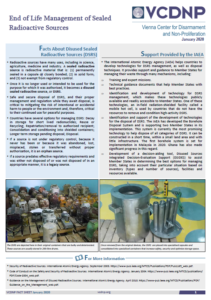
The fact sheet builds on a panel discussion held at the VCDNP with the aim to support countries in the management and disposal of disused sealed radioactive sources.
Share this:

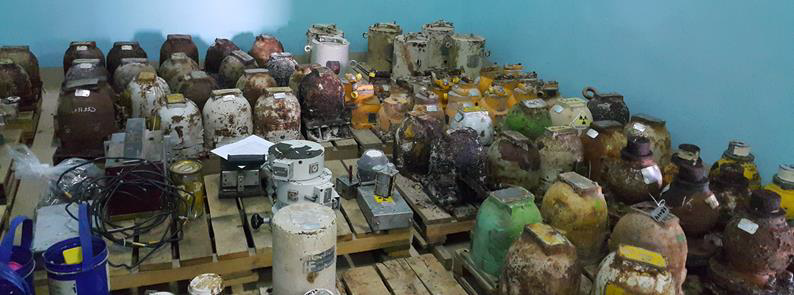
All countries enjoy the benefits of radioactive sources in science, agriculture, health and industry. However, the end of life management and disposal of sealed radioactive sources can pose challenges.

This fact sheet focuses on the challenges countries face related to disused sealed radioactive sources (DSRS) and the support that the International Atomic Energy Agency (IAEA) provides.


View the fact sheet here.


The fact sheet, authored by VCDNP Senior Research Associate Ingrid Kirsten and Research Associate Noah Mayhew, builds on a panel discussion the VCDNP organised in July 2019 on the “End of Life Management of Sealed Radioactive Sources. At that event, experts discussed their experiences with the management and disposal of DSRS. They shared the challenges they face and their success stories, highlighting the support provided by the IAEA and other international partners.


Related Experts

Ingrid Kirsten
Senior Fellow
Noah Mayhew
Senior Research Associate

Related Content

Artificial Intelligence and Nuclear Security Governance: Addressing the Risks of Frontier AI 

VCDNP’s Dr. Sarah Case Lackner and AI safety researcher Zaheed Kara authored a report on the risks of frontier AI to the security of nuclear materials and facilities, featuring insights from a series of consultations held between the nuclear security and AI communities.
Read more

Contribution of Nuclear Applications to Food Security in a Changing Climate

17 December 2021 • 
VCDNP Senior Research Associate Ingrid Kirsten moderated a discussion on the security and cost- effectiveness of nuclear applications in agriculture and how farmers and consumers benefit when these applications are used to track the impact of climate change and to develop climate-smart agriculture practices.
Read more
1 2 3 49
cross
linkedin facebook pinterest youtube rss twitter instagram facebook-blank rss-blank linkedin-blank pinterest youtube twitter instagram