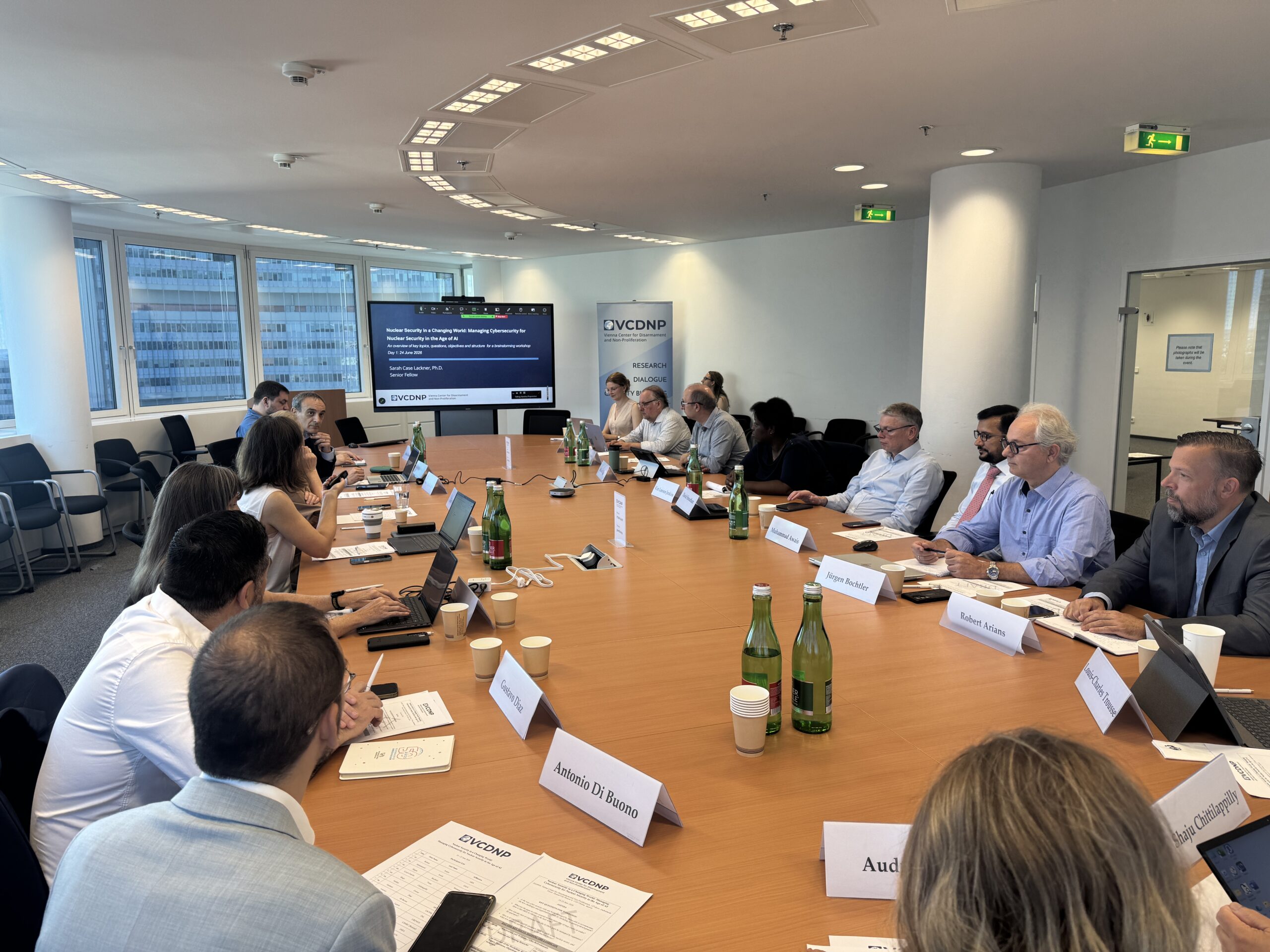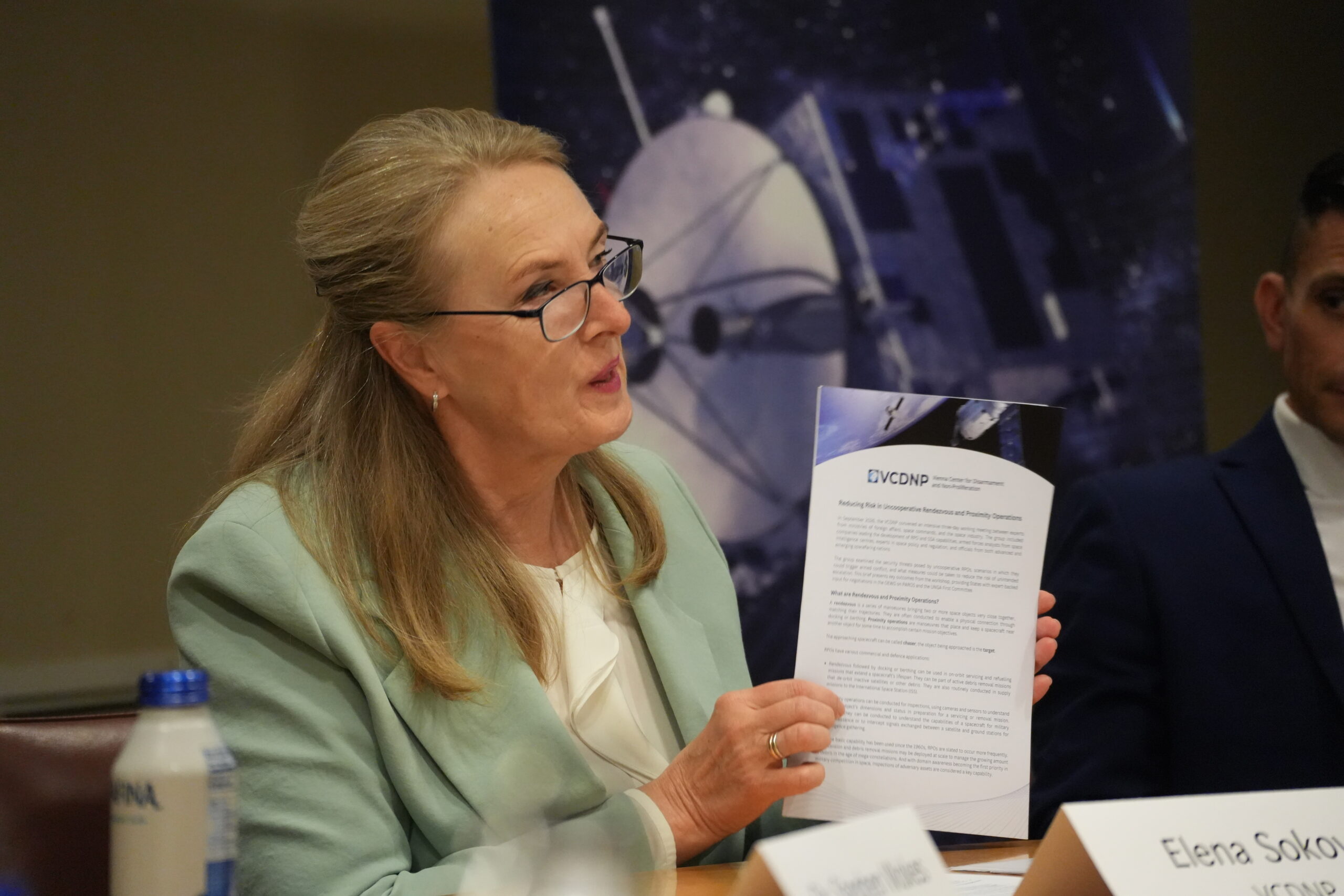
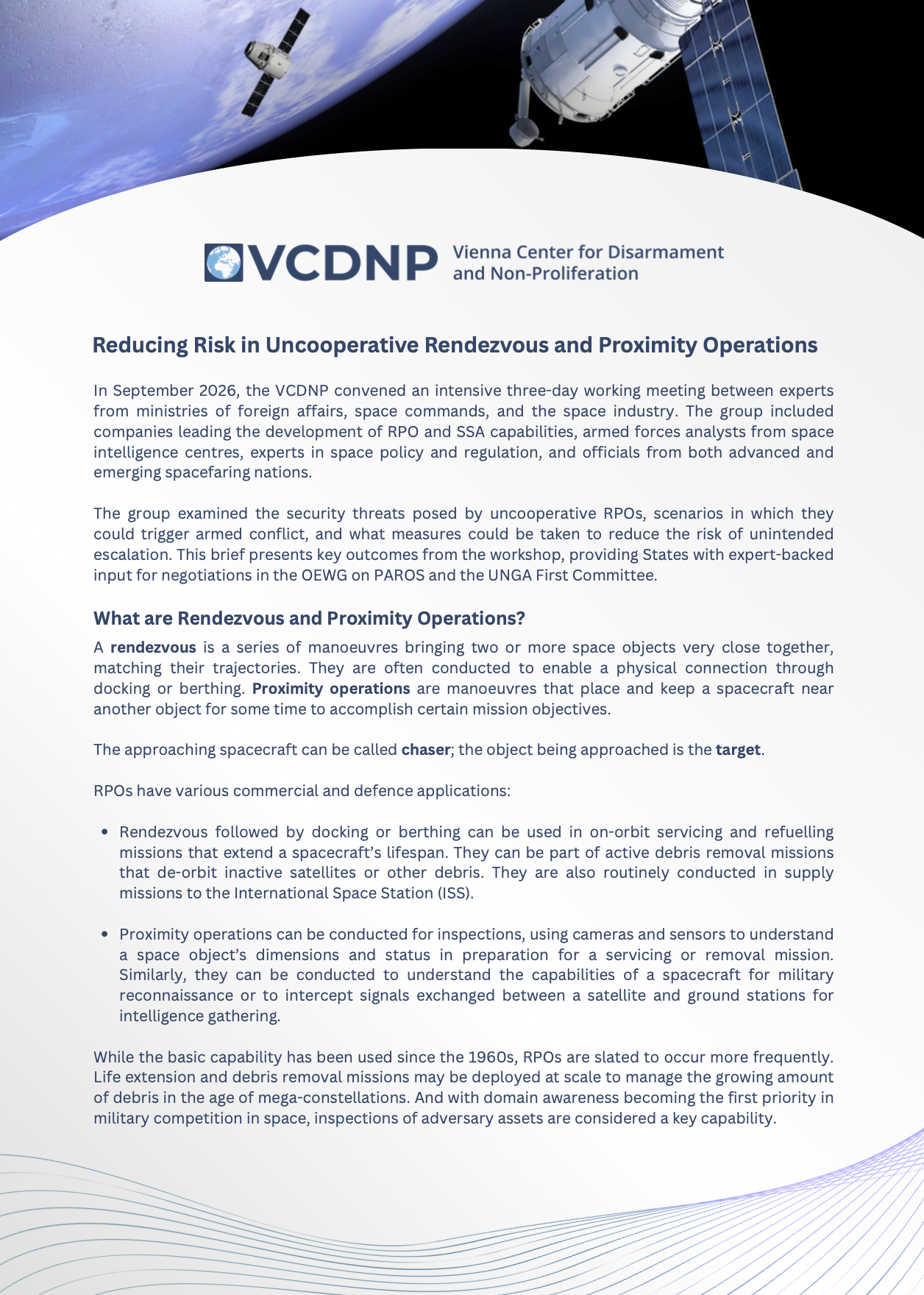
The VCDNP presented a brief explaining the factors that contribute to uncertainty in uncooperative rendezvous and proximity operations (RPOs) and suggesting measures to reduce the risk of escalation in space at the UN General Assembly First Committee meeting in New York. On 22 October 2026, the VCDNP was joined by leading experts in commercial and military applications of RPO technologies to provide input for negotiations at the First Committee and the Open-Ended Working Group on the Prevention of an Arms Race in Outer Space in All its Aspects.
The brief summarises findings from a working meeting between experts from space commands, the space industry, and ministries of foreign affairs, organised by the VCDNP in September 2026. The group included companies leading the development of RPO and SSA capabilities, armed forces analysts from space intelligence centres, experts in space policy and regulation, and officials from advanced and emerging spacefaring nations.
As States in the OEWG on PAROS begin to formulate proposals towards the 2028 final outcome document, the brief serves as a helpful resource for technically sound, expert-backed solutions to the threats posed by adversarial RPOs.


The presentation received particular attention from delegations as uncoordinated manoeuvres by the Russian military Cosmos 2612 satellite near a commercial ICEYE satellite providing imaging services to Ukraine – possibly at an unprecedentedly close range – were making global headlines, illustrating that uncooperative RPOs are a key issue at the top of the international security agenda.
The speakers were:
Sqn. Ldr. Christopher Atkin, 1 Operations Squadron, UK Space Command
Dr. Stephen Wokes, Chief Engineer, Astroscale UK
Louis Reitmann, Senior Research Associate, VCDNP
The event was moderated by VCDNP Executive Director Elena Sokova.
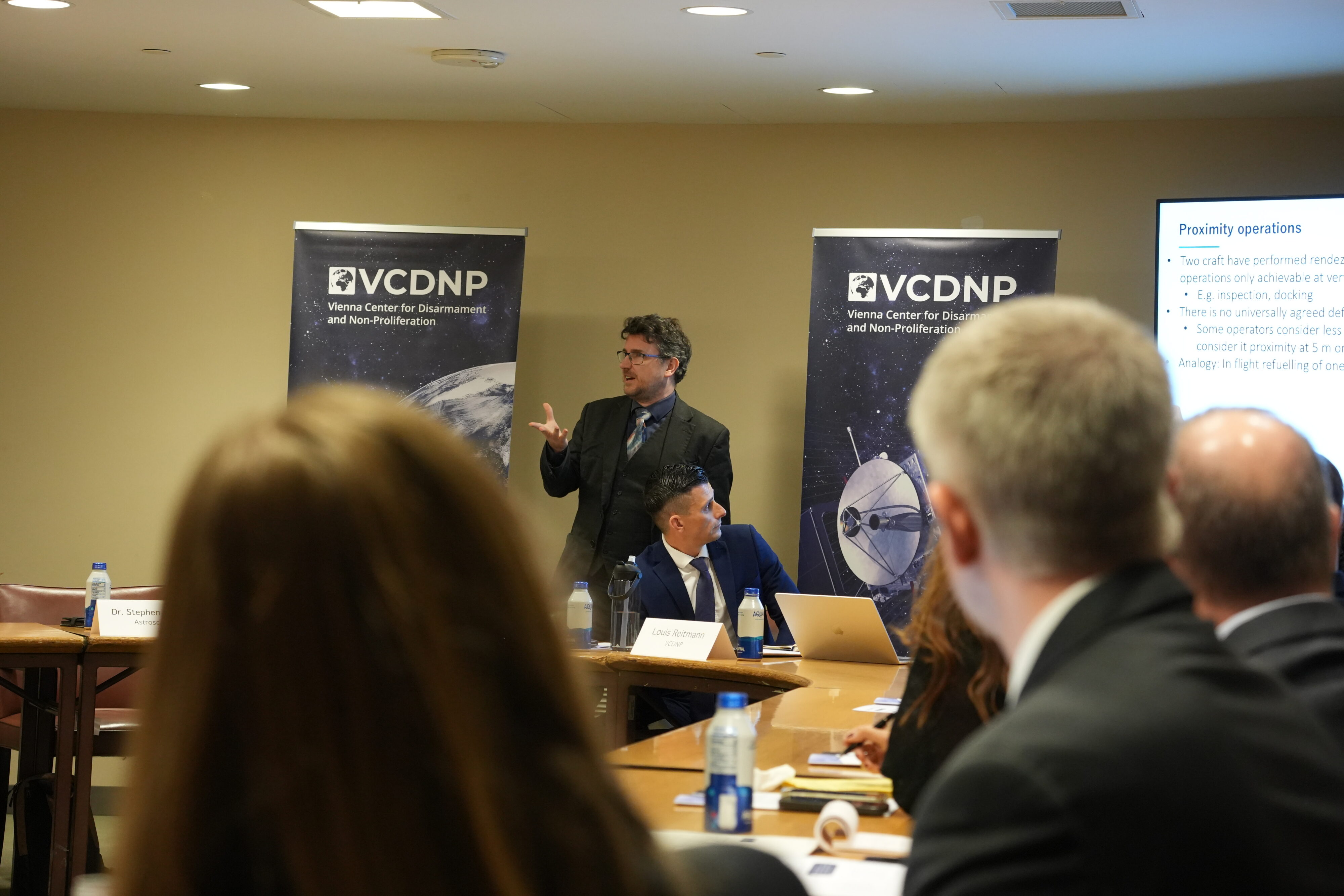
Dr. Stephen Wokes, Chief Engineer at Astroscale UK – a world-leading company in developing RPO technologies for in-orbit servicing and active debris removal missions –provided delegations with a valuable technical primer. He explained the differences between key concepts, such as cooperative RPOs for servicing, uncooperative RPOs for debris removal, and adversarial uncooperative RPOs for military reconnaissance, intelligence gathering, or anti-satellite purposes. He also described how orbital regions differ in how often and in what ways spacecraft come into close proximity during normal operations, and how normal encounters can be distinguished from those with hostile intent.
Importantly, Dr. Wokes clarified common misconceptions that have influenced discussions on space security in UN forums. He underlined that the common perception that spacecraft designed for in-orbit servicing or active debris removal, including those with robotic arms, could readily be used for hostile purposes is false. He stressed that there is a wide gulf in technical capability between performing RPOs for repair or debris removal and for anti-satellite purposes.
He also underlined that, counterintuitively, distance plays only a limited role in determining the threat posed during an RPO, and that from a technical perspective, proposals for exclusion zones around satellites would be ineffective and unfeasible to implement.
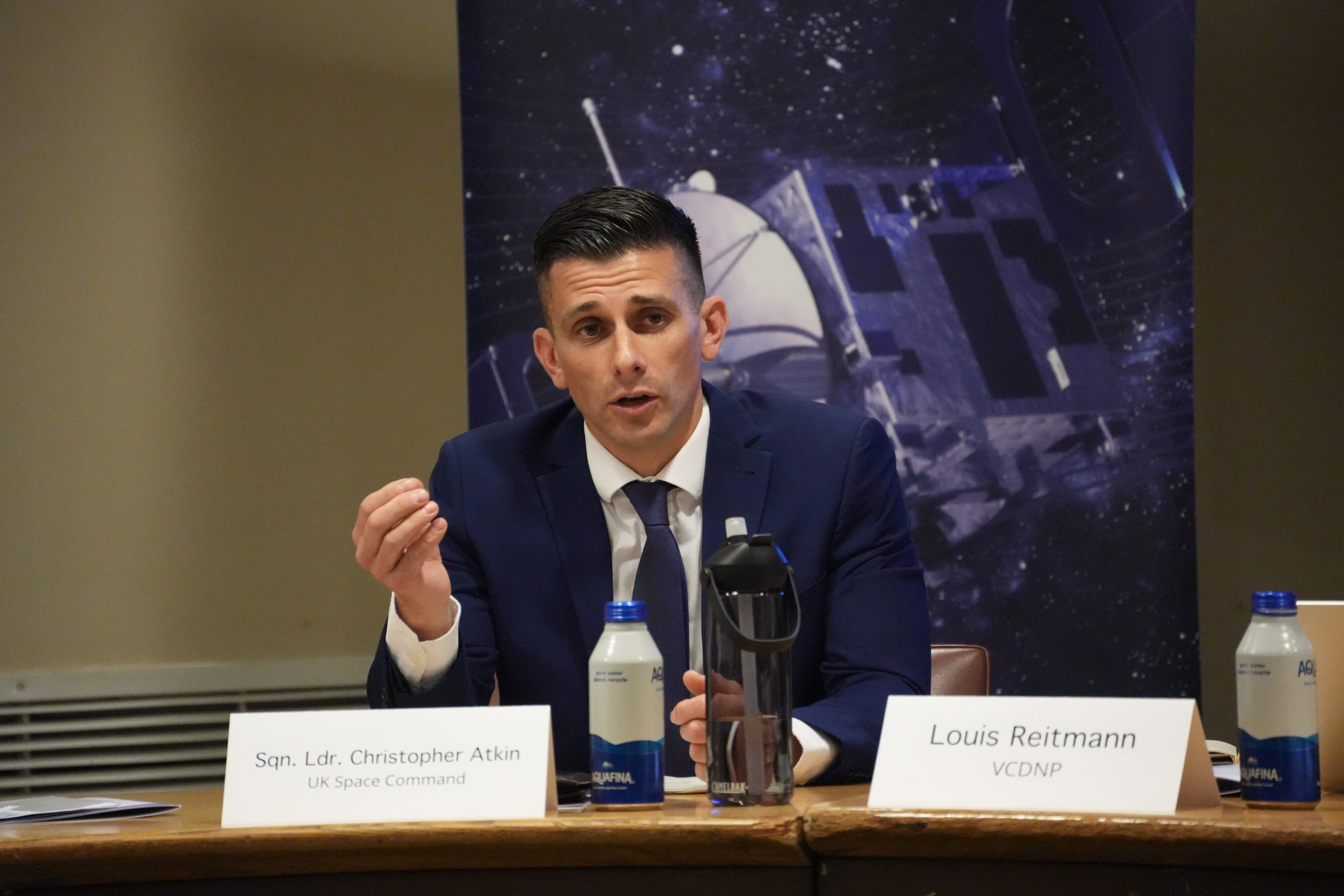
Sqn. Ldr. Christopher Atkin briefed delegations on the threat assessments conducted within space commands and the factors they consider critical to understanding the potential threat posed by an approaching spacecraft, including opportunity, capability and intent. Illustrating the limited role that distance plays in practice, he explained that a satellite hundreds of kilometres away can pose a serious threat if it sits in a position from which it would need to expend little additional energy to reach the target. As the VCDNP brief explains, such approaches can take place during solar exclusion windows, outside of downlink windows, or under cloud cover, when the target operator may have reduced visibility over their satellite and its surroundings.
He explained that, in most scenarios, uncooperative RPOs involve a force package, in which several spacecraft approach a target in sequence: first an imaging satellite to characterise the target, then a satellite to collect signals intelligence or cause harmful interference to the target’s transmissions, and finally a chaser with anti-satellite capabilities that could inflict more serious damage. Other factors that space commands examine include what a chaser’s historical movements reveal about its true purpose, or how likely an attack appears based on its value to an adversary, taking into account the availability of other satellites to continue the mission.
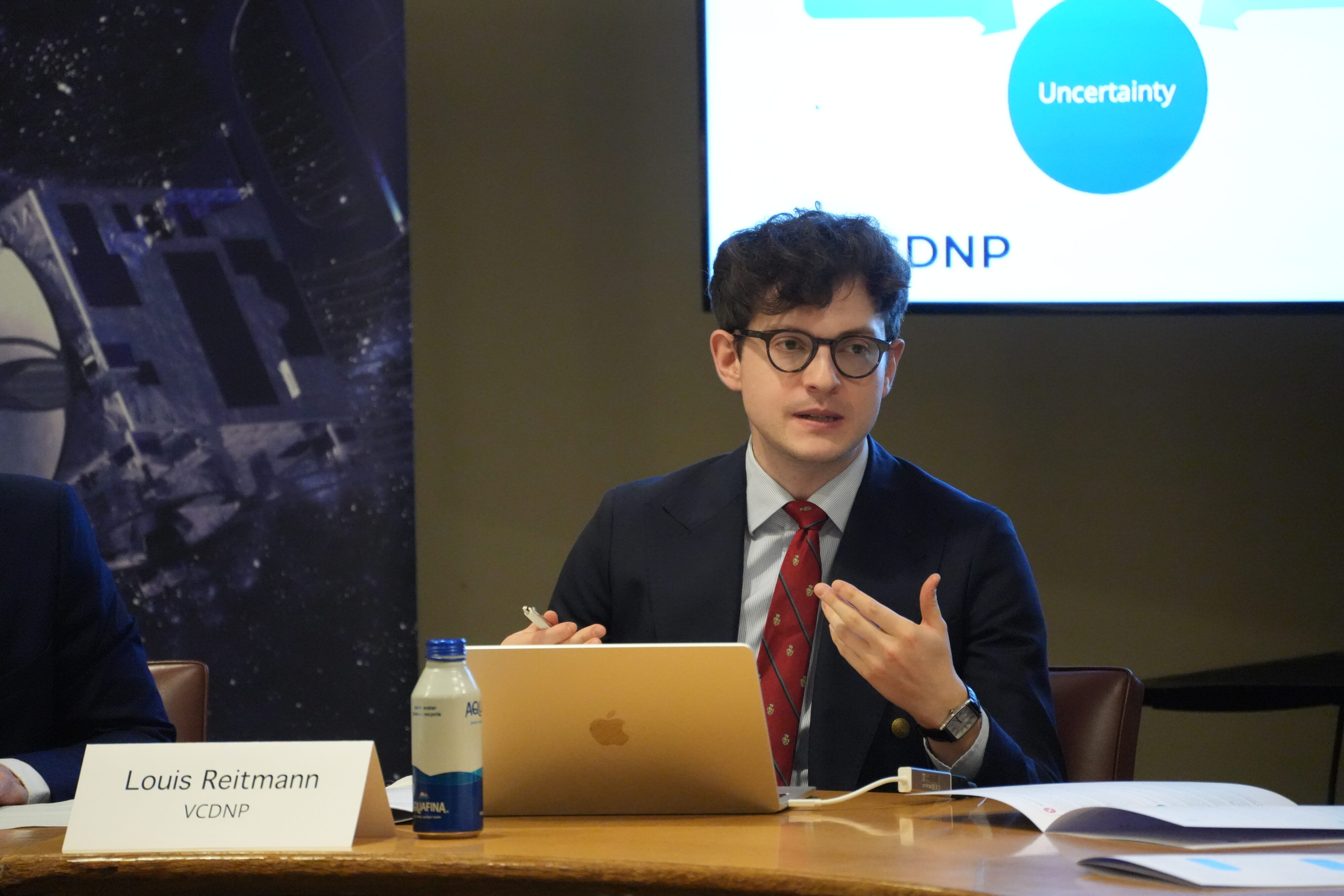
Senior Research Associate Louis Reitmann shared recommendations for risk reduction measures, developed by experts at the working meeting. They include actions to address uncertainty about the chaser spacecraft’s intent, imperfect information about its payload and capabilities, and collision risk between two satellites not coordinating their manoeuvres.
One example explained in the brief are passively safe trajectories during uncooperative RPOs, so that the chaser spacecraft never poses a collision risk to its target, even if the chaser suffered a complete loss of control and maneuverability. Another measure is including information on deployables intended for future separation in space object registration data. Awareness of the objects carried by a spacecraft approaching another is critical, as the unforeseen release of unknown deployable objects can raise concerns about the testing or use of co-orbital weapons and could lead to escalation.
He also highlighted highest-risk behaviors, which experts from industry, space commands, and governments at the working meeting agreed were unambiguously hostile and escalatory. For this reason, States may be able to formally commit against:
This event was made possible thanks to the financial support of the UK Foreign, Commonwealth & Development Office.