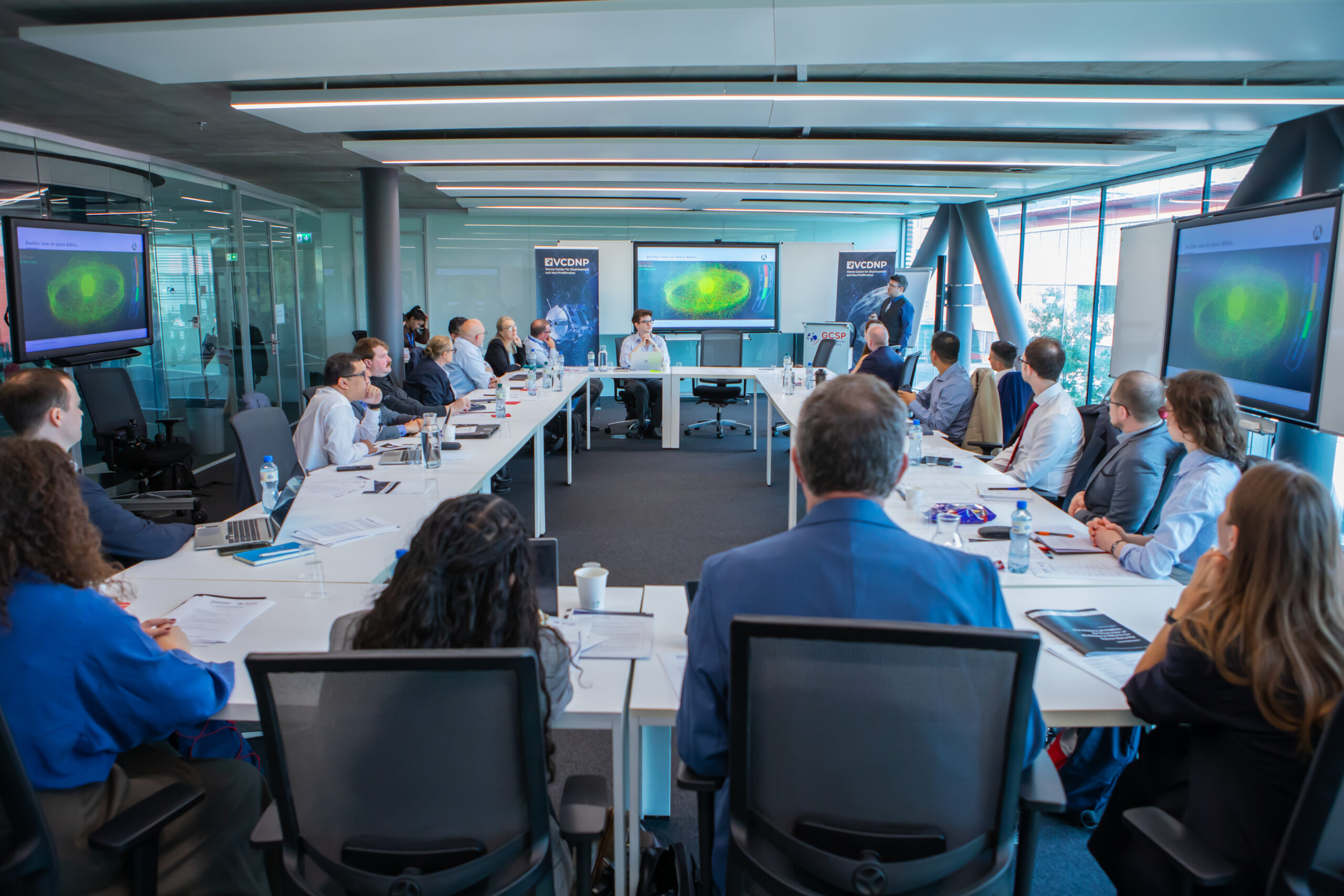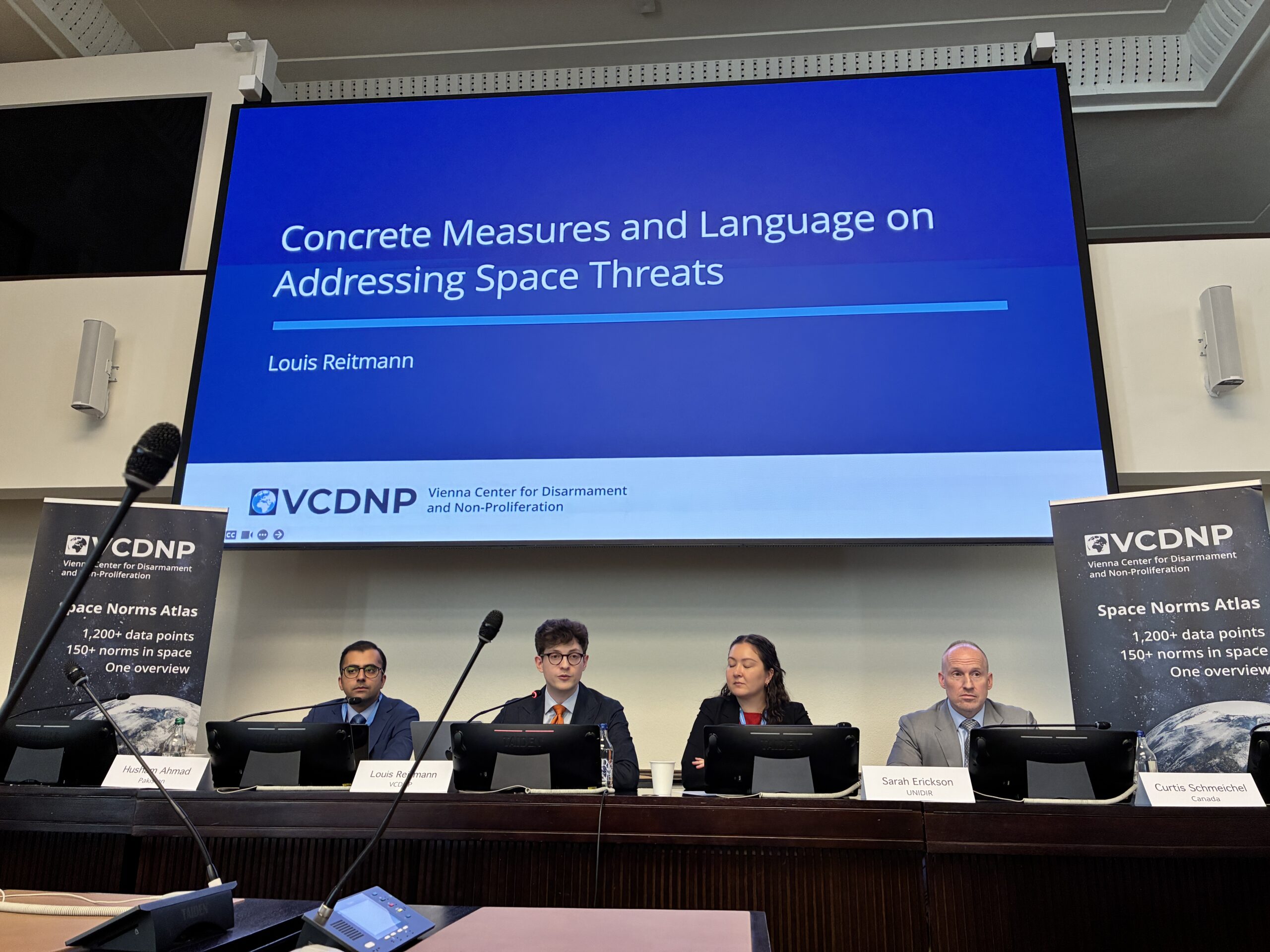
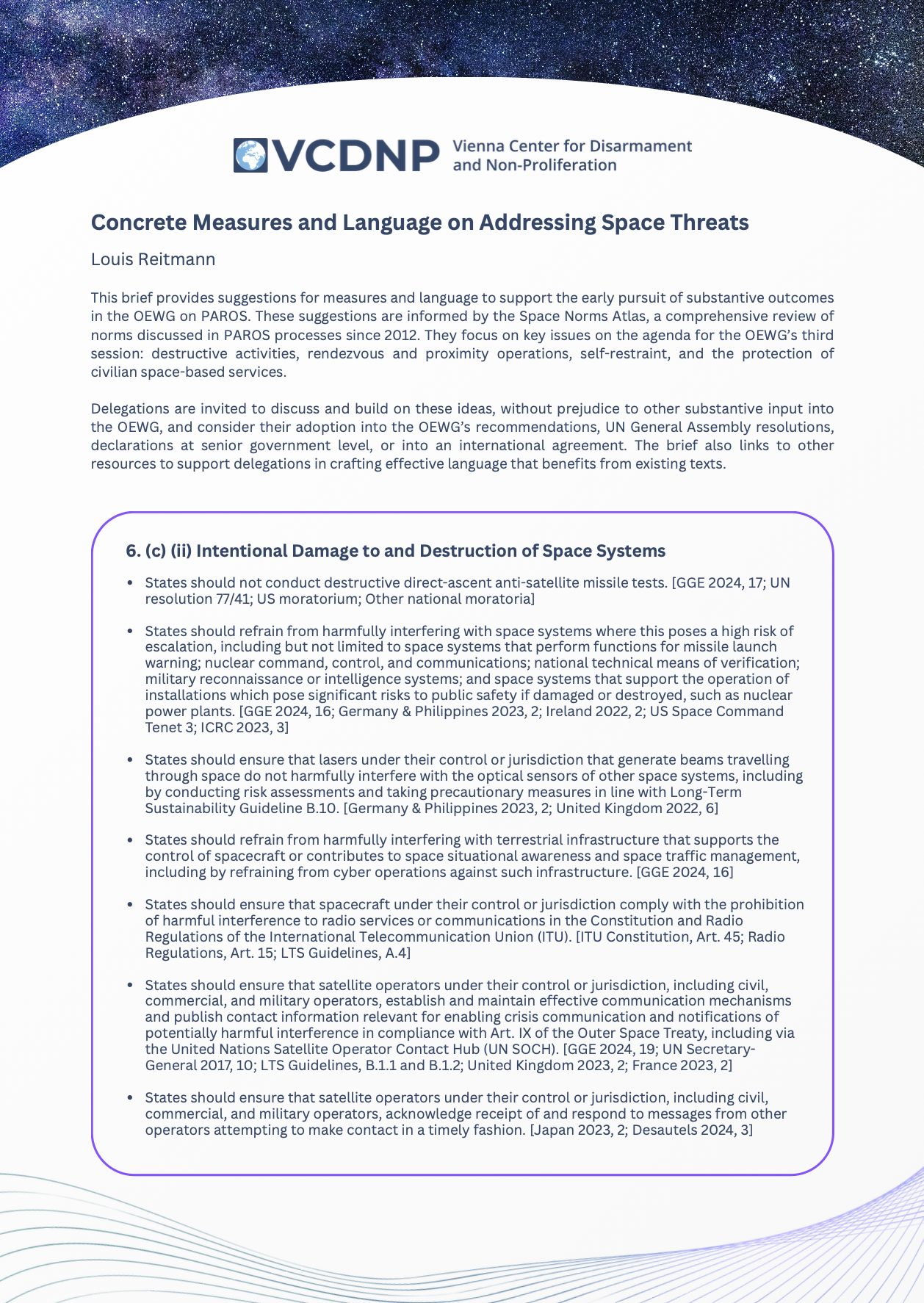
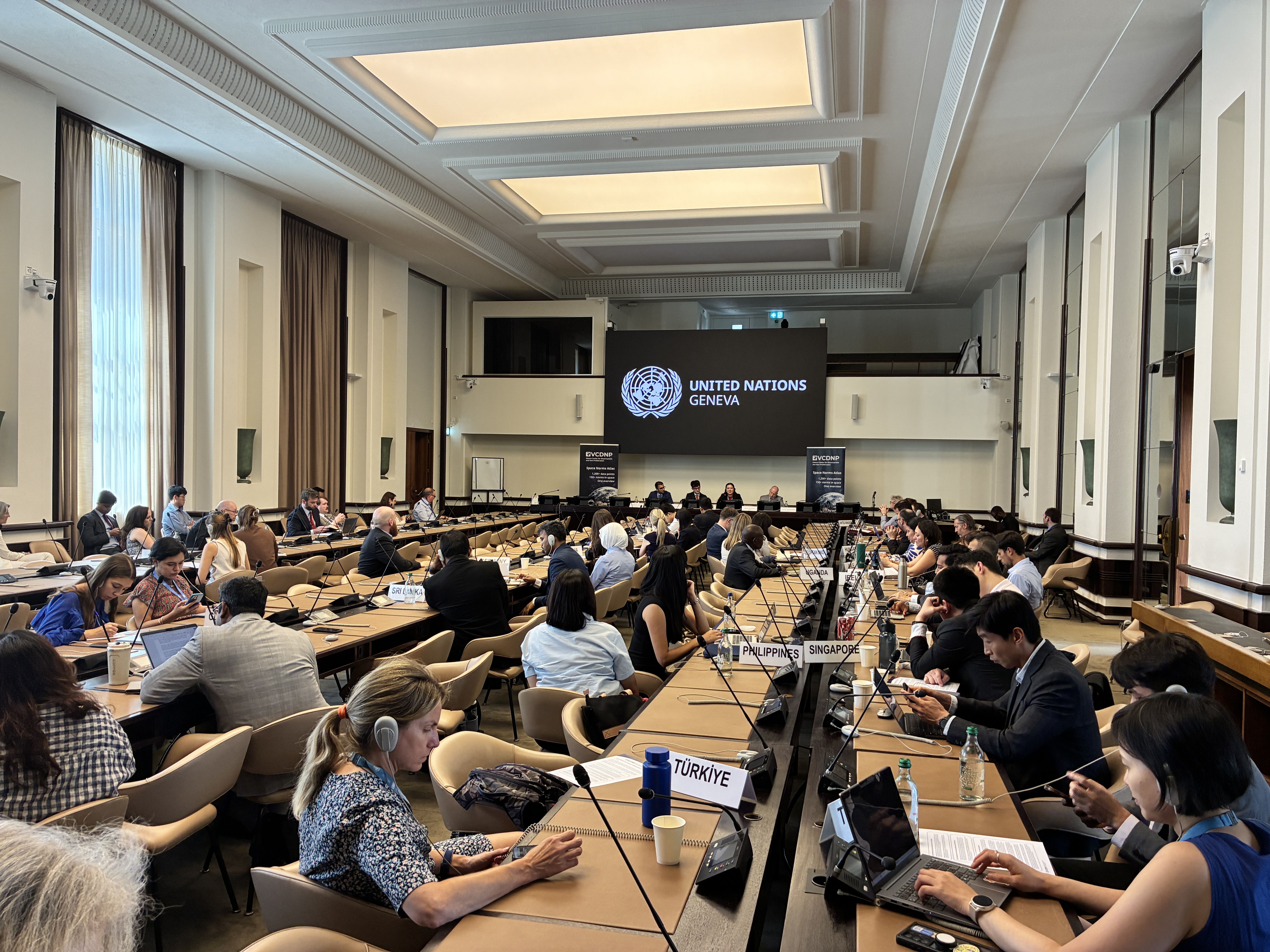
The VCDNP convened an event at the United Nations in Geneva to present substantive proposals on space security during the Third Session of the Open-Ended Working Group on the Prevention of an Arms Race in Outer Space in All its Aspects, which took place from 6 to 10 July 2026. The event also featured presentations of working papers by Canada and Pakistan, which contribute to moving the OEWG from general reflections to considering its potential outcomes.
Recognising the benefits of pursuing substantive outcomes early and working from specific proposals, the VCDNP offered draft text on key issues on the session’s agenda: destructive activities in space, uncoordinated rendezvous and proximity operations, self-restraint, and the protection of civilian space-based services. These suggestions were informed by the Space Norms Atlas, a comprehensive review of States’ proposals across PAROS processes since 2012 by Research Fellow Louis Reitmann.
Delegations are invited to build on these ideas and consider their adoption into the OEWG’s recommendations to the UN General Assembly and other potential outcomes, such as UN resolutions or international agreements. The paper also links to other resources to support delegations in crafting effective language that benefits from existing texts.
Speakers
Presenting the working paper, Louis Reitmann shared proposals on measures and language for Member States’ consideration, such as:
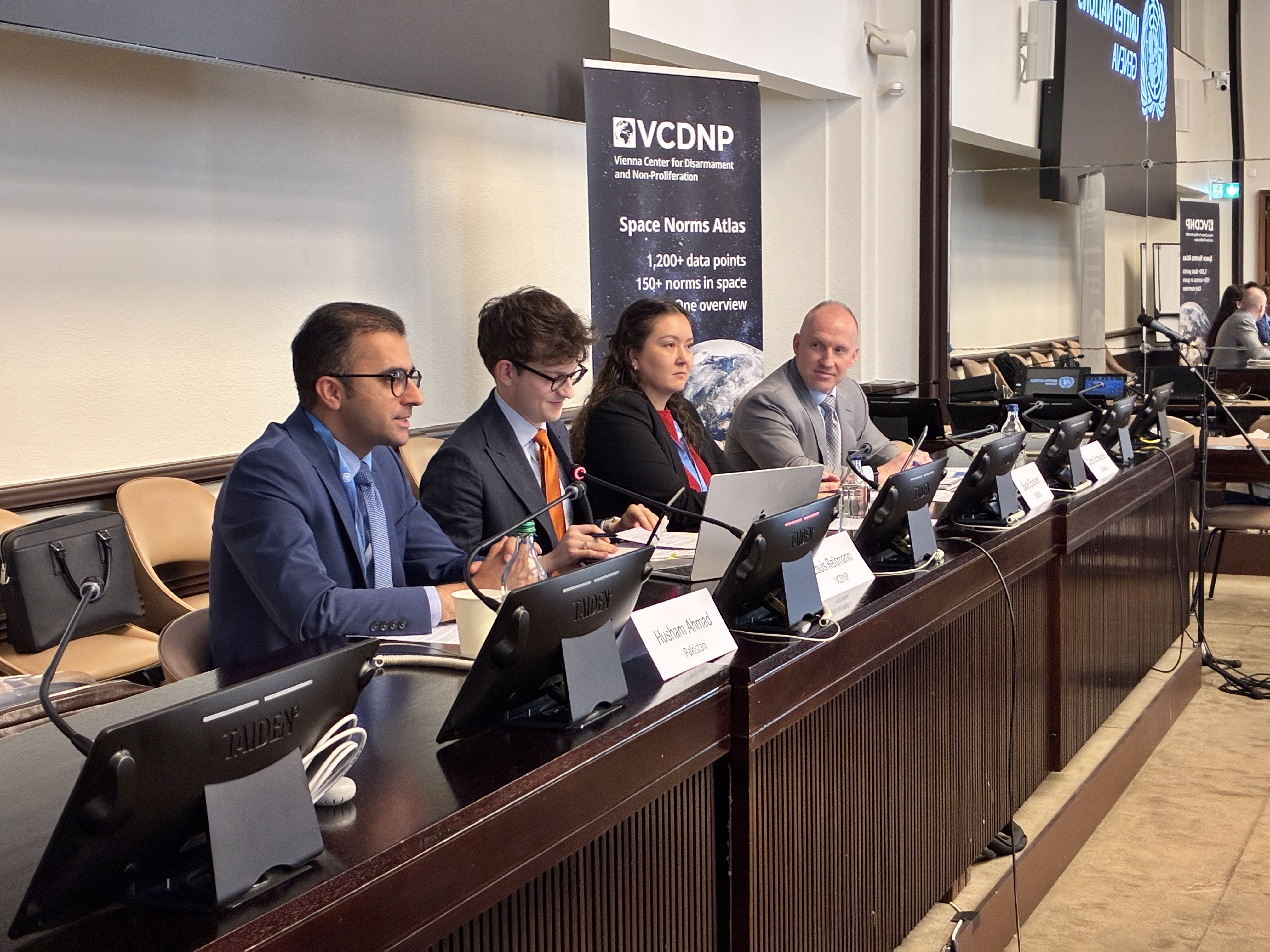
Husham Ahmad presented a working paper containing Pakistan’s first input towards the OEWG’s recommendations to the UN General Assembly. The paper proposes text for basic obligations under a potential PAROS treaty and for norms, principles, and guidelines, in line with the OEWG’s mandate to consider both legally binding and non-binding measures. The paper provides language, formulated as high-level principles, across a wide variety of space threats, from the use of force and intentional damage to space objects to uncoordinated rendezvous and proximity operations, which Pakistan plans to flesh out with further technical detail and input from other delegations.
Pakistan’s early proposals for the recommendations due in mid-2028 gives delegations much-needed time to negotiate, especially as the OEWG will cross the halfway point in its term at the next session in November 2026.
Curtis Schmeichel introduced a Canadian working paper exploring the possibility of codifying the emerging norm against destructive direct-ascent anti-satellite missile (DDA-ASAT) testing in an international agreement. With several delegations expressing interest in elaborating a DDA-ASAT test ban treaty, the paper provides case studies on the evolution from norms to international law, including the 1967 Outer Space Treaty and the 1963 Partial Nuclear-Test-Ban Treaty (PTBT).
Mr. Schmeichel stressed that the norm against DDA-ASAT testing shares similarities to the emergence of the PTBT: States have seen the consequences of DDA-ASAT testing and have found them detrimental to space security and sustainability; States have worked towards an international norm against DDA-ASAT testing, including through national moratoria, which has helped to prevent further testing since 2021; like nuclear explosions, DDA-ASAT testing is an observable behaviour, making verification of a potential DDA-ASAT test ban feasible.
In another parallel, the PTBT’s partial scope was a step down from earlier ambitions for a comprehensive test ban treaty, which faltered under mistrust and verification challenges. Just as the PTBT still made an invaluable contribution to international security, a DDA-ASAT test ban could be similarly effective even challenges in verifying a blanket ban on all ‘space weapons’ make further-reaching international agreements difficult.
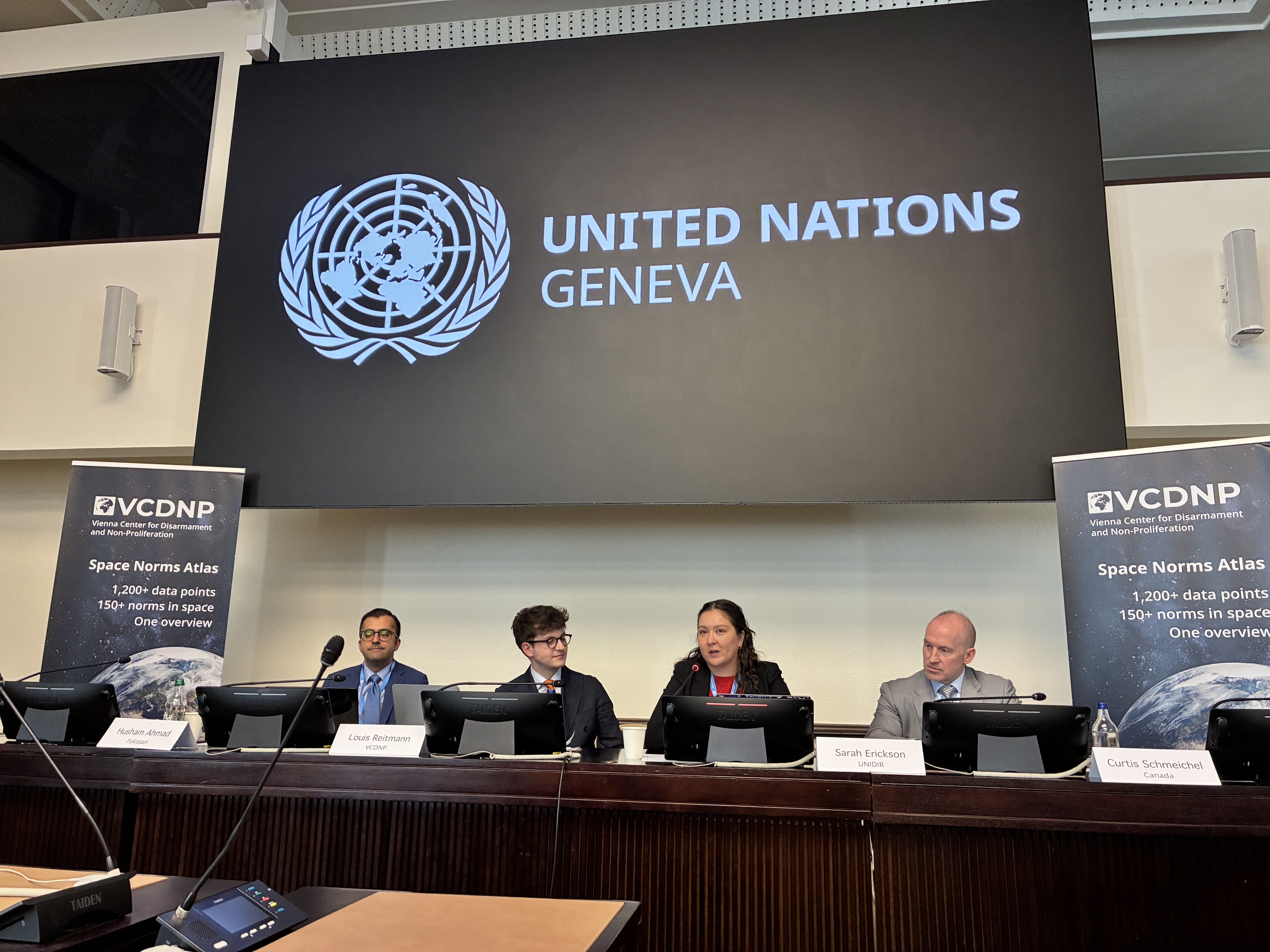
Sarah Erickson provided feedback on the proposals discussed, drawing on her first-hand experience in previous PAROS processes. She highlighted that, as delegations develop further input towards the OEWG’s recommendations, language can play an important role in achieving convergence. Some commitments may be more achievable to be agreed if framed as positive obligations, others may better be phrased as negative prohibitions. She also underlined that tabletop exercises based on historical incidents in space can help Member States find ways to better apply and utilise existing international space law.
This event was made possible thanks to the financial support of the UK Foreign, Commonwealth & Development Office.